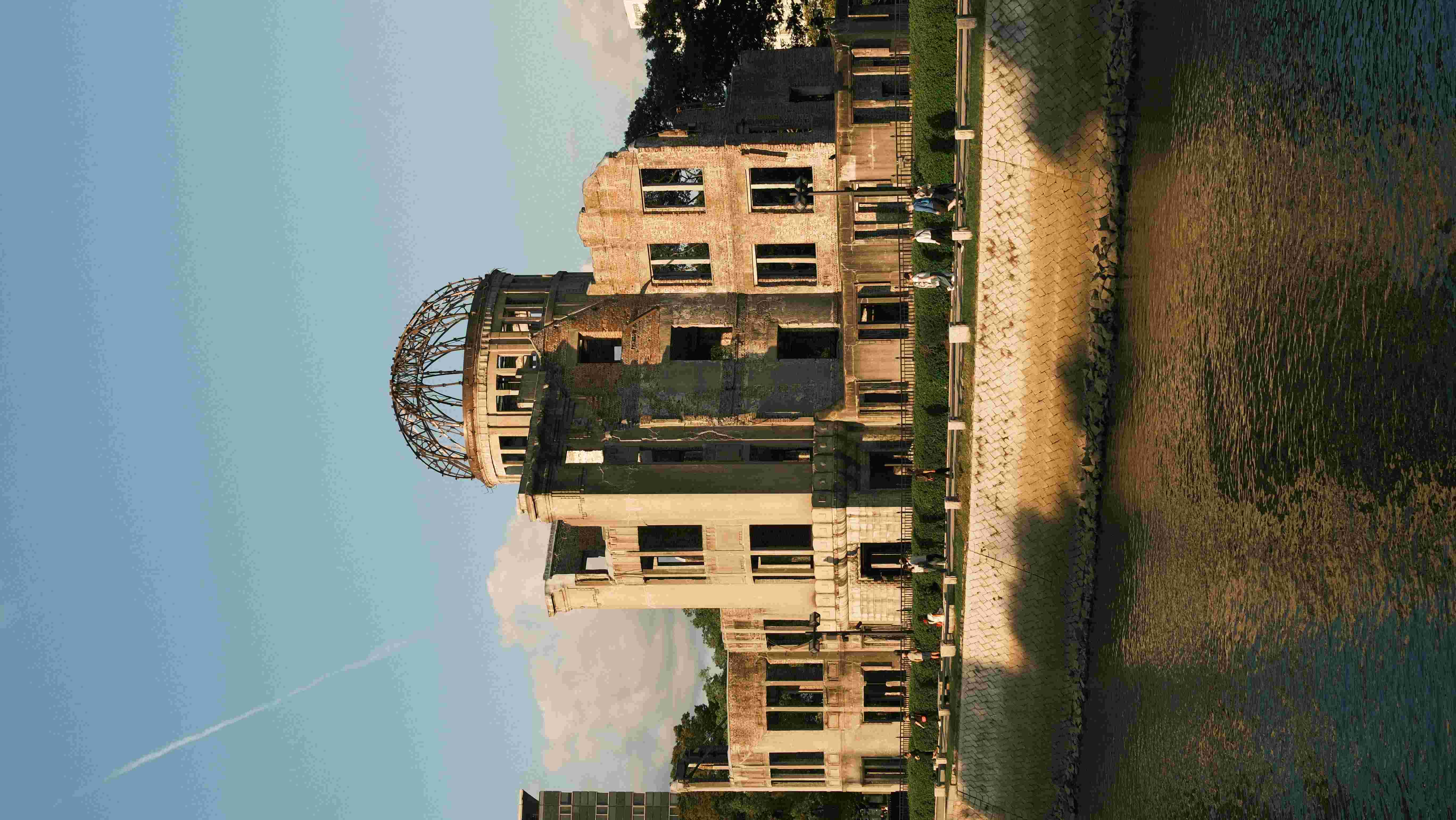
The Hiroshima Peace Memorial Park is the most powerful historical site we've visited anywhere in the world. Not the most beautiful, not the most grand — the most powerful. The Atomic Bomb Dome stands exactly as it was left in 1945. The museum inside is raw, unflinching, and essential. If you visit one thing in Hiroshima — visit this. And before you go, book a local walking tour. It will change how you see everything.
The Peace Memorial Park
The park occupies a triangular island formed by two branches of the Ōta River — the site directly below the atomic bomb's hypocenter on August 6, 1945. It is quiet and green today: wide paths, the cenotaph memorial, the Flame of Peace, the Children's Peace Monument surrounded by thousands of paper cranes, the river running along both sides.
At the park's northern edge stands the Atomic Bomb Dome (Genbaku Dome) — the preserved skeleton of the former Hiroshima Prefectural Industrial Promotion Hall, the only structure near the hypocenter that remained partially standing after the bomb. It has been left exactly as it collapsed: rusted iron framework, shattered walls, the dome's ribs visible against the sky. It is a UNESCO World Heritage Site. Standing in front of it in silence is one of those travel experiences that doesn't require description to communicate its weight.
The Cenotaph and Flame of Peace
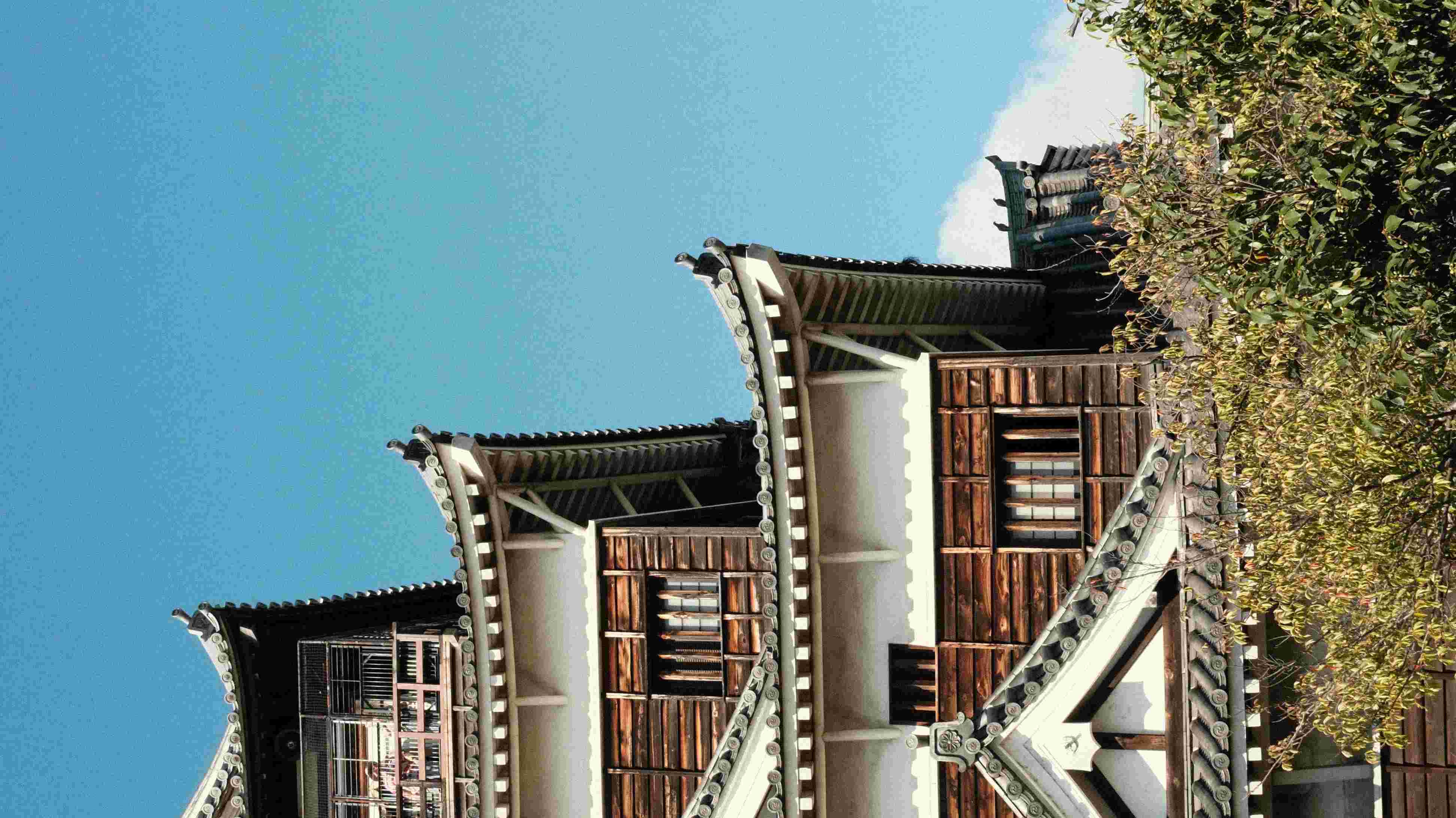
The Memorial Cenotaph is a curved arch that frames the Flame of Peace and the Genbaku Dome beyond — a precise alignment designed by architect Kenzō Tange. The flame has burned continuously since 1964 and will be extinguished only when the last nuclear weapon in the world is destroyed. Looking through the cenotaph arch at the Dome beyond is one of the defining images of modern Japan.
The Children's Peace Monument — a statue of Sadako Sasaki, the girl who died of leukemia from radiation exposure after folding over a thousand origami cranes — is surrounded by cases holding millions of paper cranes sent by schoolchildren from around the world. It is, quietly, devastating.
The Peace Memorial Museum
The museum tells the full story of the atomic bombing — the political decision-making in Washington, the bombers' flight path to Hiroshima, the moment of detonation, and the immediate and long-term aftermath. The survivor testimonies are the museum's core: photographs, personal effects, written accounts. A child's melted tricycle. A shadow burned into stone steps by the blast. A watch stopped at 8:15am.
The museum does not soften or contextualise the American decision in the way some expect from a Japanese institution. It presents what happened in detail. It also presents the reality of Japan's own wartime actions and the geopolitical context of the Pacific War — not in a way that obscures the horror of August 6, but in a way that reflects an institution genuinely committed to peace rather than grievance.
Allow at least 90 minutes inside. Many people need longer. Don't rush it.
Go early in the morning — the museum fills up significantly by 10am, particularly with school groups. Being there at opening (8:30am) means the first hour in relative quiet, which is the right way to see it.
Entry: ¥200 adults — one of the most important admissions in Japan.
The Walking Tour — Book This First
The single best decision you can make about Hiroshima: book a walking tour of the Peace Memorial Park before your visit. We joined a tour focused on the atomic bombing and our guide Thomas was exceptional — his knowledge was deep, his approach was personal rather than textbook, and the stories he told about specific survivors and specific locations in the park made the place entirely real in a way that walking through it alone does not.
The walking tour typically covers: the approach to the park, the Genbaku Dome, the cenotaph and memorial structures, the Children's Monument, and the museum entrance — with the guide providing context for each location and space for questions. It takes approximately 2 hours before the museum visit.
Book the walking tour through GetYourGuide. Ask specifically for Thomas if he's available — the recommendation in our guide is specific and genuine.
What to Expect Emotionally
This is worth saying directly: the Peace Museum is genuinely confronting. Not in a way that is exploitative or sensationalised — in a way that is honest about an event that killed 140,000 people by the end of 1945 and left many more dying of radiation for decades. You will see photographs and personal effects that are difficult to look at. You will read testimony from survivors describing what they saw on the streets of Hiroshima on August 6. This is appropriate. This is the point.
After the museum, don't rush to the next thing. Walk back through the park slowly. Sit by the river. Give what you've seen somewhere to go. Scheduling a demanding afternoon activity immediately after the museum is the wrong approach.
Practical Information
| Museum entry | ¥200 adults; free for children and students under 18 |
| Museum hours | 8:30am–6pm (Mar–Jul, Sep–Nov); 8:30am–7pm (Aug); 8:30am–5pm (Dec–Feb) |
| Best time to arrive | At opening (8:30am) — significantly quieter before 10am |
| How long to allow | Half day minimum: walking tour (2h) + museum (90 min) + park time |
| Getting there | Tram from Hiroshima Station (lines 2 or 6) to Genbaku Dome-mae stop |
| Walking tour | Book through GetYourGuide — ask for Thomas |
More Hiroshima Guides
- The Best Things to Do in Hiroshima
- Miyajima Island Day Trip from Hiroshima
- 2 Days in Hiroshima Itinerary
- Is Hiroshima Worth Visiting? Our Honest Review
- Where to Stay in Hiroshima
- The Best Food in Hiroshima: Okonomiyaki, Oysters & More
- Is Naoshima Worth Visiting? (Next Stop via Uno Port)
- Is Fukuoka Worth Visiting? (Shinkansen from Hiroshima)
- All Japan Guides
FAQ
Is the Hiroshima Peace Museum worth visiting?
Yes — one of the most important museum visits you can make in Japan. It is confronting and sometimes difficult, and that is appropriate. Go early, allow 90 minutes, and don't schedule anything demanding immediately after.
Should I book a walking tour for the Peace Memorial Park?
Yes — strongly recommended. The context a guide provides transforms the park from a collection of monuments into something genuinely understood. Book through GetYourGuide before your visit.
How long should I spend at the Peace Memorial Park?
Half a day minimum: a 2-hour walking tour followed by 90 minutes in the museum, plus time in the park itself. Don't rush this.
When is the best time to visit the Peace Museum?
At opening (8:30am) for the quietest experience. By 10am the museum fills with school groups and tour buses. August 6 (the anniversary of the bombing) draws large crowds; it's a profound day to visit if you can tolerate the volume of visitors.
Some links in this post are affiliate links. If you book through them, we earn a small commission at no extra cost to you.