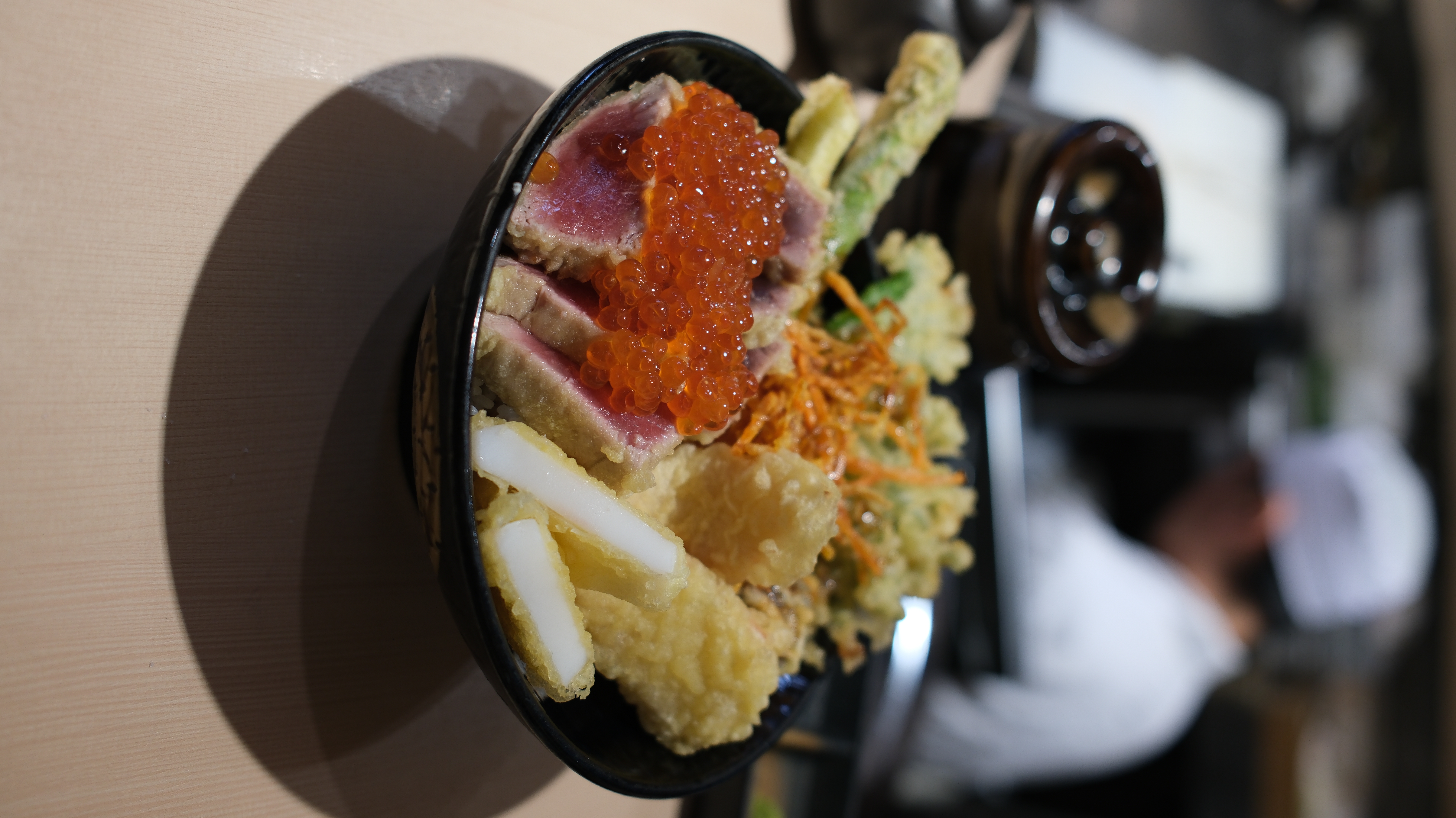
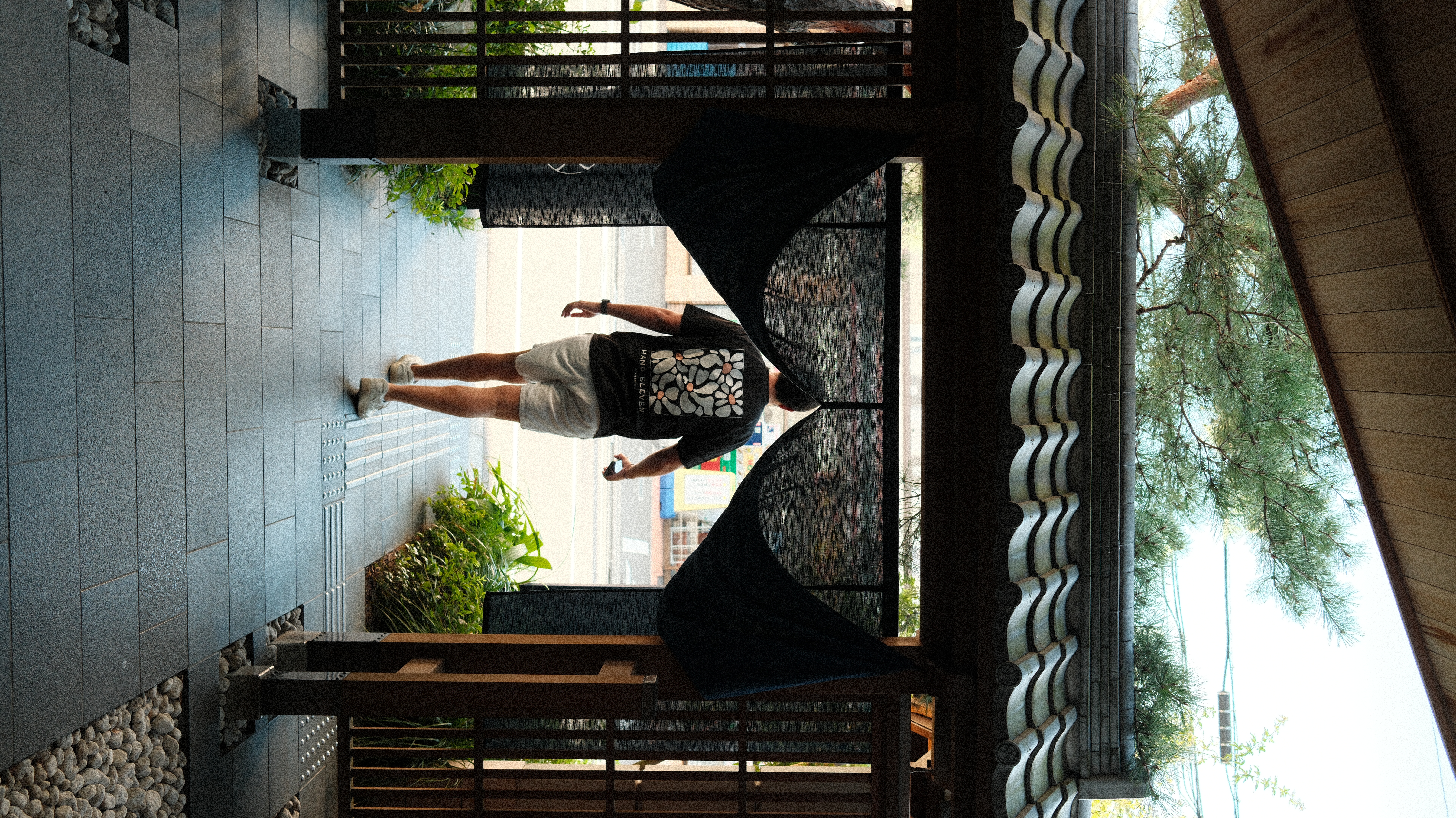
The Tsukiji outer market is one of the best food experiences in Tokyo — and it's still very much open and worth visiting in 2026.
There's often confusion about Tsukiji because the inner wholesale fish market (the famous tuna auctions) moved to Toyosu in 2018. That part is gone from Tsukiji. But the outer market — the dense network of stalls selling fresh seafood, tamagoyaki, pickles, dried goods, kitchen knives and street food — remains, and it's excellent. This is where we send everyone who visits Tokyo.
| What's there | Outer market: seafood stalls, tamagoyaki, street food, knife shops |
|---|---|
| What's gone | Inner market: tuna auctions moved to Toyosu in 2018 |
| Opening hours | Most stalls open from ~5:00–6:00am; busiest 7:00–10:00am; many close by noon |
| Best time to visit | 7:00–9:00am on a weekday |
| Budget | €15–25 per person for a full market breakfast |
| Cash | Many stalls are cash only — bring ¥3,000–5,000 in small notes |
| Getting there | Tsukiji Station (Hibiya Line) or Tsukijishijo Station (Toei Oedo Line) |
What to Eat at Tsukiji
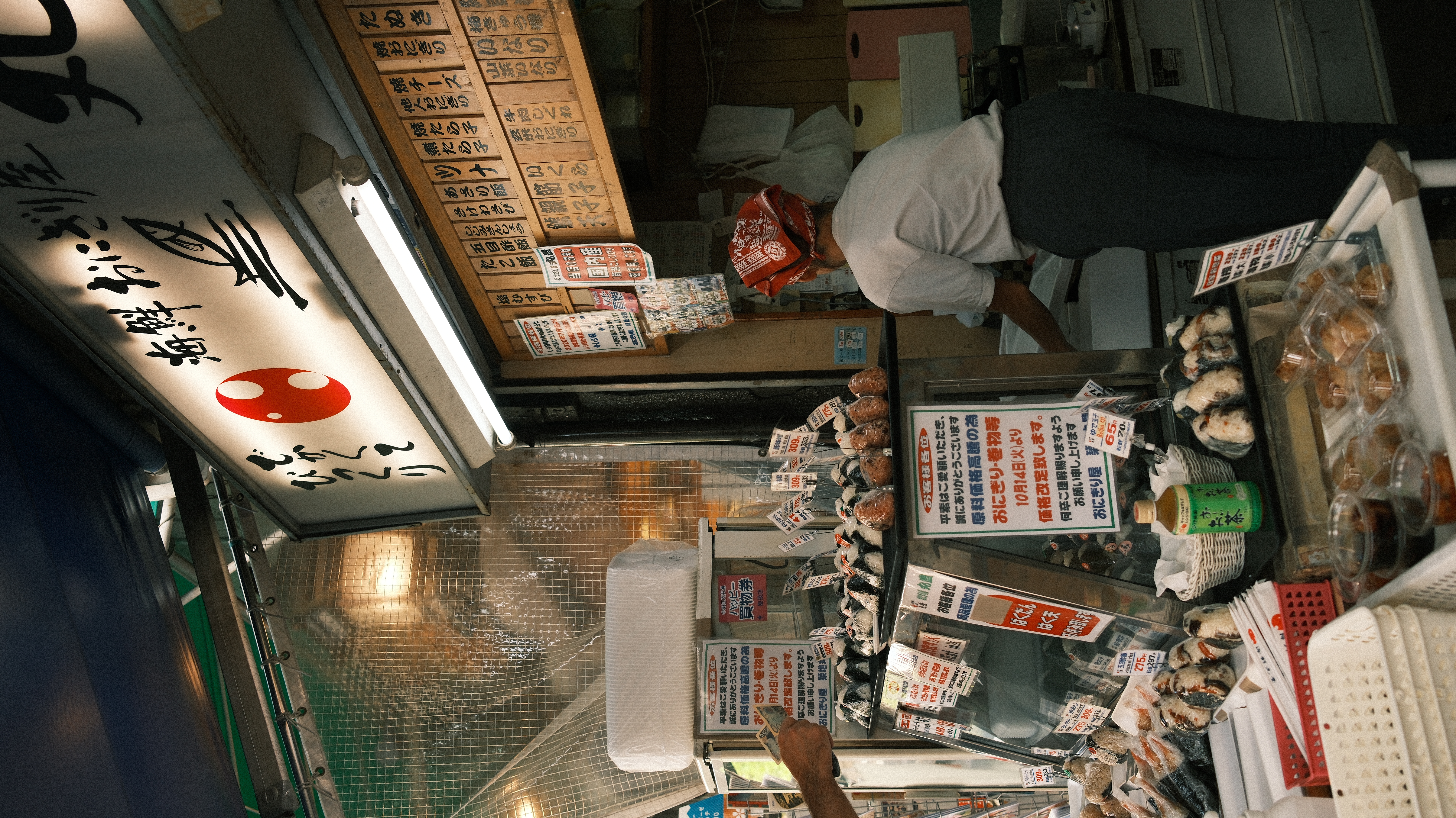
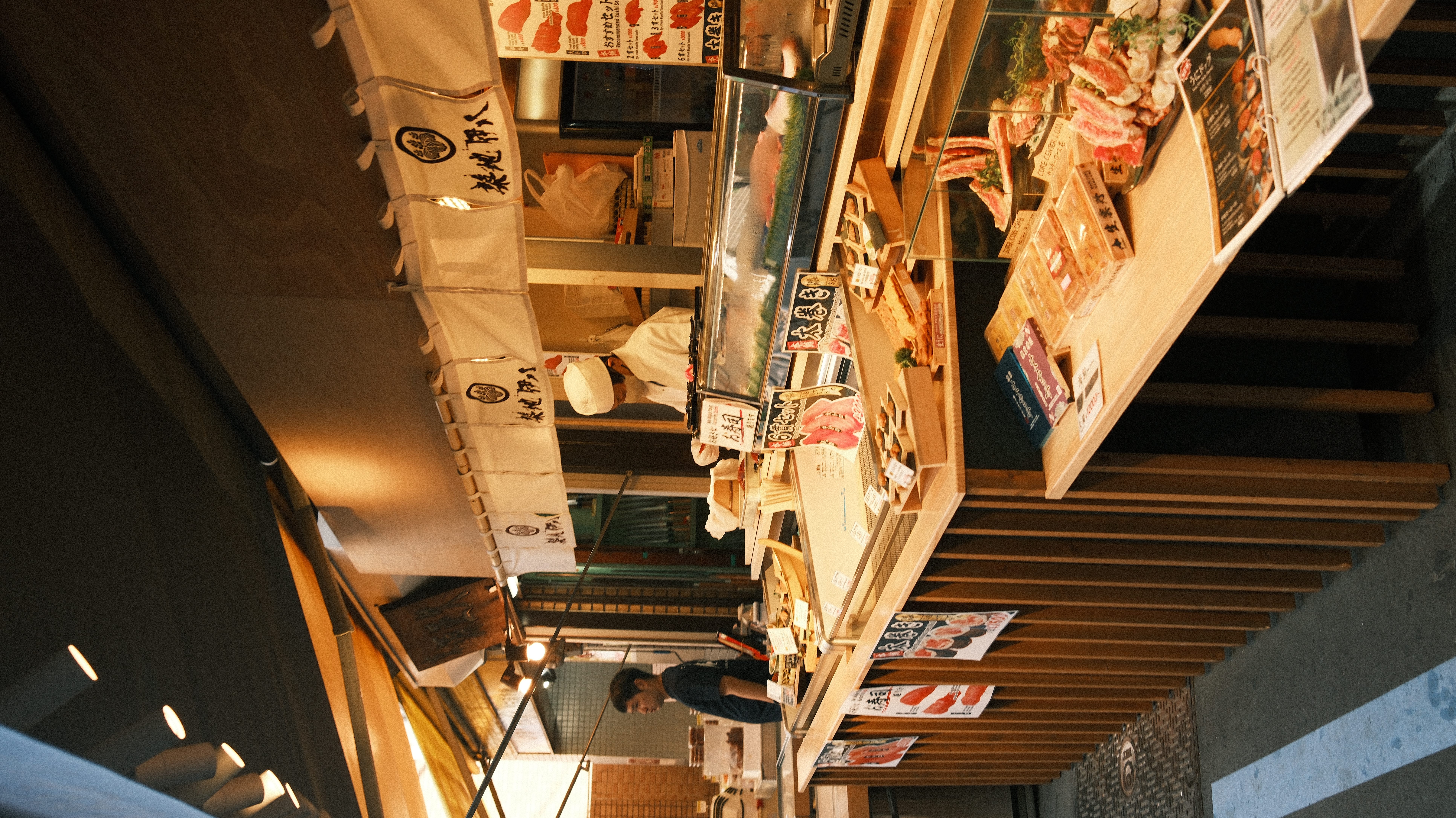
The outer market stalls. Arrive early — the best items sell out by 10am.
Tuna Sashimi
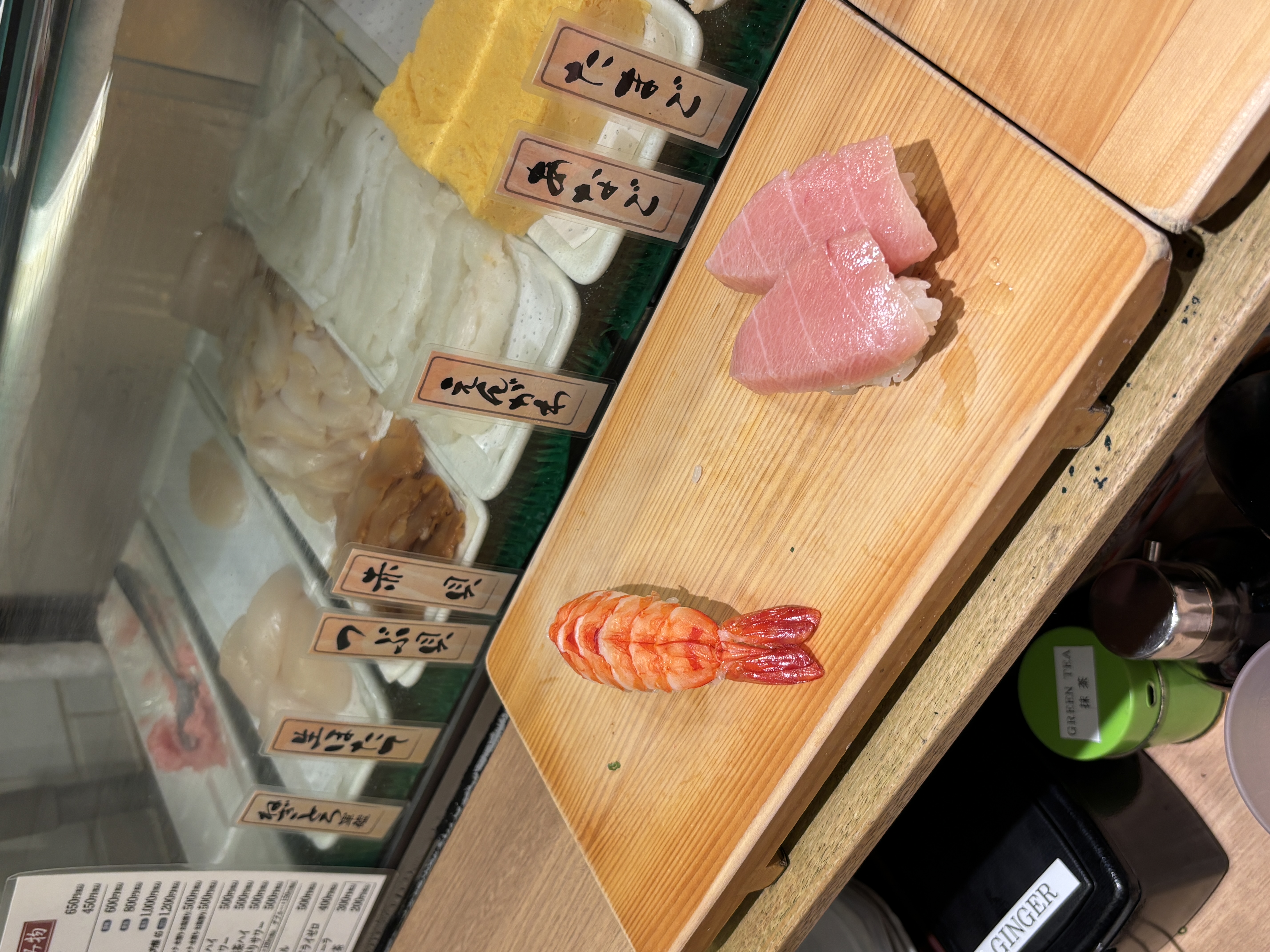
The most important thing to eat at Tsukiji. Several stalls sell freshly sliced tuna at standing counters — look for ones with a visible piece of tuna being cut, and ask for otoro (fatty tuna, the best cut) or chutoro (medium-fat, slightly more affordable). A small plate costs ¥500–1,500 (~€3–10) depending on the cut. It will be among the best sushi-grade tuna you've ever tasted.
Tamagoyaki
Sweet rolled egg omelette on a skewer — a Tsukiji speciality. Tsukijiya is one of the most famous stalls (look for the queue). The tamagoyaki here is thick, slightly sweet, served warm on a bamboo skewer. About ¥200–300 (~€1.50–2). Try one as you walk — it's the perfect market snack.
Grilled Seafood Skewers
Grilled scallops, oysters, king crab legs, and various fish on skewers are sold at multiple stalls. The scallops are particularly good — large, fresh, grilled simply with soy and butter. Budget ¥400–800 per skewer.
Sea Urchin (Uni)
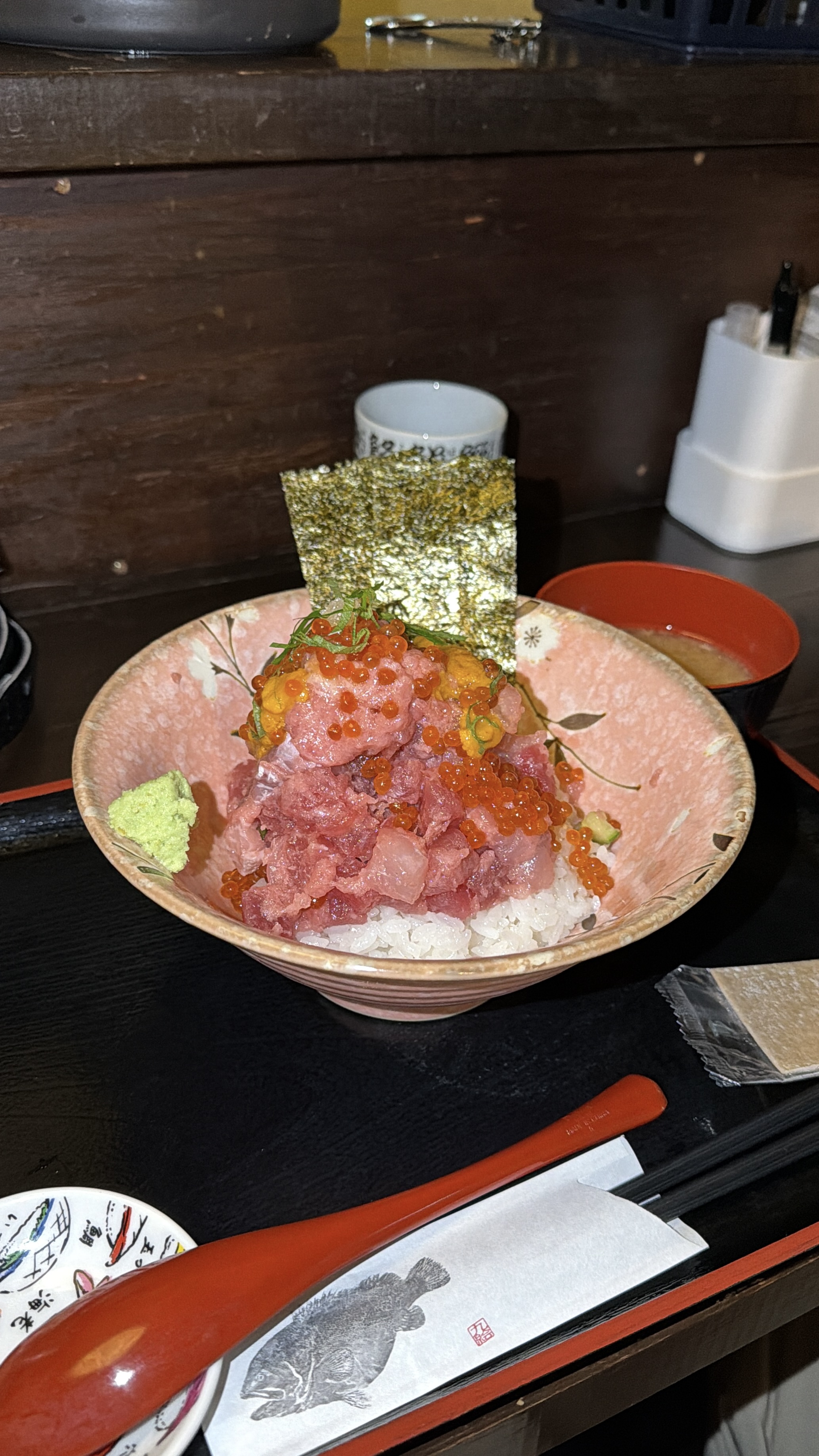
If you eat sea urchin, Tsukiji is one of the best places in the world to try it. The freshness makes an enormous difference. Some stalls serve it on small dishes or as part of a mini don (rice bowl) for ¥500–1,500. It's creamy, oceanic, and nothing like the uni you might have had elsewhere.
Oysters
Fresh oysters sold at several stalls, eaten standing at the counter. Usually ¥200–400 each. Very good.
Ramen and Soba (Sit-down Breakfast)
Several small restaurants within and around the market open early for a sit-down breakfast. Particularly good for ramen or donburi (seafood rice bowls) around 7–8am before the main rush. Budget €10–15 for a bowl.
How to Navigate the Market
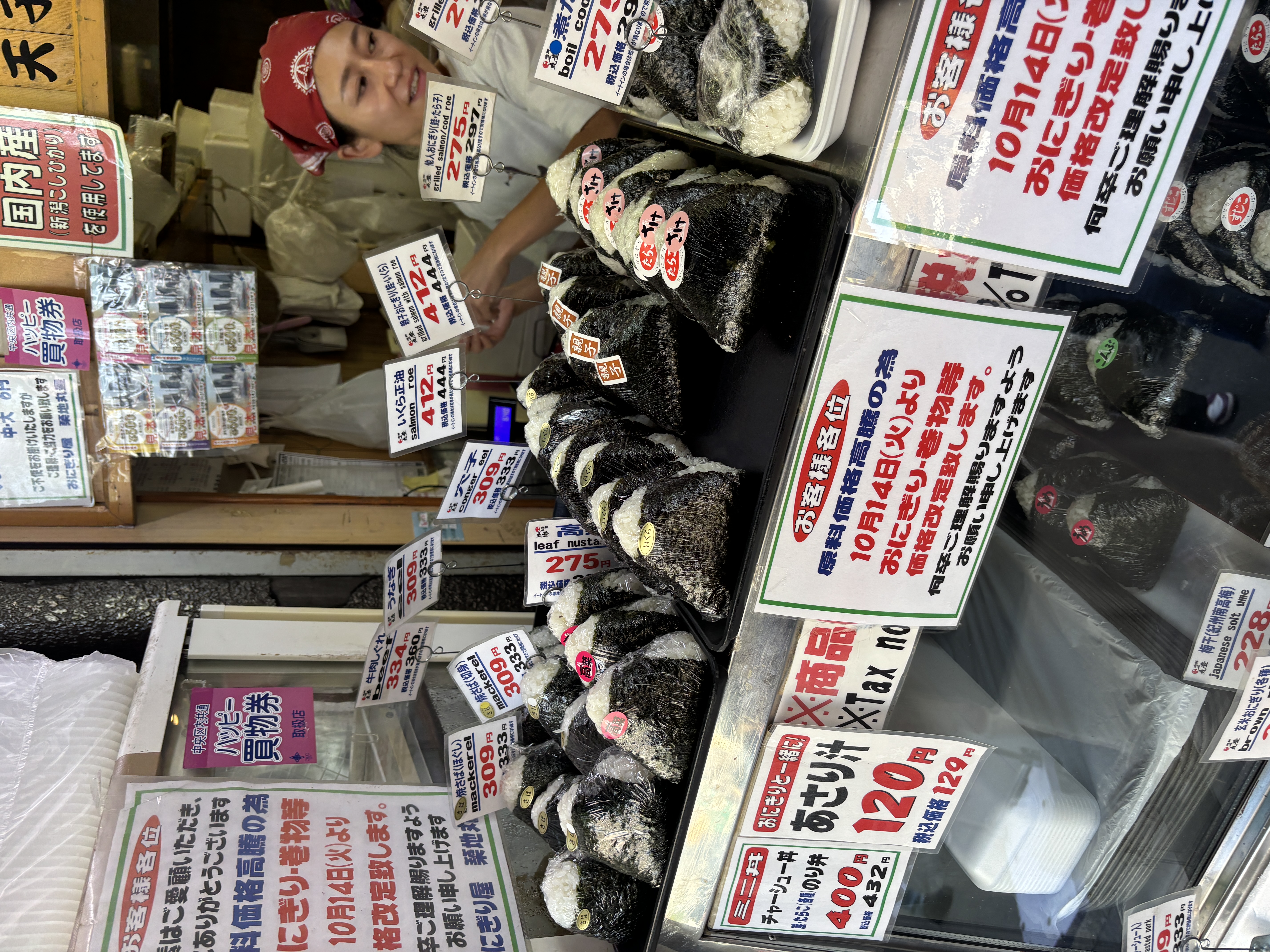
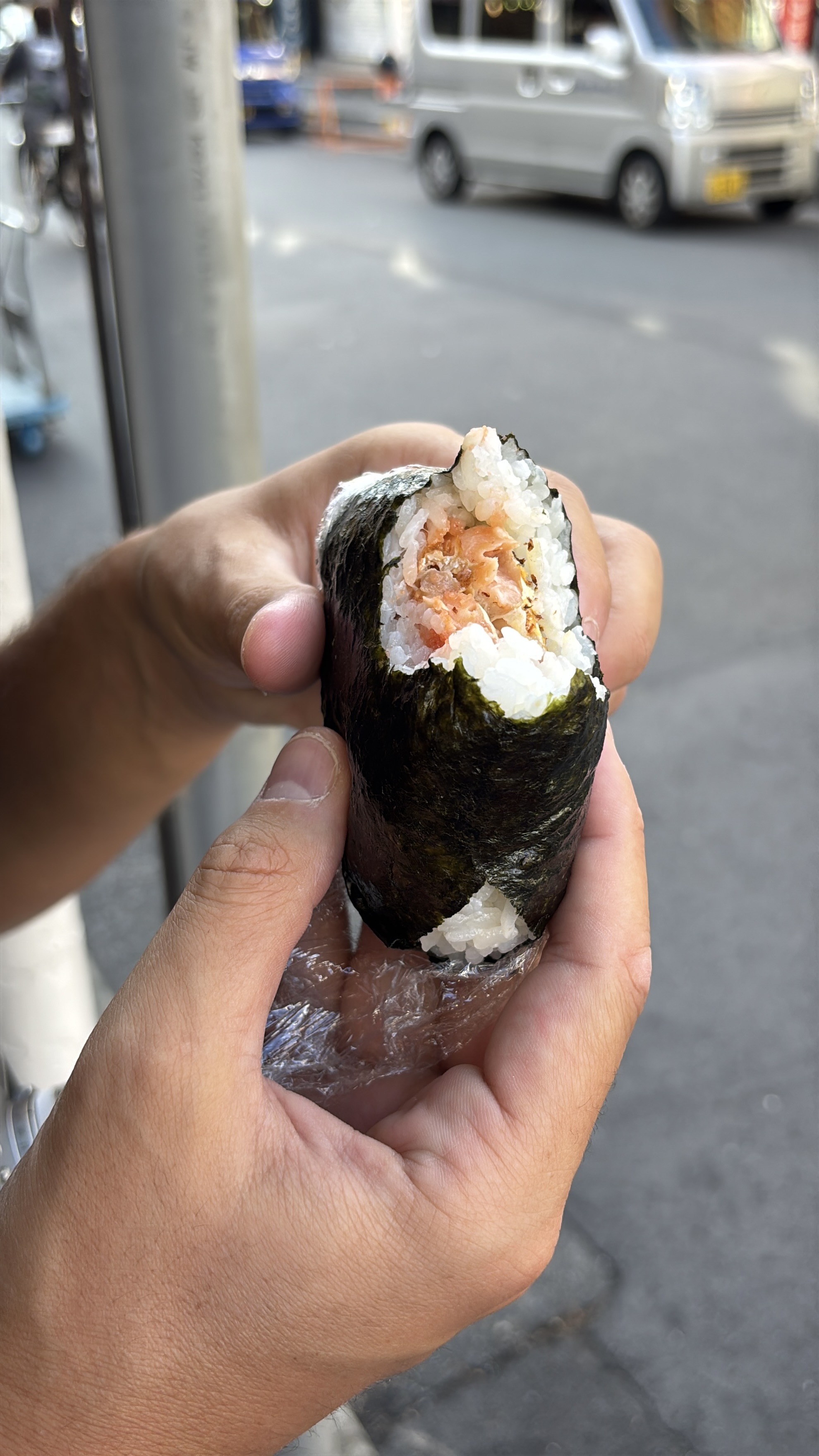

The outer market. It's dense and you'll get slightly lost. That's fine — just keep eating.
The outer market is not large but it's dense. The alleys are narrow and the layout is maze-like — you'll double back, get turned around, and stumble onto things you weren't looking for. This is exactly as it should be. Don't try to follow a map precisely; instead, arrive at the market edge and start walking in.
Rough layout: The main market area runs along Tsukiji Outer Market St (also called Fish Market St). The alleys running perpendicular to it contain most of the food stalls. The restaurant row is along the outer edges.
The knife shops: Tsukiji has some of the world's best Japanese kitchen knife shops — Tsukiji Masamoto and Aritsugu are the most famous. Even if you're not buying, they're worth a look. If you are buying, budget ¥5,000–50,000+ depending on type and quality.
Practical Tips
- Go early. 7–9am is the sweet spot — stalls are fully stocked, the atmosphere is at its peak, and you beat the lunchtime tourist rush. By 11am, many stalls are sold out of the best items.
- Bring cash. Many stalls are cash only. ATMs inside 7-Eleven (across the road from the market) accept foreign cards.
- Weekdays are better than weekends. Weekends bring more tourists and some regular stalls close. Wednesday the market is traditionally quieter due to mid-week wholesaler patterns.
- Don't bring big bags. The alleys are narrow. A small day bag or nothing is ideal.
- Eating while walking is generally okay here — it's a market, not a temple district. Stalls expect it.
- Graze rather than commit. Eat small amounts at multiple stalls rather than sitting down for one meal. This is how the market is designed to be experienced.
Planning your Tokyo food experience?
What About the Toyosu Tuna Auction?
The inner market (tuna auctions) moved to Toyosu in 2018. Tourist observation spots are available at Toyosu for the tuna auction, but access is limited and the lottery system for the prime viewing slot is competitive. Our honest opinion: the outer market at Tsukiji is more rewarding for most visitors than the Toyosu auction — the food experience is better and you don't need to win a lottery.
If you specifically want to see the tuna auction, apply for the Toyosu observation slot through Tokyo Metropolitan Central Wholesale Market's official site well in advance.
FAQ
Is Tsukiji Market still open in 2026?
Yes — the outer market is fully open and excellent. The inner wholesale market (tuna auctions) moved to Toyosu in 2018, but that's not what most visitors come for. The outer market stalls selling fresh seafood, tamagoyaki, street food and kitchen supplies are all still there.
What time does Tsukiji Market open?
Most stalls open from around 5–6am. The best window is 7–9am on weekdays — fully stocked, good atmosphere, before the main tourist rush. Many stalls close or sell out by noon.
Is Tsukiji Market worth visiting?
It's one of the first things we list in our guide to the best things to do in Tokyo. The combination of extraordinary fresh seafood, the market atmosphere, and the chance to eat one of the best breakfasts of your life for €20 makes it unmissable. Go on a weekday, go early, bring cash.
Is Tsukiji Market only about fish?
Primarily fish and seafood, but also tamagoyaki, pickles, dried goods, produce, and kitchen equipment. The knife shops alone are worth a visit for anyone who cooks.
How do I get to Tsukiji Market?
Tsukiji Station on the Tokyo Metro Hibiya Line (3-minute walk), or Tsukijishijo Station on the Toei Oedo Line (5-minute walk). Either works — both are within easy walking distance of the outer market entrance.
More Tokyo Guides
Some links in this post are affiliate links. If you book through them, we earn a small commission at no extra cost to you — it helps us keep writing guides like this one.