Tokyo is the greatest food city in the world. That's not an opinion — it's the most Michelin-starred city on the planet, and it has been for years.
But what makes it truly extraordinary isn't the fine dining. It's the fact that you can eat one of the best meals of your life at a standing counter for €12, or pull back a plastic curtain on an unmarked door in Shinjuku and find something unforgettable. Tokyo takes food seriously at every single level — and that changes how you travel. Apart from all the other incredible things Tokyo has to offer, if you're still deciding whether the city is worth the trip, read our honest review first.
We ate our way through Tokyo obsessively. These are the spots that genuinely stayed with us.
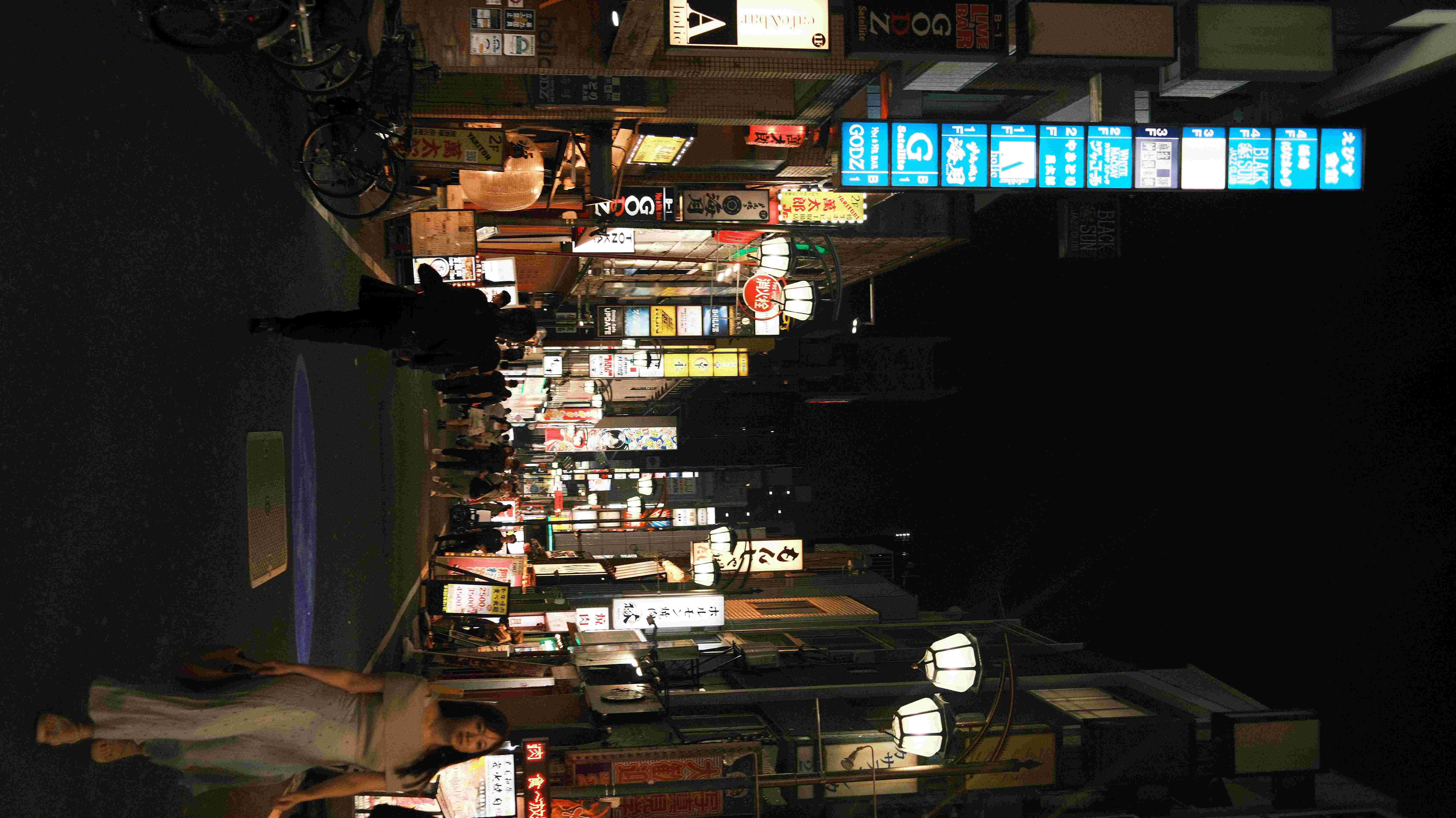
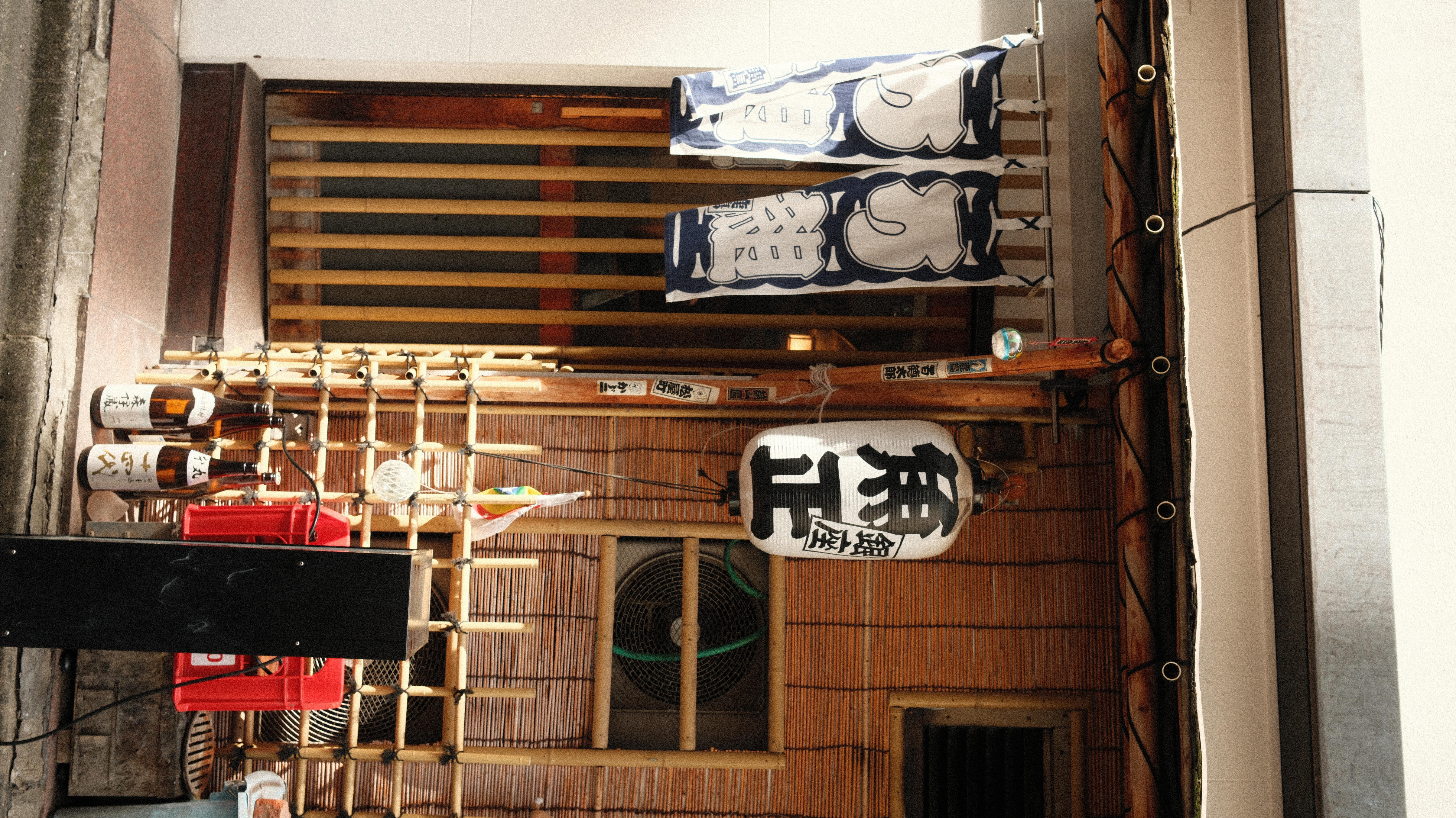
Tokyo's izakaya culture. Pull back the noren curtain and find something extraordinary.
Before You Eat: A Few Things to Know
Tokyo's food scene can feel overwhelming — not because it's hard to navigate, but because the options are infinite. A few things that helped us:
- Queues mean quality. If there's a line outside a small restaurant at 11:45am, get in it. Tokyo queues for things that are worth it.
- Standing restaurants are not a compromise. Some of our best meals were eaten standing at a counter. The format keeps things fast and the quality high.
- Convenience stores are genuinely good. 7-Eleven, Lawson, and FamilyMart sell food that beats most restaurants back home. Onigiri, sandwiches, hot snacks — don't overlook them.
- Lunch is the best value. Many high-end spots do lunch sets at half the dinner price. If you want to try somewhere special, go at lunch.
- Google Translate camera function handles any Japanese menu. Download it offline before you arrive.
Our Top Picks: Best Restaurants in Tokyo
Udon Shin — Shinjuku
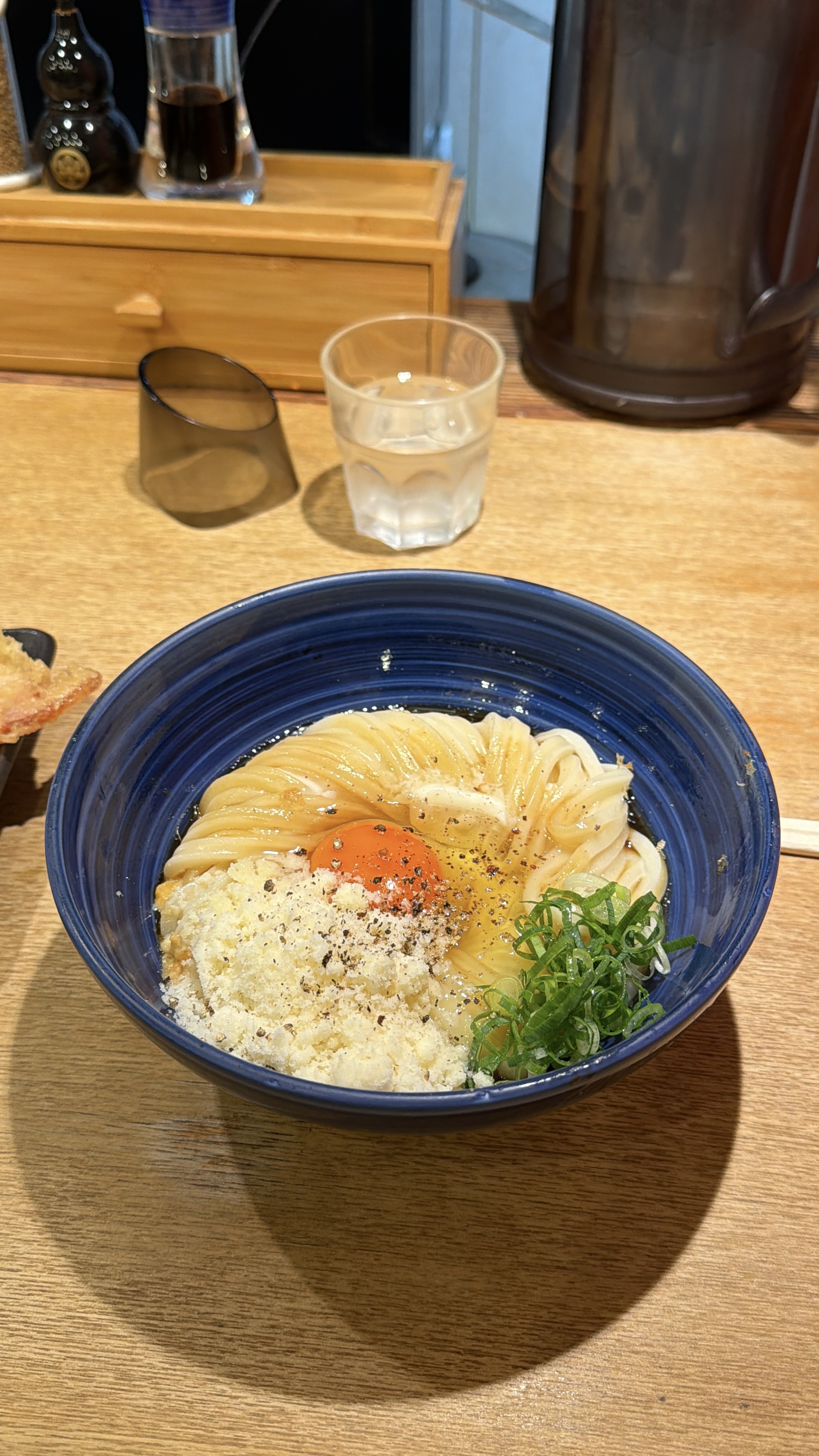
Tokyo's noodle culture runs deep. This is what a bowl of udon can be.
What it is: A tiny udon restaurant in Shinjuku that does one thing perfectly — rich, silky carbonara-style udon that completely reframes what noodles can be.
What to order: The Mentaiko Cream Udon. Thick, handmade noodles in a creamy, savoury sauce with spicy cod roe. Nothing like what you'd expect from "udon." Around €12–15.
The honest take: There will be a queue. It moves fast. Worth every minute of it — this was one of the most memorable dishes we had in all of Japan, not just Tokyo.
Shinjuku · Lunch and dinner · Expect to queue · Cash and card
Uogashi Nihon-Ichi — Shibuya
What it is: A standing sushi counter — no seats, no ceremony, just very good sushi at very good prices. Multiple locations, the Shibuya one being the most convenient.
What to order: Order whatever looks freshest at the counter. We had fatty tuna (otoro), scallop, and raw shrimp. Three pieces each and drinks came to around €15 per person. In Tokyo. At a sushi counter. That is impossible value.
The honest take: This is not the sushi experience you'll tell your grandchildren about. It's the one you'll tell your friends about when they ask where to eat in Tokyo on a budget.
Shibuya · All day · No reservation needed · Standing only
Tsukiji Outer Market — Ginza area
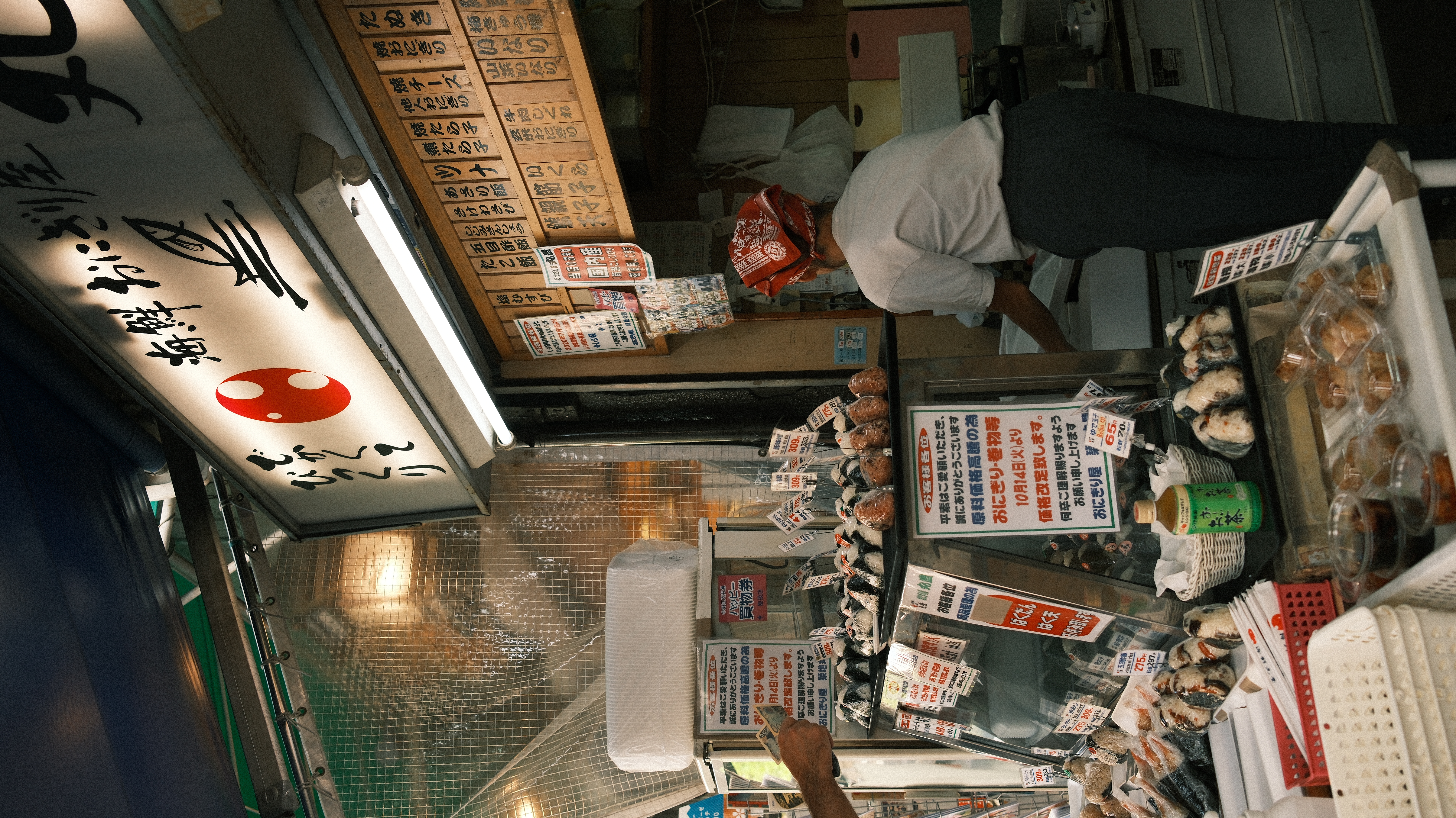
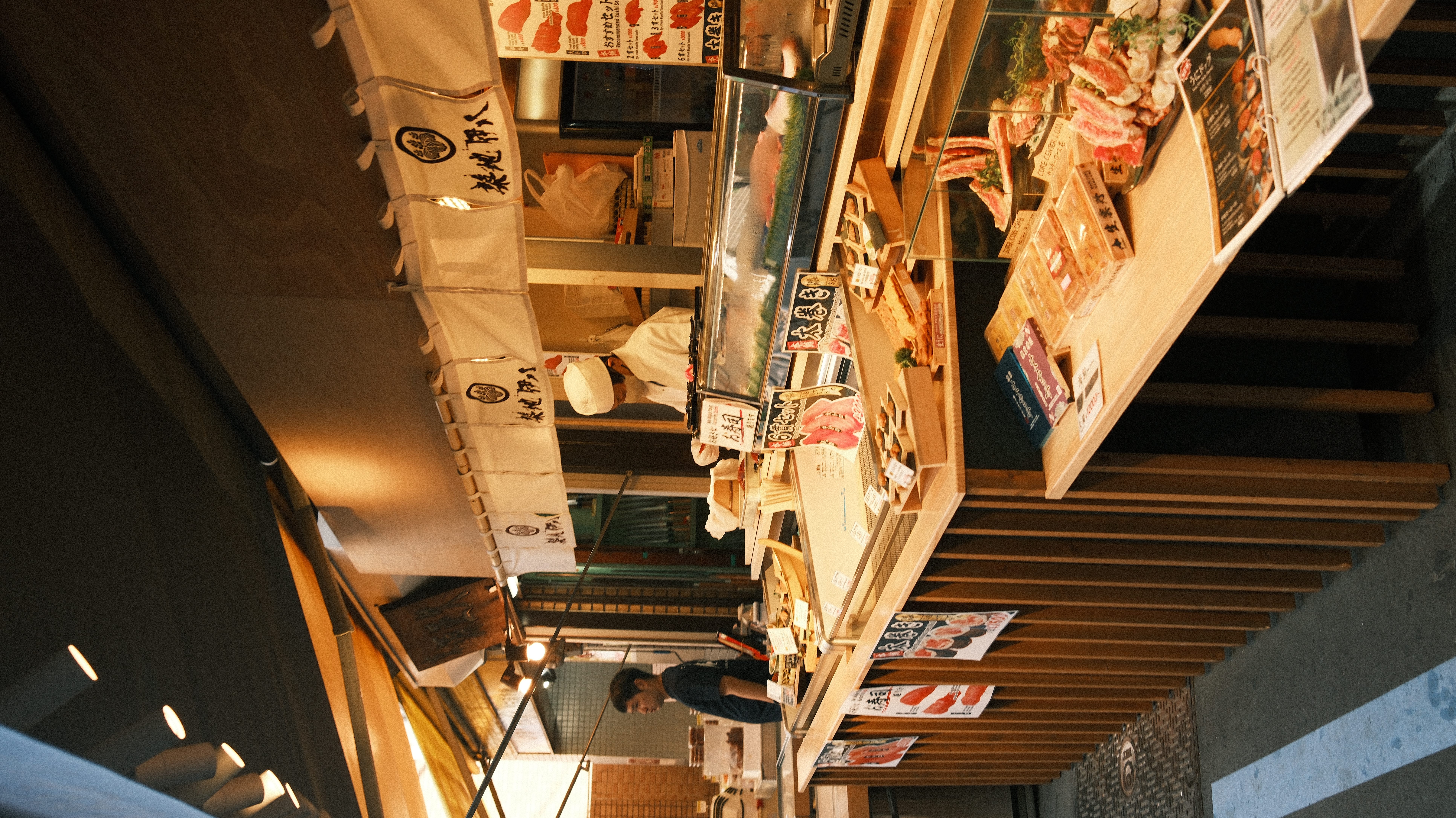
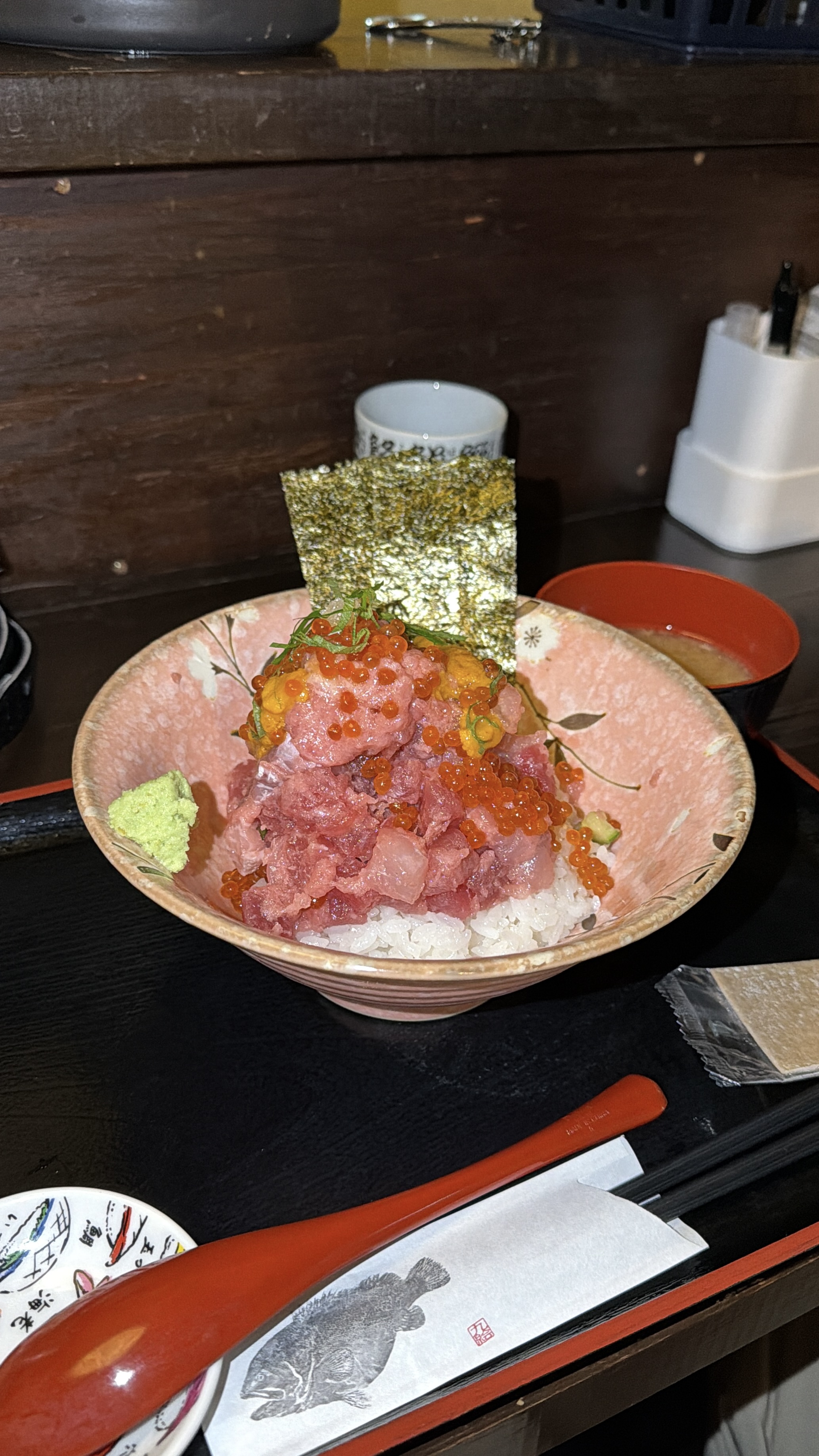
Tsukiji at 8am. Arrive hungry, bring cash, eat everything.
What it is: Tokyo's famous market, technically now the outer market (the inner wholesale fish market moved to Toyosu in 2018). The outer market — the part tourists care about — is still very much alive with dozens of stalls selling street food, fresh seafood, and market snacks.
What to eat: Toro nigiri (fatty tuna sushi, made in front of you), wagyu beef skewers, fresh oysters, tamagoyaki (rolled egg omelette, a Tsukiji classic), uni (sea urchin) on rice. Budget around €20 and eat until you're done.
What to know: Go early — before 9am if you can. It gets crowded by 10am. Most stalls are cash only. It pairs perfectly with a morning in nearby Ginza. We've written a complete Tsukiji Market guide covering exactly what to eat, which stalls to find, and how to navigate the maze.
The honest take: One of the best food experiences in all of Japan. Don't skip it.
Ginza / Tsukiji · Morning only (most stalls close by early afternoon) · Cash preferred
Rare Tendon Ginza Mitsuyoshi — Ginza
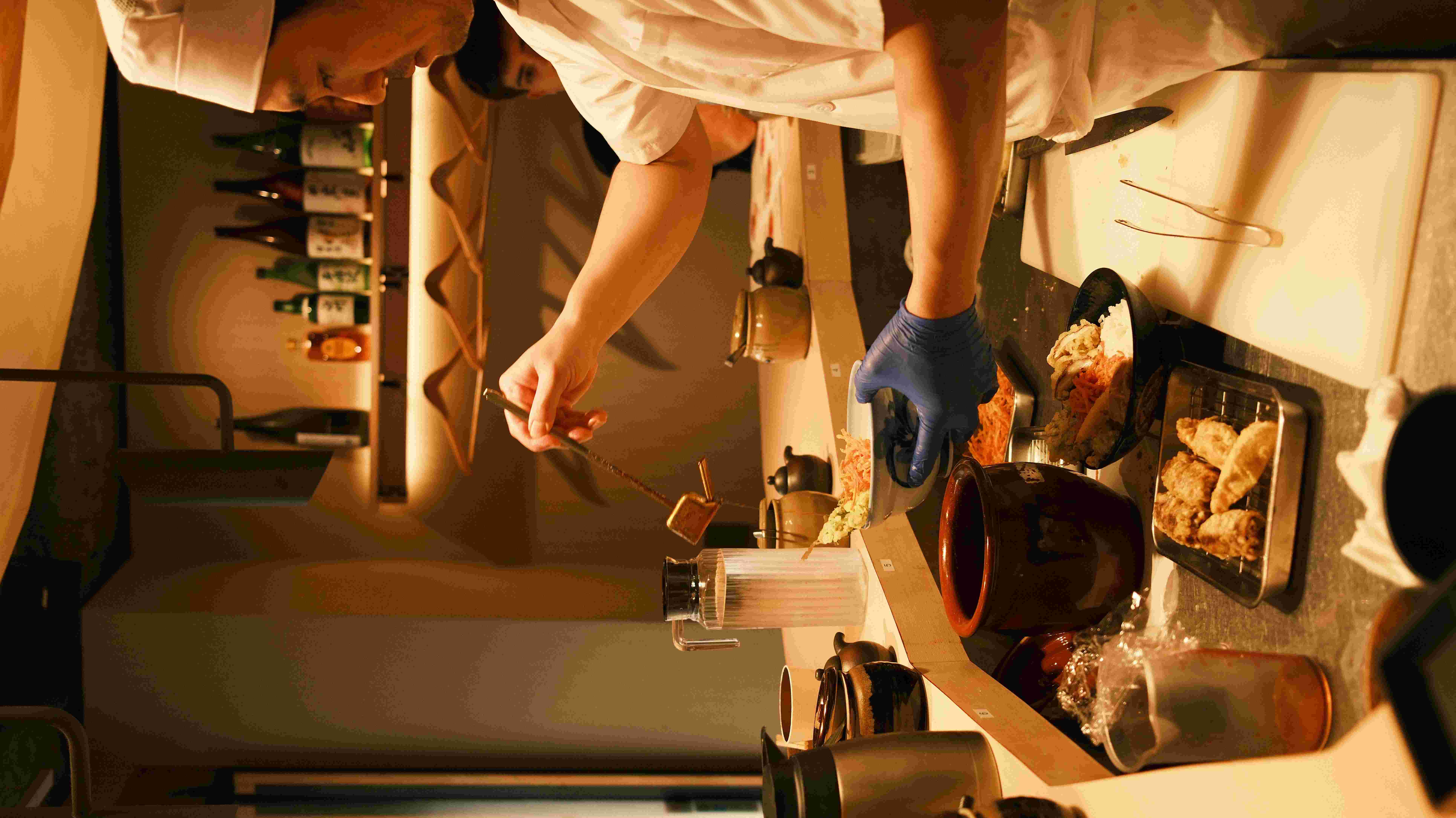
Watching tempura fried to order is half the experience.
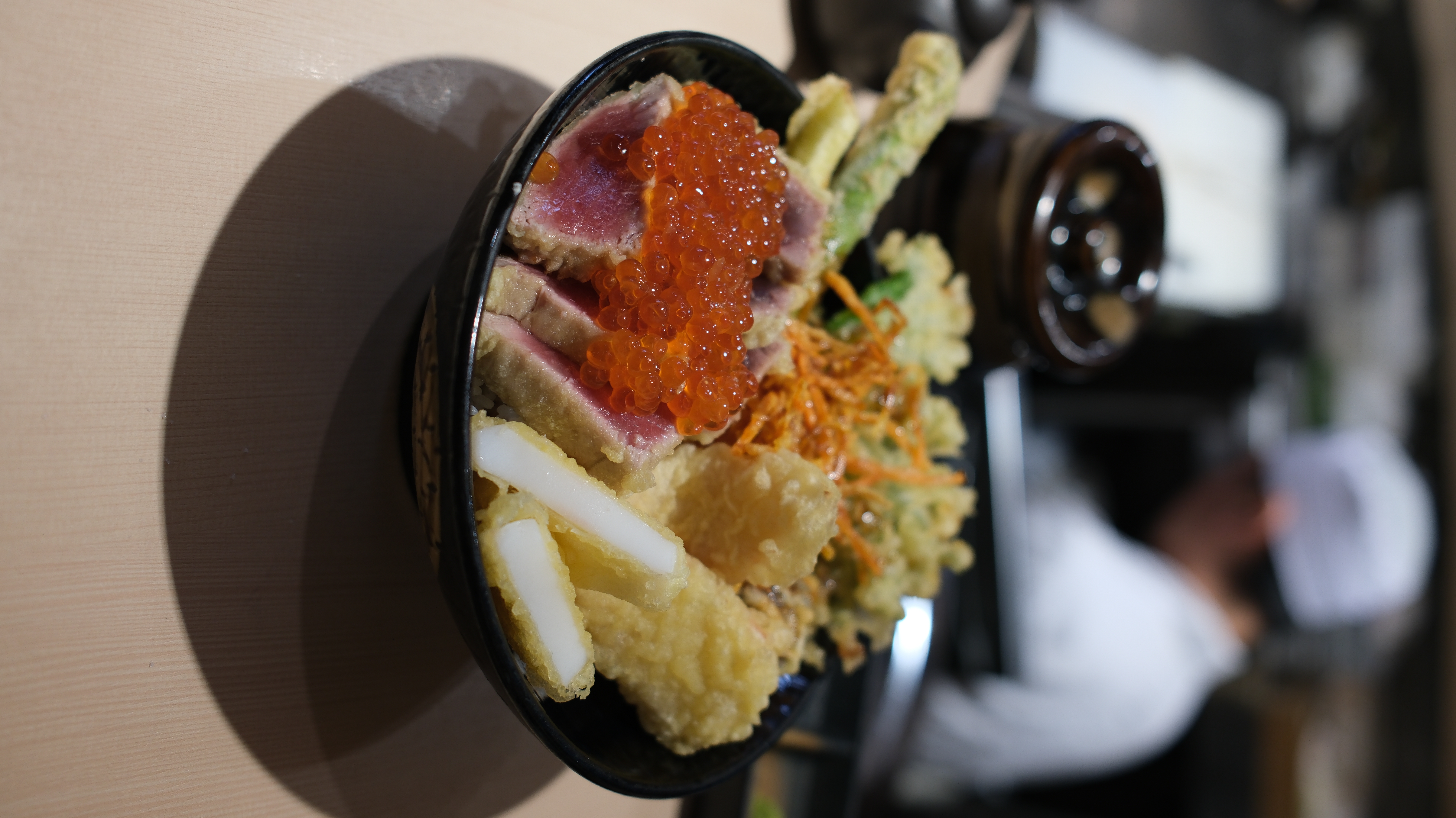
What it is: A tempura bowl (tendon) specialist in Ginza. The concept is simple: perfectly fried tempura over rice, served in a lacquered bowl.
What to order: The rare tendon set — slightly pink prawn tempura with vegetables, over rice, with miso soup. Light, not greasy, proof that simplicity done perfectly beats complexity every time. Around €15–20.
The honest take: We didn't expect to be this impressed by a tempura rice bowl. The batter is genuinely different — almost impossibly light. If you're spending a morning at Tsukiji and an afternoon in Ginza, this is lunch.
Ginza · Lunch and dinner · Expect a queue at lunch · Small space
Noda — Fine Dining Omakase
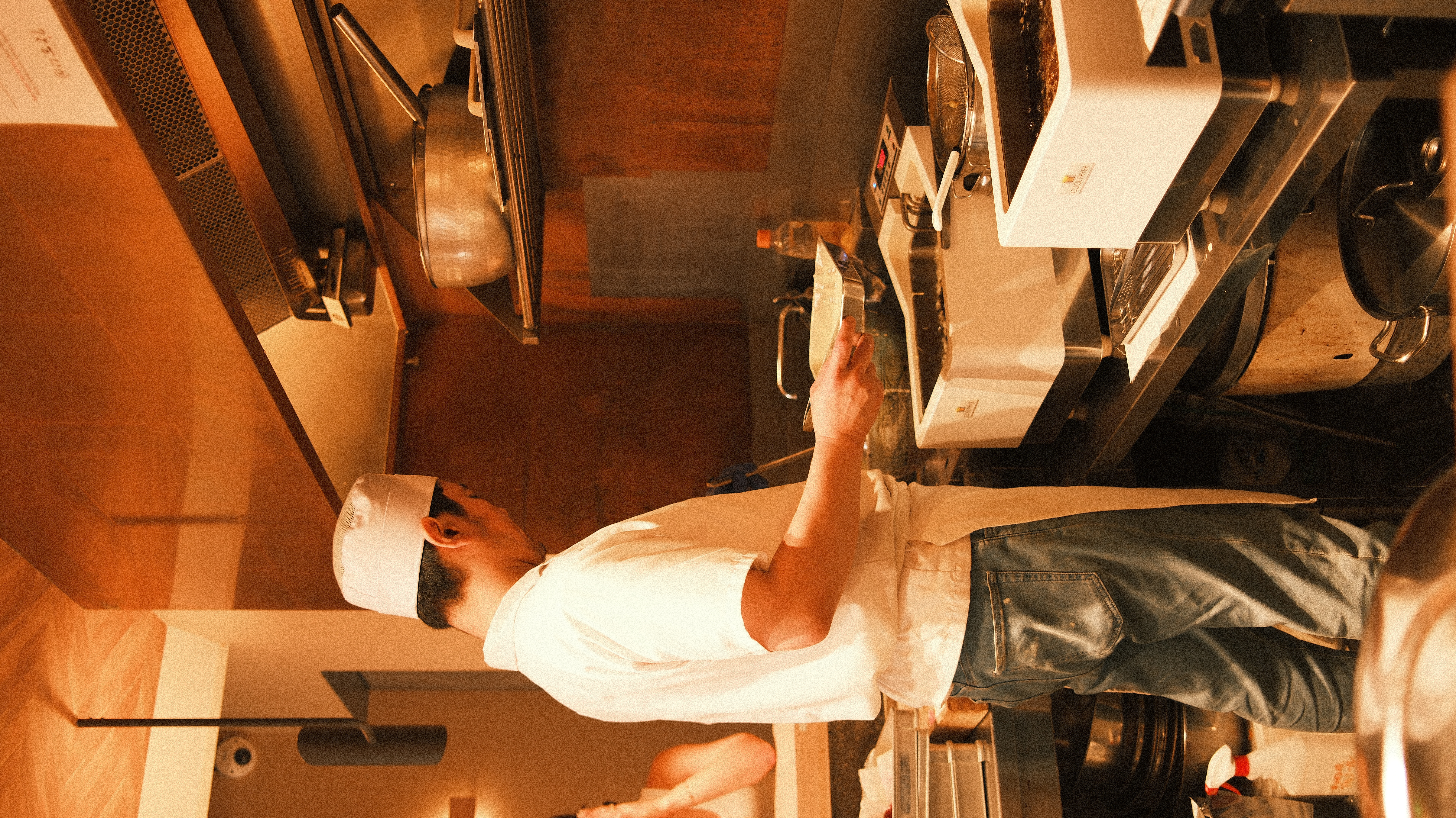
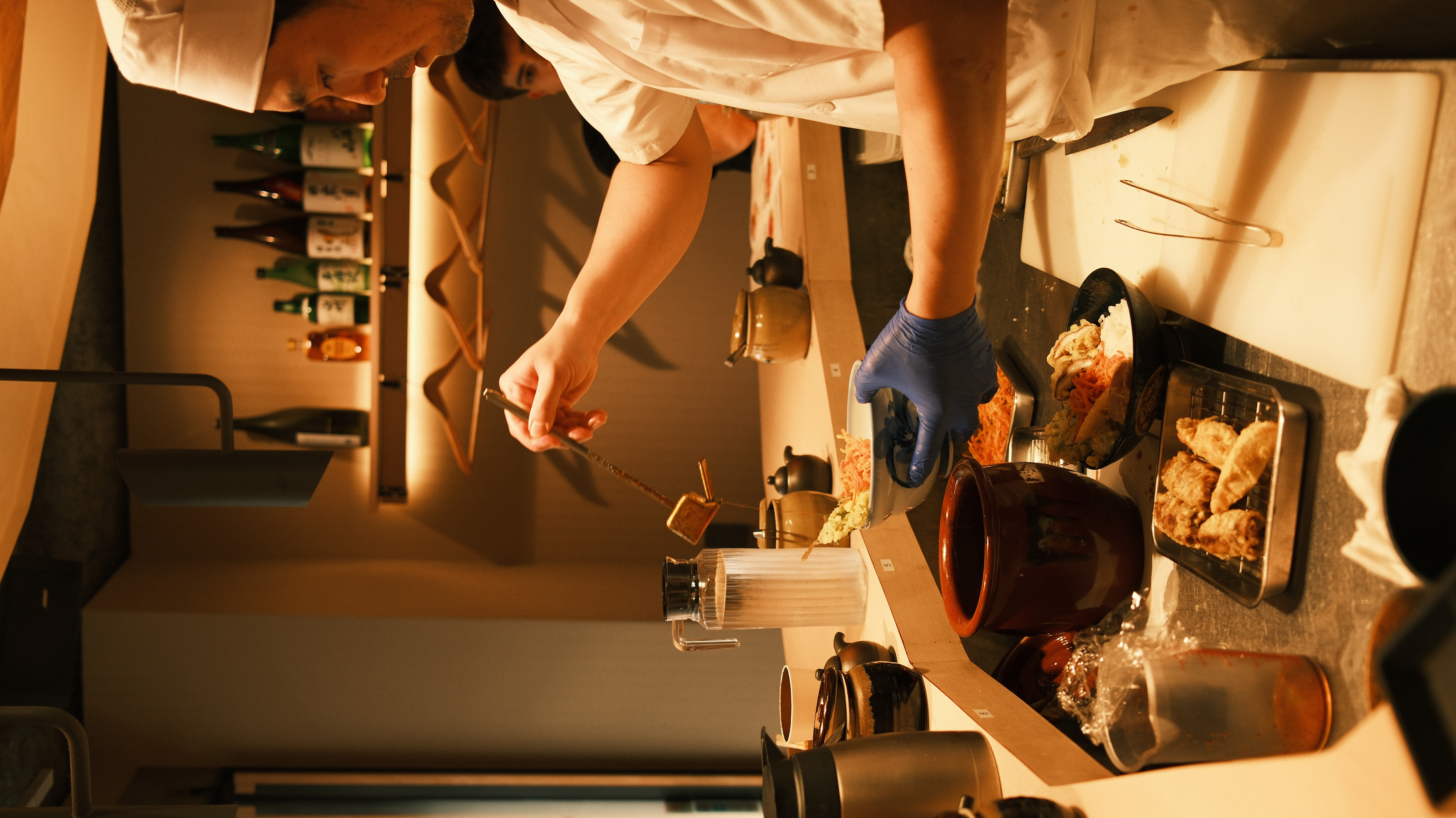
Omakase is theatre as much as dinner. Counter seats, chef in full view, no menu.
What it is: An omakase restaurant — chef's choice, course by course, with no menu. You sit at the counter, you trust the chef, and you eat whatever is best that day.
What to expect: 8–12 courses. Each dish is a considered decision. The meal tells a story about Japanese ingredients, seasons, and technique. One of the best dining experiences of our lives — not because it was fancy, but because every single dish meant something.
The honest take: This is not an everyday meal. It's a special occasion. Budget €100–200+ per person. Book well in advance — these seats are limited and go quickly. If you're going to do one fine dining experience in Tokyo, make it an omakase.
Book via Tableall, Omakase.com, or directly · Several weeks in advance · Counter seating only
Ramen — The Alleys of Shinjuku and Shibuya
We're not going to name one ramen spot because the honest answer is: the best ramen in Tokyo is the bowl you find yourself. Walk the back streets of Shinjuku around Kabukicho, look for a place with a plastic food display and a vending machine ticket system (you buy your bowl from a machine before you sit — it's a Tokyo thing), sit at the counter, and eat.
What to look for:
- Tonkotsu (pork bone broth) — rich, cloudy, deeply savoury
- Shoyu (soy-based) — cleaner, lighter, Tokyo's traditional style
- Tsukemen (dipping ramen) — thick noodles served alongside a concentrated broth for dipping. Different and very good.
Budget €8–12 per bowl. Add a soft-boiled egg (ajitsuke tamago) and chashu pork.
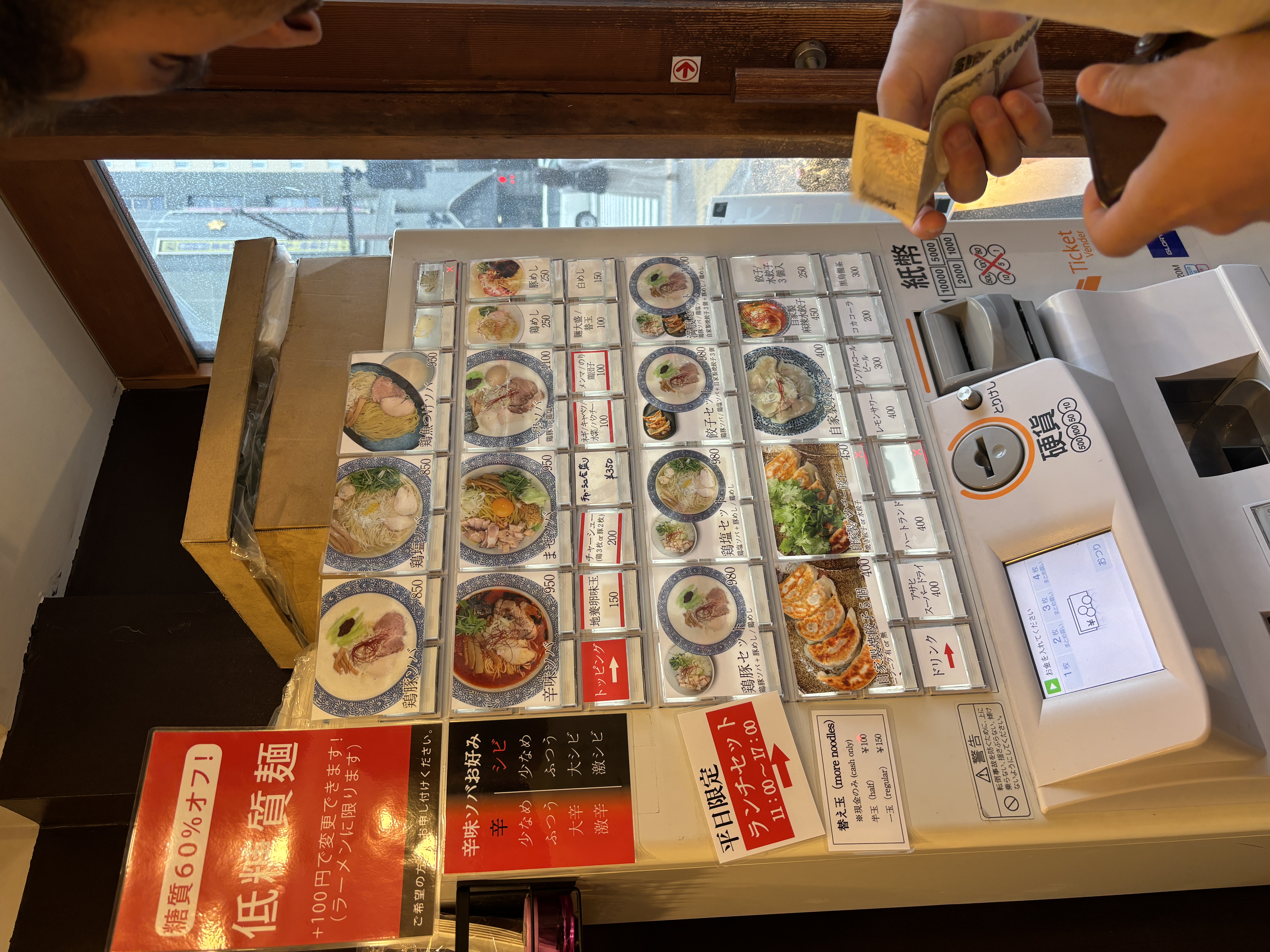
The vending machine ticket system. Buy your bowl before you sit. There's usually an English option.
Gyukatsu Motomura — Multiple Locations
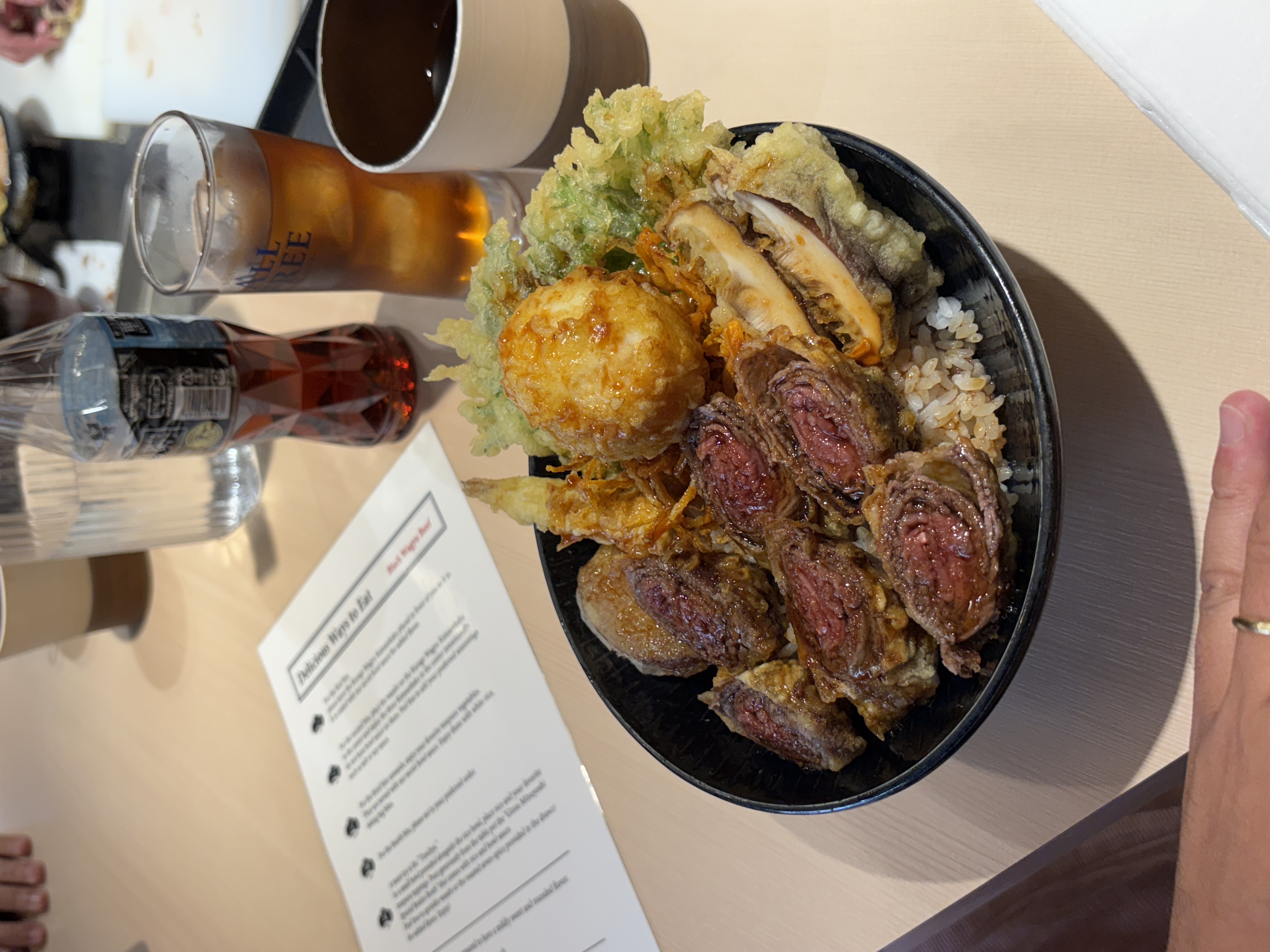
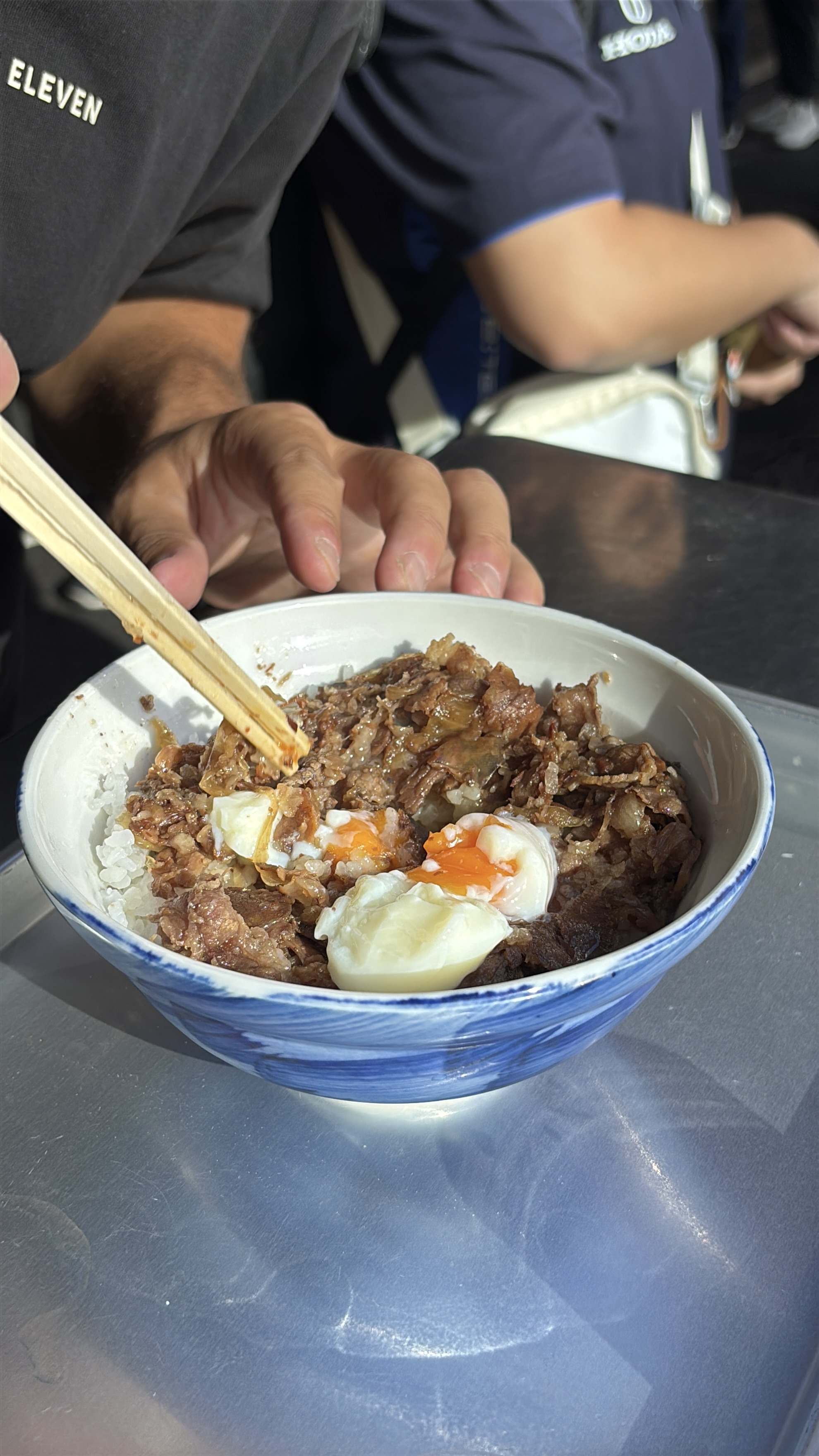
What it is: Beef katsu — breaded, lightly fried beef cutlet served rare, with a small grill at your table to cook it further to your liking. Served with rice, miso soup, and shredded cabbage. A Tokyo institution.
What to order: The standard gyukatsu set. Cook the beef to medium on the grill, dip it in the provided sauces (try the dashi soy). Around €12–16.
The honest take: The queue can be long, especially at the Shibuya location. Worth it. One of those Tokyo experiences that's also genuinely delicious.
Multiple locations · Lunch and dinner · Queue expected at peak times
Golden Gai — Shinjuku
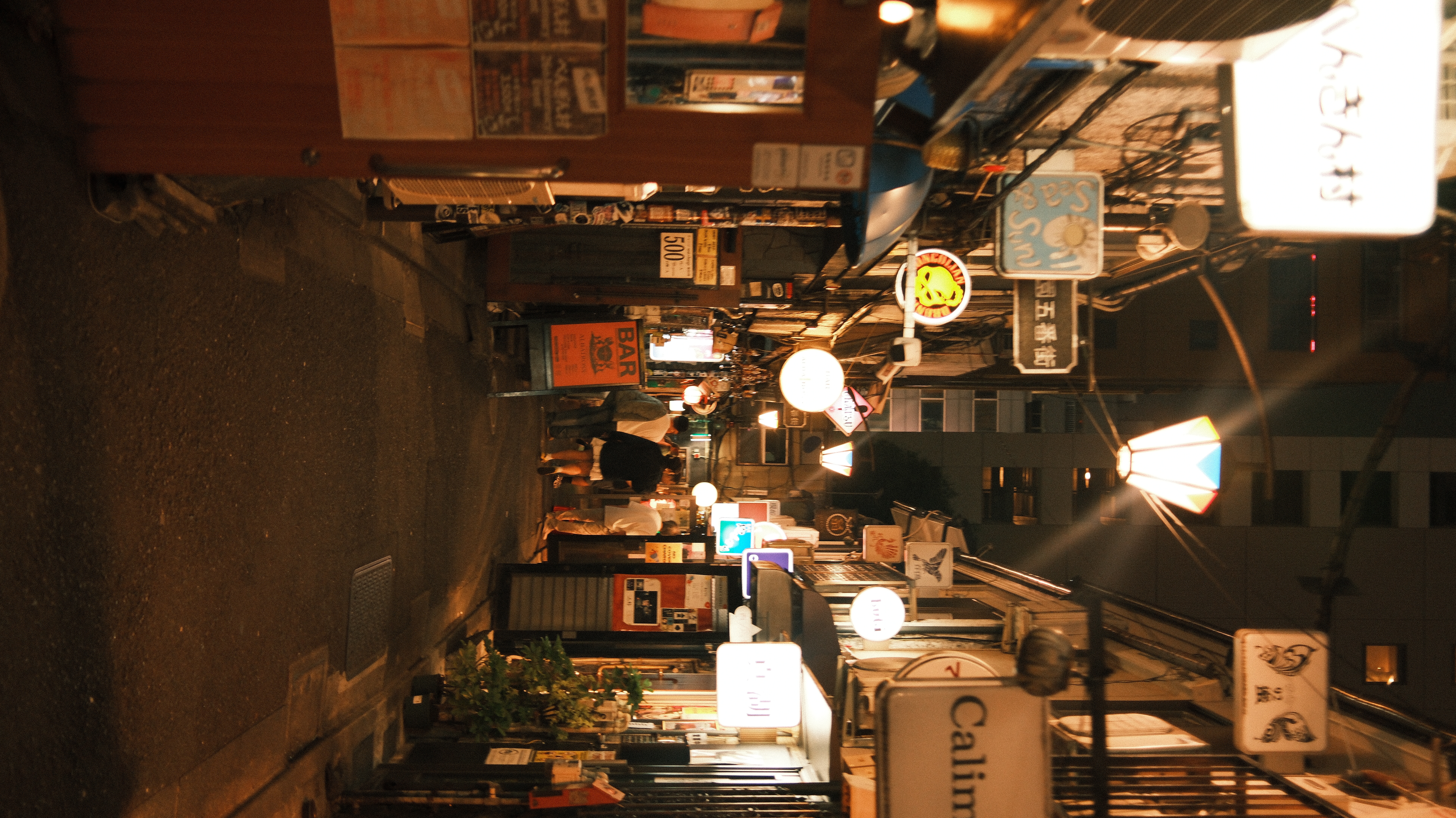
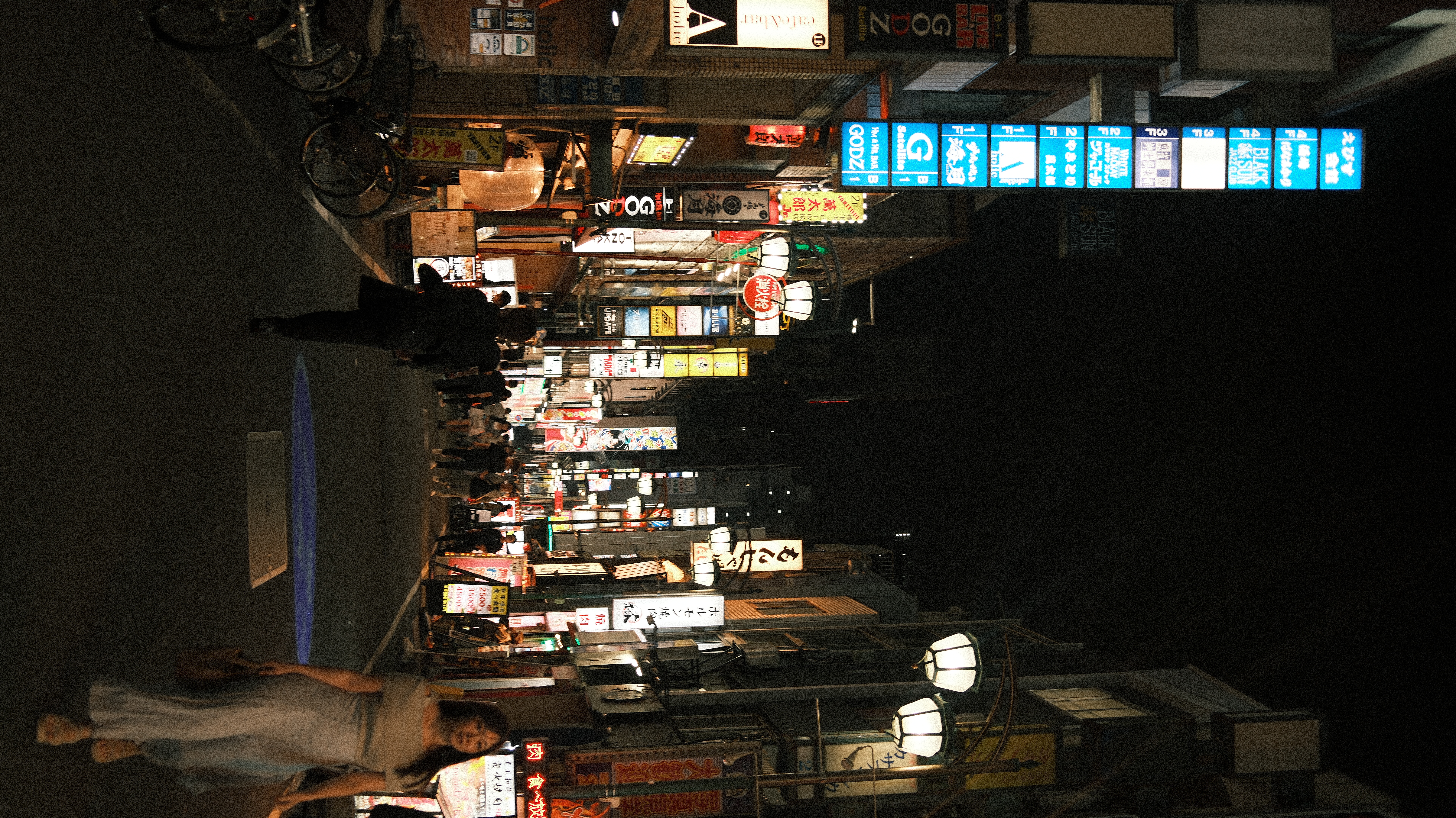
Golden Gai at night. Six alleys, around 200 bars, and a Tokyo you won't find anywhere else.
Golden Gai isn't technically a restaurant — it's an area of Shinjuku made up of six narrow alleyways lined with around 200 tiny bars, each seating between 6 and 12 people. Some serve food, most just serve drinks. All of them have a personality.
What to do: Walk the alleys, read the handwritten signs outside each bar (some are theme bars — jazz, film, horror, literature), pick one that feels right, and go in. Most bars have a cover charge of €3–5. Drinks are €5–8. The experience is priceless.
The honest take: This is one of those Tokyo things that sounds strange on paper and is extraordinary in person — we've also included it in our guide to the best things to do in Tokyo, because nothing else quite compares to an evening here. Go on a weeknight if you can — weekends get crowded. Go with someone you like talking to.
Shinjuku · Evening only · Cash preferred · Most bars have a cover charge
What We'd Skip
The big tourist ramen chains (Ichiran, Ippudo chain locations near tourist areas) — they're fine but they're not what makes Tokyo ramen special. Walk one block further and find something local.
Conveyor belt sushi near tourist attractions — the quality drops significantly at the ones positioned near Shibuya Crossing, Asakusa, etc. If you want kaiten-zushi (conveyor belt), go to a local neighbourhood version.
Any restaurant with a photograph menu outside and English staff waiting to pull you in — this is true everywhere in the world, but especially in Tokyo where the better places require you to make a small effort to find them.
A Note on Budget
Tokyo's food scene is exceptional at every price point. You can eat brilliantly for €15–25 per day if you're strategic (market breakfasts, standing lunch counters, convenience store dinners). You can also spend €200 on a single omakase meal. Both are valid choices — and both deliver value in ways that would be hard to find in any other city.
If you want a full breakdown of food costs and daily budgets, we've covered it in our Is Tokyo Expensive? guide.
FAQ
What is the best restaurant in Tokyo?
That depends entirely on what you're looking for. For the most memorable single meal, an omakase counter. For the best value, Tsukiji Market in the morning or a standing sushi counter like Uogashi Nihon-Ichi. For noodles, Udon Shin in Shinjuku.
Is Tokyo good for food lovers?
It's the best food city in the world. More Michelin stars than Paris or New York, extraordinary street food, and a culture that takes every type of cuisine — from convenience store onigiri to €200 omakase — completely seriously.
How much does food cost in Tokyo?
More affordable than you'd expect. A bowl of ramen is €8–12. Standing sushi is €10–15. A market breakfast at Tsukiji is €15–20. Fine dining omakase is €100–200+. See our full Tokyo budget guide for a complete breakdown.
Do I need to book restaurants in Tokyo in advance?
For fine dining and omakase, yes — book weeks or months ahead. For everything else, just turn up. Even popular spots like Udon Shin and Gyukatsu Motomura work on a queue system.
Is Osaka's food scene better than Tokyo's?
Osaka is known as Japan's food capital and the street food scene there is extraordinary — takoyaki, okonomiyaki, kushikatsu. But Tokyo has more range, more Michelin stars, and more depth across every cuisine type. They're different rather than one being better. If you're visiting both, read our Japan destination guide for how to split the time.
Can I eat well in Tokyo without speaking Japanese?
Completely. Most menus have photos, and the Google Translate camera function handles any written menu. The vending machine ticket system at ramen restaurants usually has an English option too.
More Tokyo Guides
Our Verdict
Tokyo will change what you expect from food. Not because every meal is expensive or elaborate — but because the standard is so consistently high at every level that you stop thinking about where to eat and start thinking about what to eat next.
Start at Tsukiji Market for breakfast. Find a ramen counter for lunch. Grab coffee at one of the city's extraordinary cafes in the afternoon. Let Golden Gai take care of the evening. Repeat for as many days as you have — and see our 1-week Tokyo itinerary for how to build the whole trip around eating well.
Some links in this post are affiliate links. If you book through them, we earn a small commission at no extra cost to you — it helps us keep writing guides like this one. We only recommend places we've actually been to and would genuinely go back to.