Yes — TeamLab Borderless is worth it. It's one of the most genuinely original experiences in Tokyo and unlike anything we'd seen before.
That said: you need to know what it is and what it isn't before you go. It's not a gallery where you walk through rooms of artwork. It's a building-sized environment where the art flows continuously between spaces, responds to your presence, and has no defined route or beginning or end. Some people find it transcendent. Some find it overwhelming. We found it extraordinary — with one caveat explained below.
| Location | Azabudai Hills, Minato, Tokyo (new location — opened February 2024) |
|---|---|
| Tickets | ¥3,200 (~€20) for adults. Must be pre-booked at teamlab.art |
| Time needed | 2–3 hours minimum; you can stay longer |
| Best time slot | First entry of the day (10am) or late afternoon (4–5pm) |
| Book in advance? | Yes — essential. Often sells out weeks ahead on weekends |
| Getting there | Roppongi-Itchome Station (Namboku/Toei Oedo Line) or Azabu-Juban (Namboku/Oedo) — 5-minute walk |
What Is TeamLab Borderless?
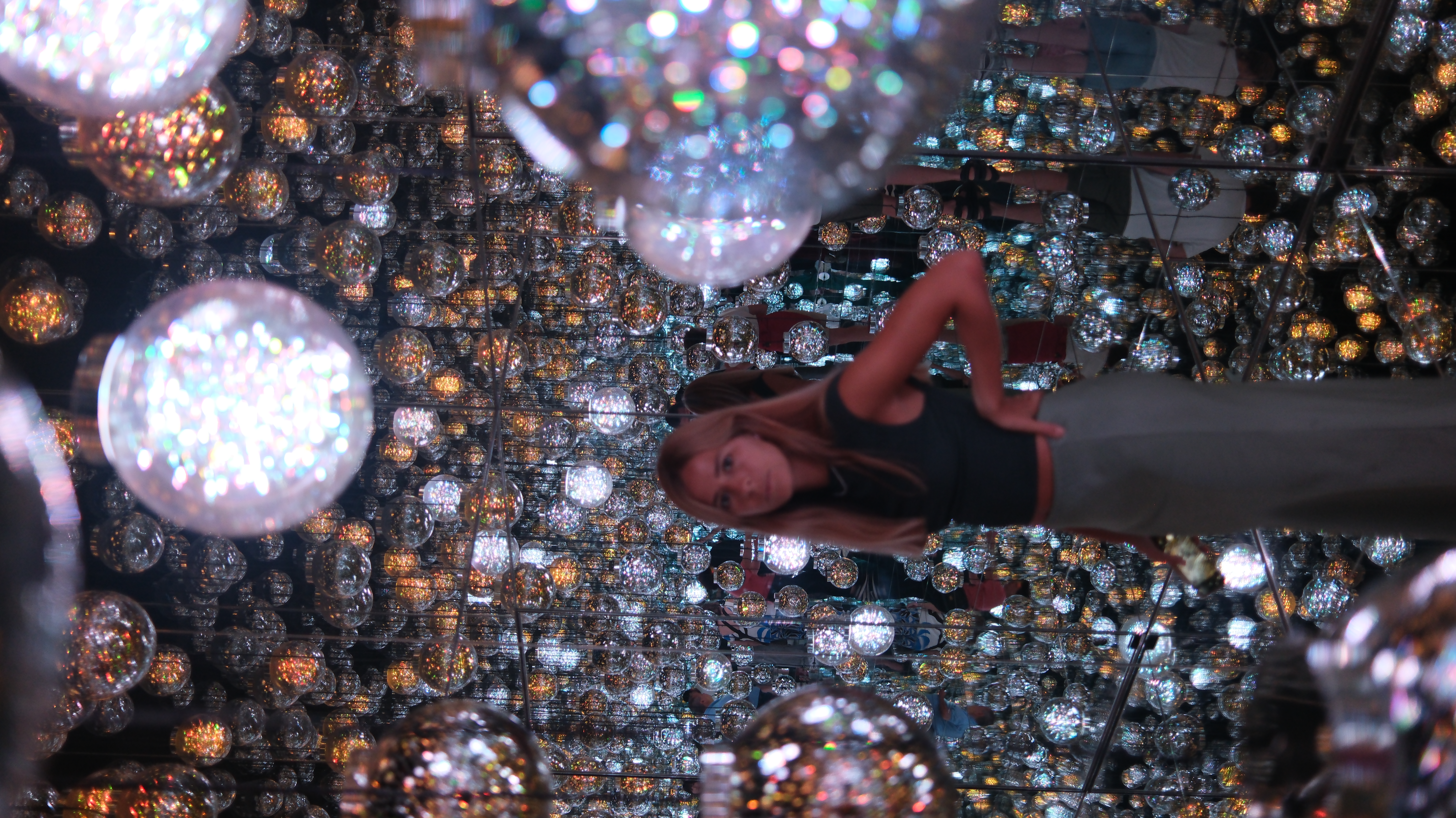
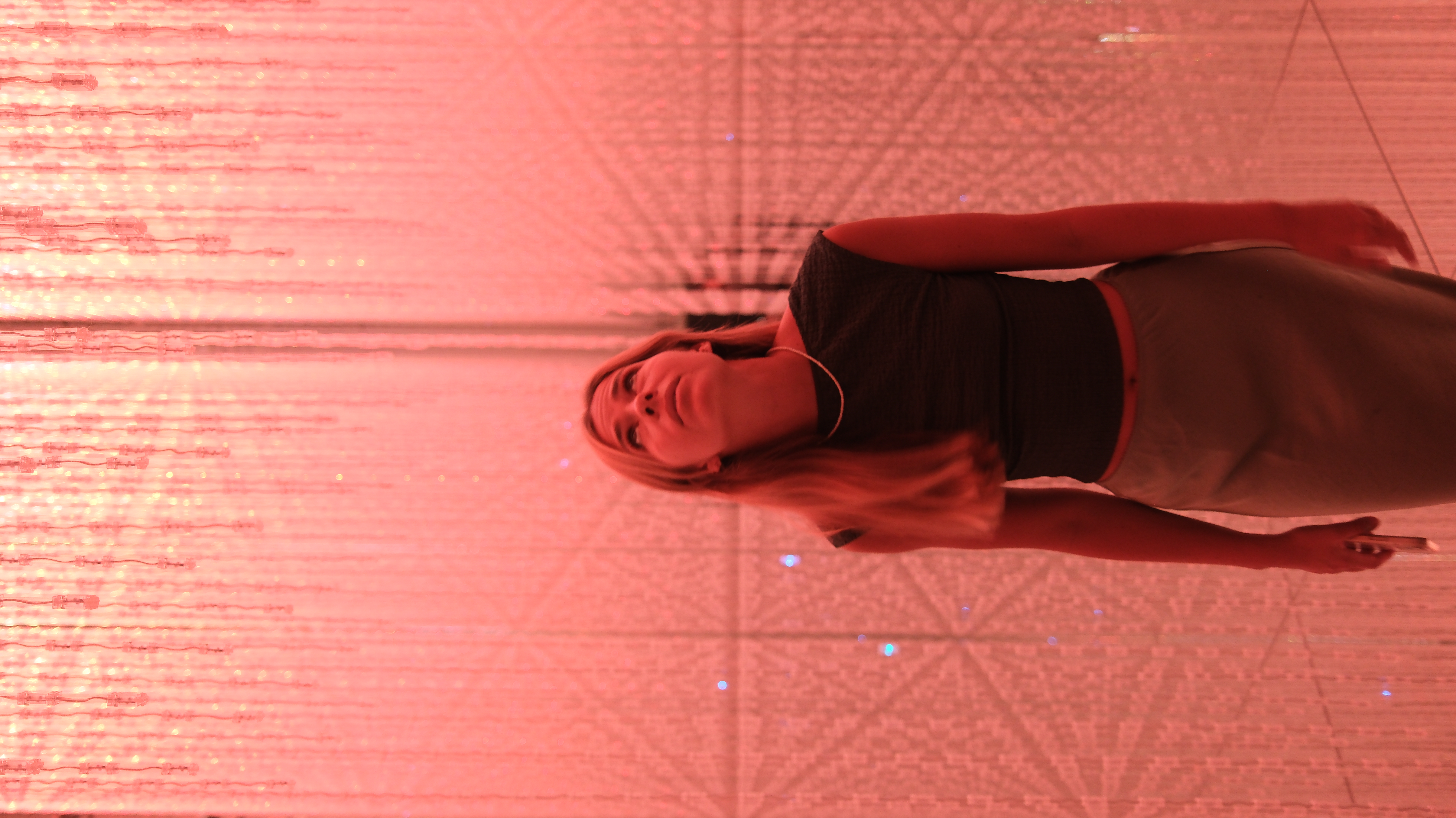
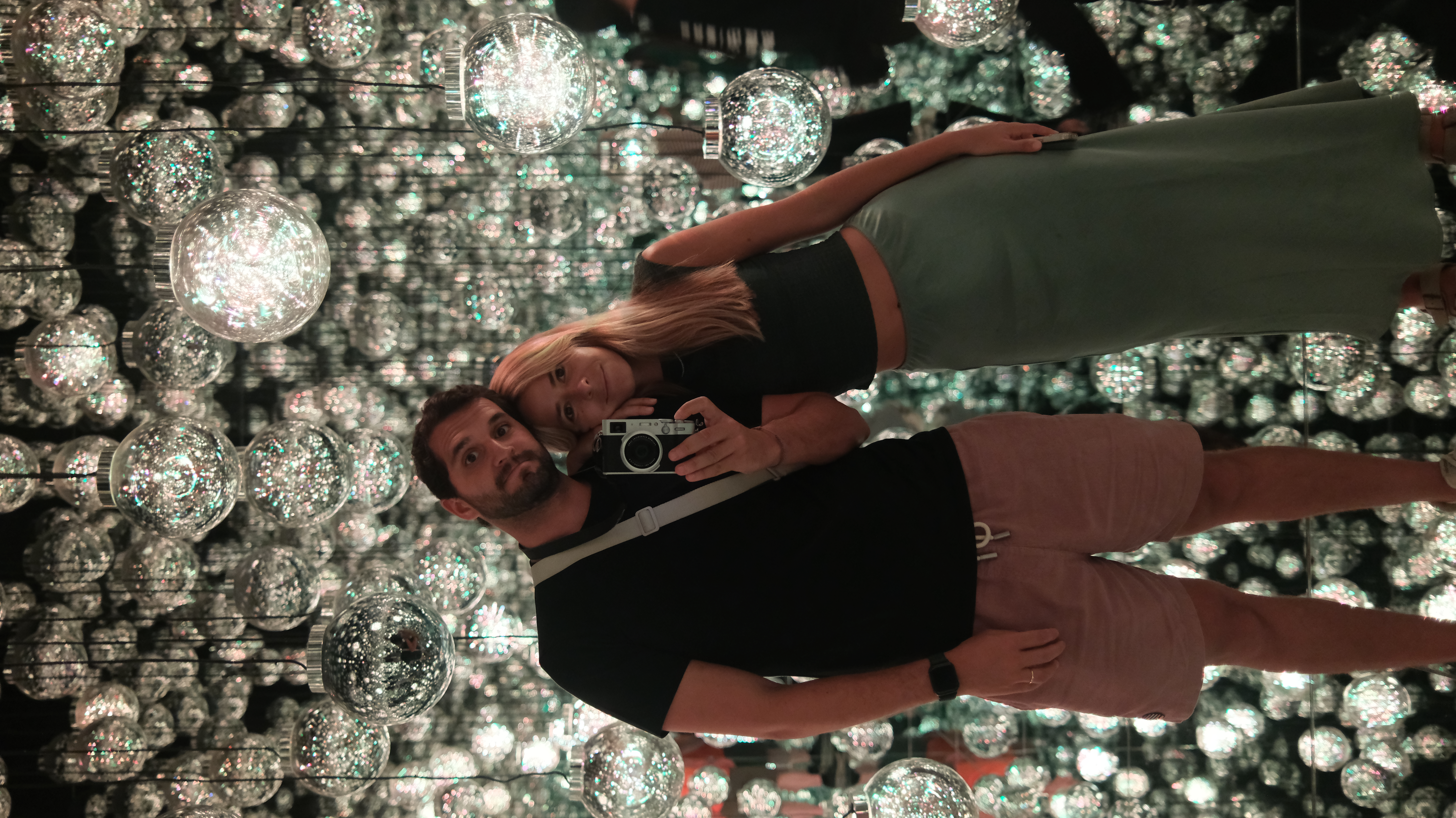
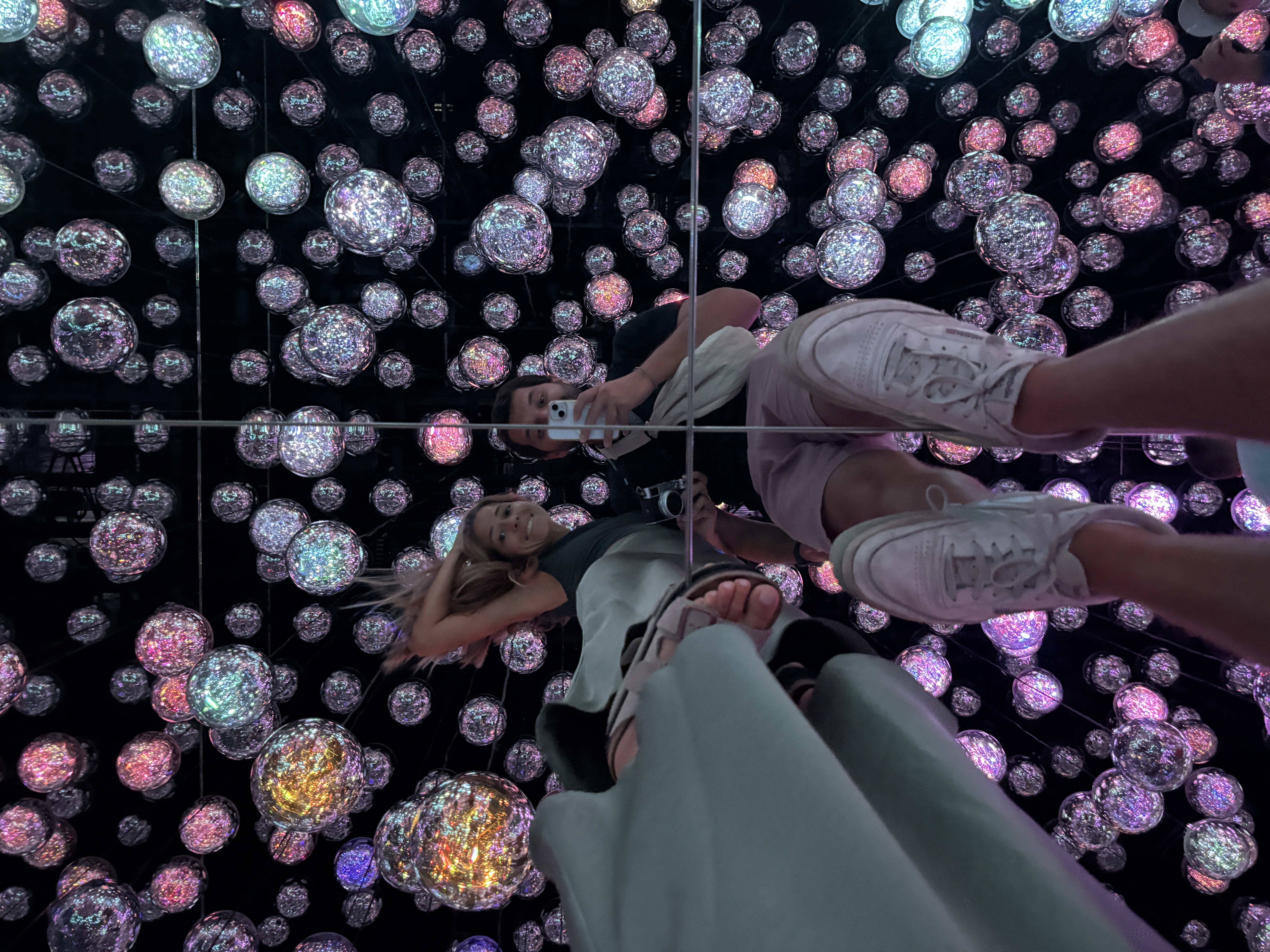
The mirror installation. Light responds to every movement around you.
TeamLab is a Japanese art collective that creates large-scale immersive digital installations — the kind where entire rooms become living artwork. Borderless (as distinct from TeamLab Planets in Toyosu, which is a different experience) is designed as a single continuous space without defined paths or a set sequence. The artworks are connected and influence each other. Light and imagery flow between rooms, following visitors, reacting to touch and movement.
The new Azabudai Hills location (which replaced the original Odaiba Borderless that ran from 2018–2023) is larger and has new works not seen in the original. The building is purpose-built for the experience — the original was housed in a converted warehouse, this one is integrated into the new Azabudai Hills architecture.
What We Loved
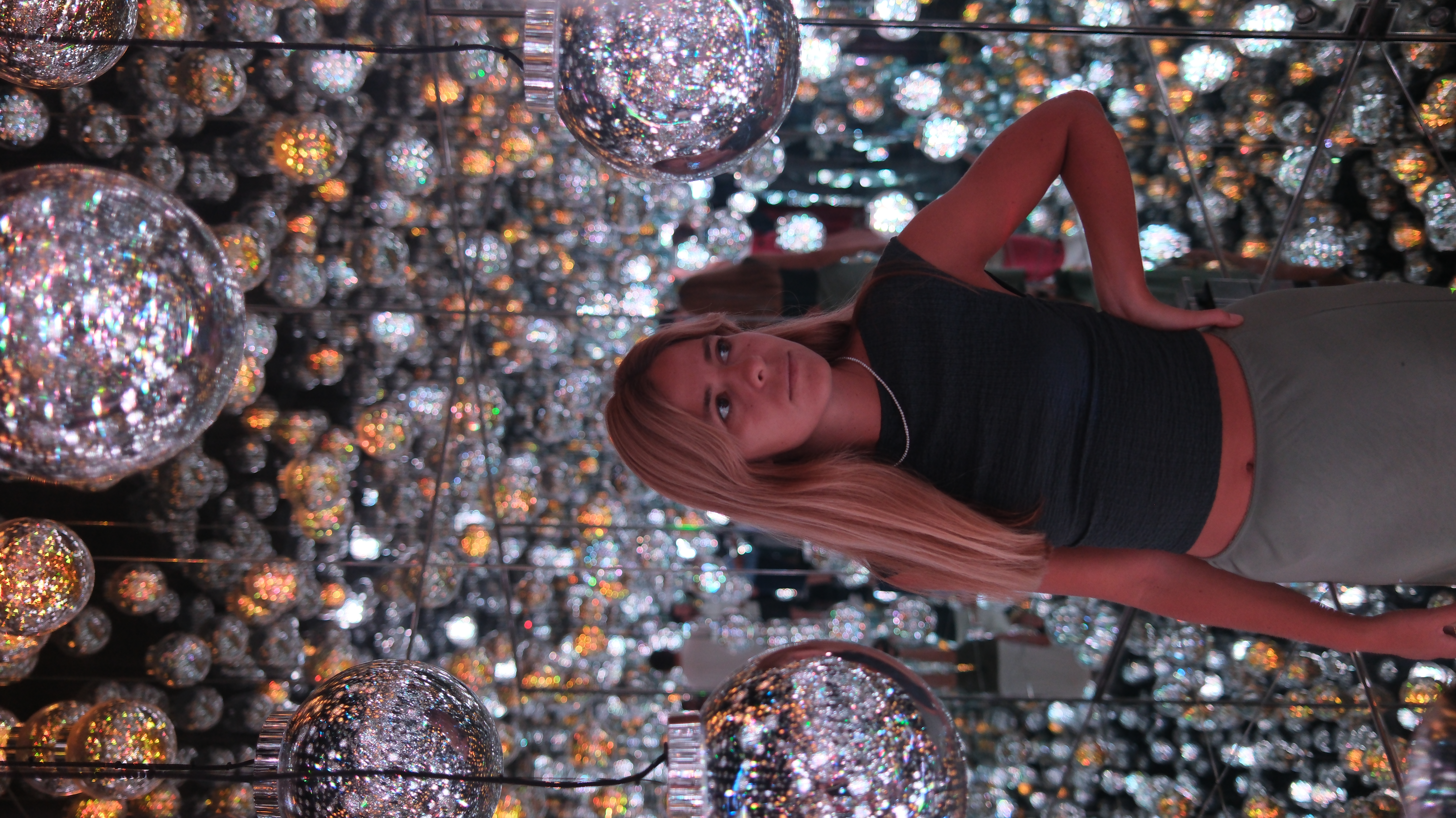
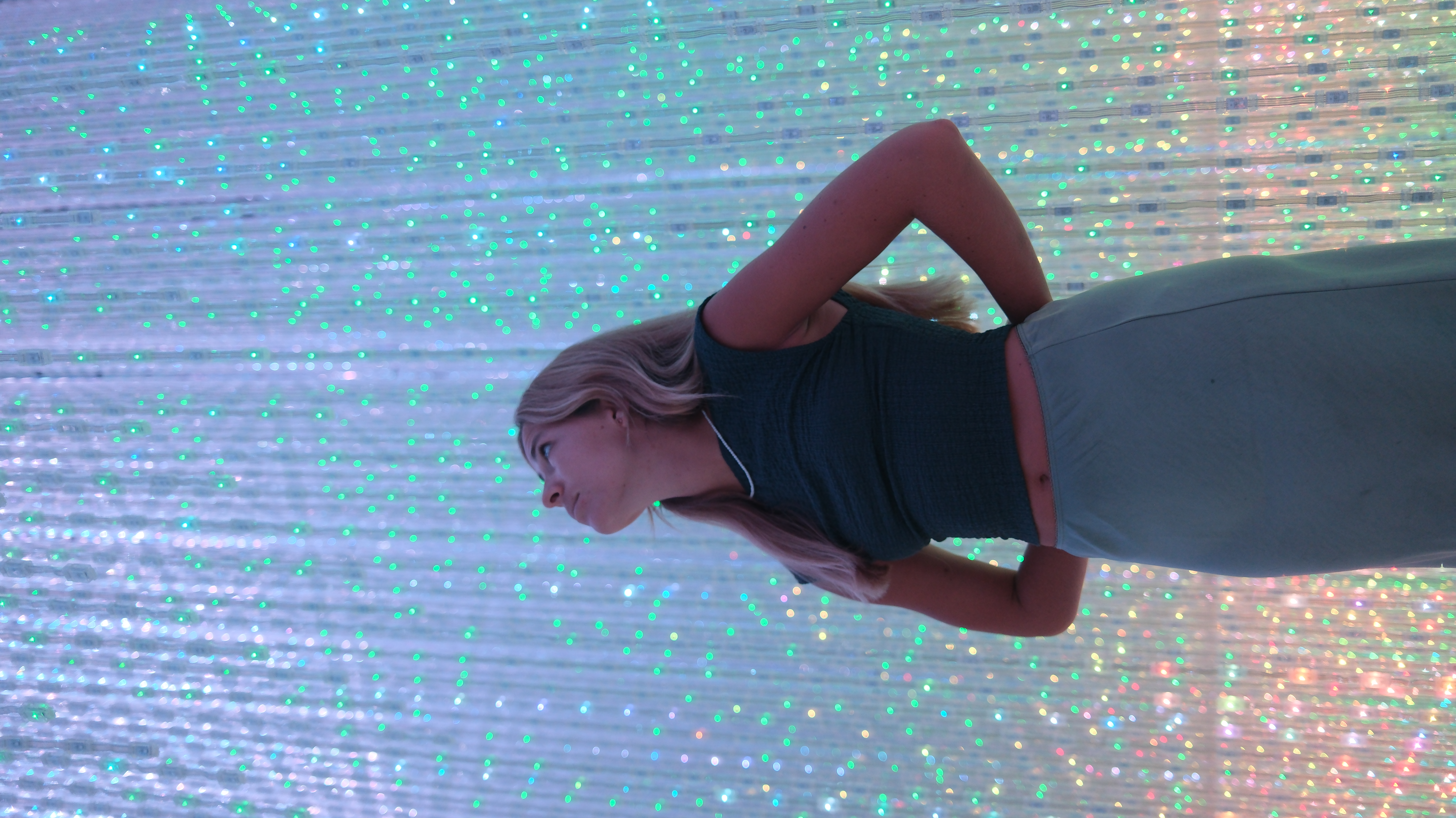
The scale of it. You walk into a room and realise you cannot see the walls — the reflections and light projections extend the space into apparent infinity. The flower rooms, where thousands of projected blossoms bloom and fall on every surface around you (floor, ceiling, walls), are genuinely breathtaking. The space feels like entering a dream.
The interactivity. The artwork responds to your presence — touch a surface and it ripples; stand still and light accumulates around you. This isn't a passive experience.
The tea house. There's a traditional Japanese tea house inside TeamLab Borderless where you can have a bowl of matcha while surrounded by the immersive artwork. One of the strangest and most beautiful things we've done.
The Honest Negative
It gets crowded. During peak hours (typically 1–3pm on weekends), some of the most popular installations become very full, and the intimacy of the experience suffers when you're shoulder-to-shoulder with 50 other people photographing the same room. This is our main caveat. The solution: go at first entry (10am) when the building is still quiet, or late afternoon when the day crowds have mostly left. Weekdays are significantly better than weekends.
Also: some people arrive expecting to be alone with the art, which almost never happens. If you want solitude with the installations, you won't find it. If you can embrace the collective experience — hundreds of people moving through light together — it's magical.
TeamLab Borderless vs. TeamLab Planets
Tokyo has two TeamLab experiences: Borderless (Azabudai Hills, Minato) and Planets (Toyosu). They're different.
| Borderless | Planets | |
|---|---|---|
| Size | Large — multiple rooms, hours to explore | Smaller — 4 main installations, ~90 min |
| Format | Non-linear, no defined route | Linear — you walk through in sequence |
| Physical experience | Mostly visual | Immersive — you wade through shallow water in one room |
| Best for | First-timers wanting the full experience | Those who want something more physical/sensory |
| Our pick | ✓ Borderless | Worth it if you have time for both |
If you only have time for one: Borderless. If you're staying in Tokyo for a week and love the kind of experience, do both on different days.
Planning your Tokyo days?
How to Book TeamLab Borderless
- Go to teamlab.art and select Borderless Tokyo (Azabudai Hills)
- Choose your date and time slot (entry is in 30-minute windows)
- Book as far in advance as possible — weekends especially sell out weeks ahead
- Tickets are tied to your booking date and time and are non-refundable (though can sometimes be exchanged)
- The app is available on iOS and Android and can enhance the experience, but isn't required
If your preferred date is sold out: Check back — cancellations release, and the site updates in real time. Early morning is sometimes when last-minute cancellations appear.
Tips for Visiting
- Go at opening time (10am). The building fills as the day progresses. First hour is the best.
- Wear flat shoes. You'll be walking on uneven surfaces including shallow water pools in some rooms.
- Wear dark colours if you want photos. The projections show up on light clothing in interesting ways — both can work, but dark is more dramatic.
- Don't rush. Budget 2–3 hours minimum. Sitting in one room and watching how the light changes over 20 minutes is more rewarding than rushing through everything.
- The tea house requires a separate booking within the TeamLab app, made on the day.
- Photography is allowed and encouraged. Tripods are not. The space is designed for phones and standard cameras.
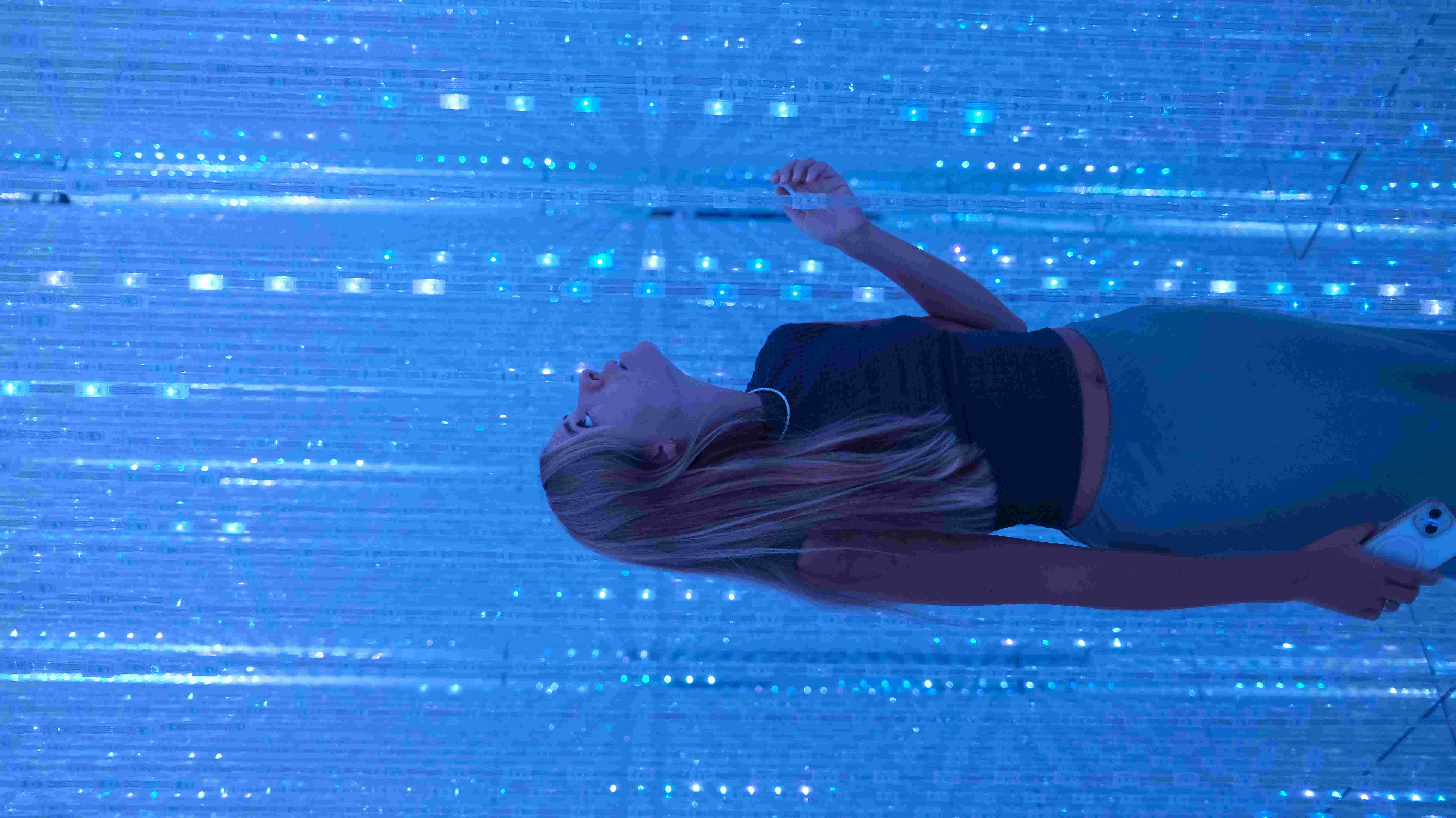
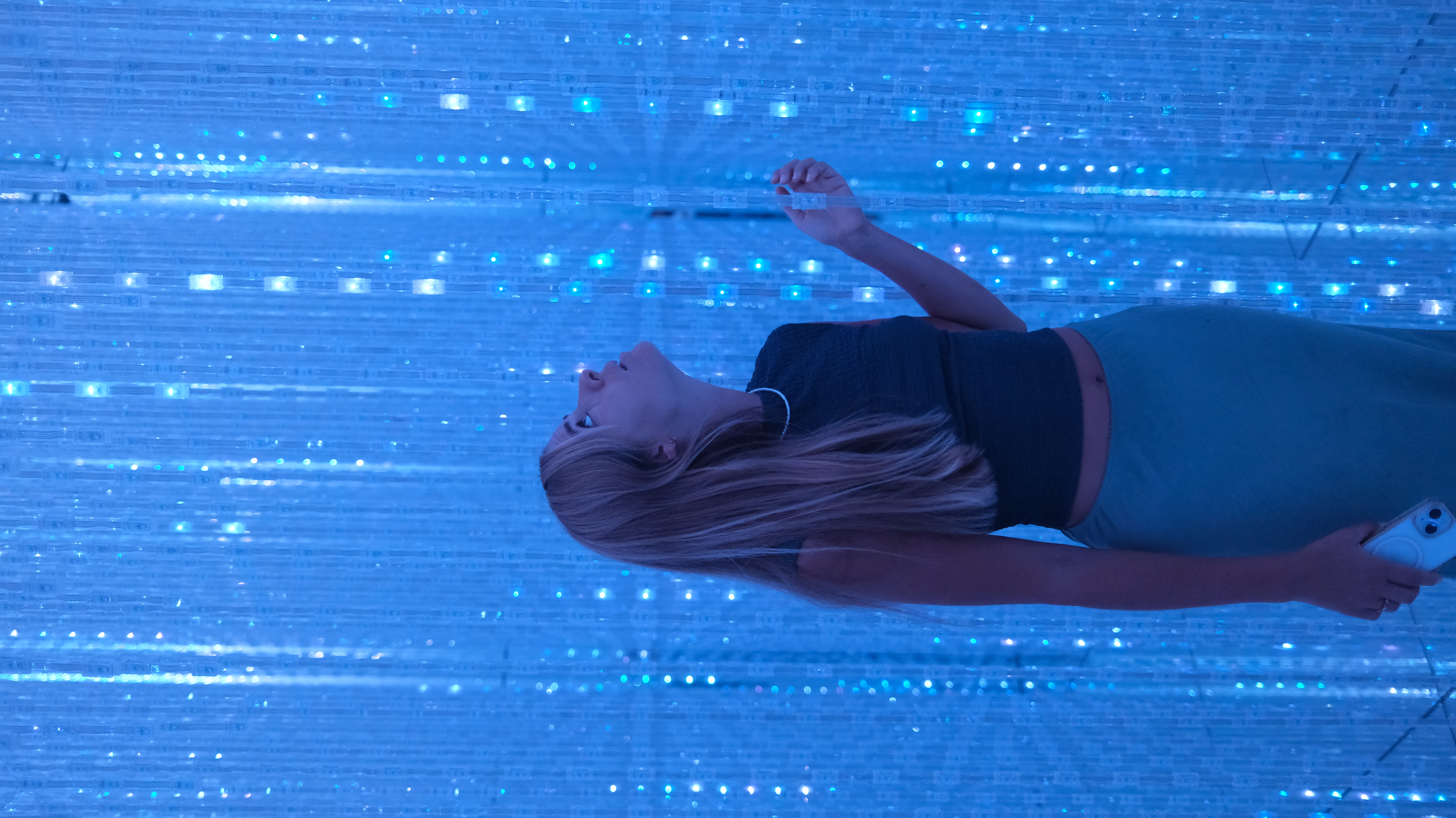
The blue room. Every wall becomes part of the artwork.
FAQ
Is TeamLab Borderless worth the money?
Yes — at €20 per person, it's one of the best value paid experiences in Tokyo. The only paid experience we'd rate above it is a proper omakase dinner (which costs 10x as much). For the combination of spectacle, originality, and time it gives you (2–3+ hours), it's excellent value.
How far in advance should I book TeamLab Borderless?
For weekends and school holidays: 3–4 weeks in advance. For weekdays: 1–2 weeks is usually fine, sometimes less. Don't leave it to the day before.
Is TeamLab Borderless suitable for children?
Yes — children usually love it. Some of the sensory installations (dark rooms, sudden changes in light) can startle young children, but the flower and forest rooms are universally appealing. There are dedicated children's areas within the space.
Is the new Azabudai Hills location as good as the old Odaiba one?
Based on our visit: yes, and in some ways better. The new space is purpose-built rather than retrofitted into a warehouse, and several of the new works are the best TeamLab has created. The location in Azabudai Hills is also more convenient — the new development is excellent for lunch before or after.
More Tokyo Guides
Some links in this post are affiliate links. If you book through them, we earn a small commission at no extra cost to you — it helps us keep writing guides like this one.