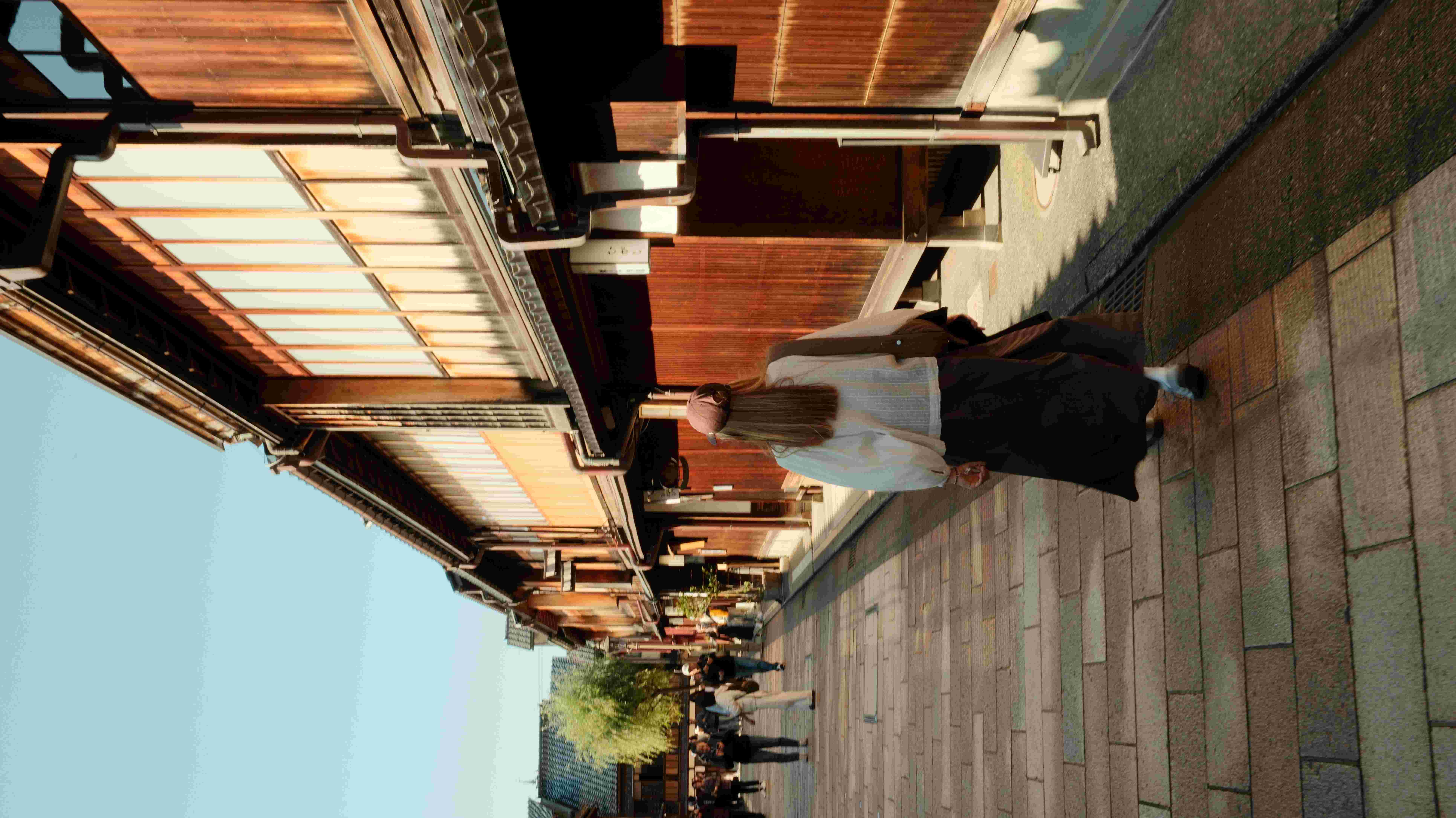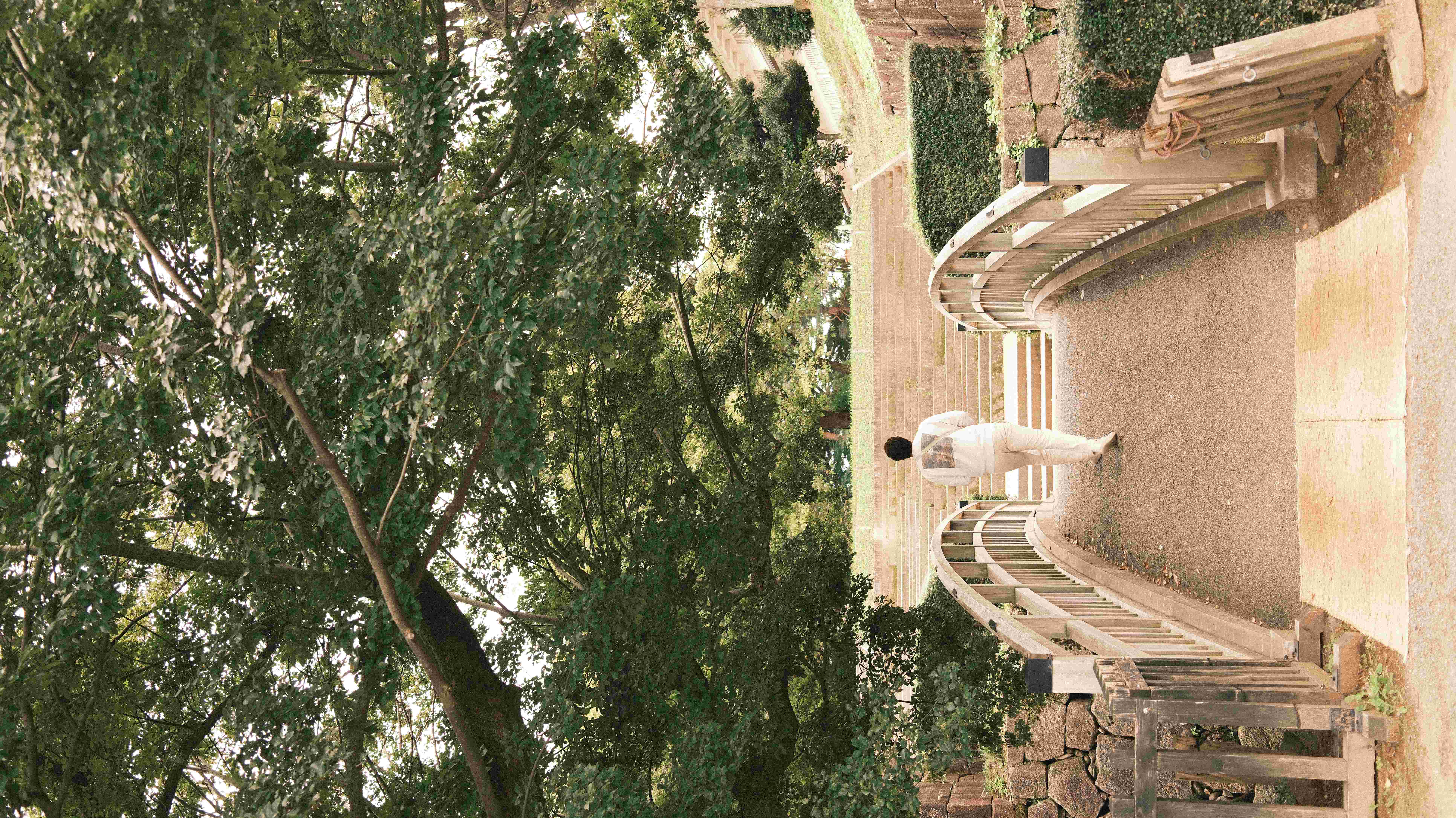
Kenroku-en is one of Japan's three great gardens — and our visit in autumn made it one of the most beautiful places we saw in Japan. The maple leaves turning red and gold against stone lanterns and still ponds, the shaped pine trees, the winding paths along the water. Yes, it is absolutely worth visiting. Here's everything you need to know before you go.
What Is Kenroku-en?
Kenroku-en (兼六園) — "garden of six attributes" — was developed over four centuries as the outer garden of Kanazawa Castle by the Maeda clan, the feudal lords who ruled the region from the 16th century through the Meiji era. The six attributes of an ideal landscape garden, as defined by a Chinese garden theorist: spaciousness, seclusion, artifice, antiquity, water, and panorama. Kenroku-en achieves all six.
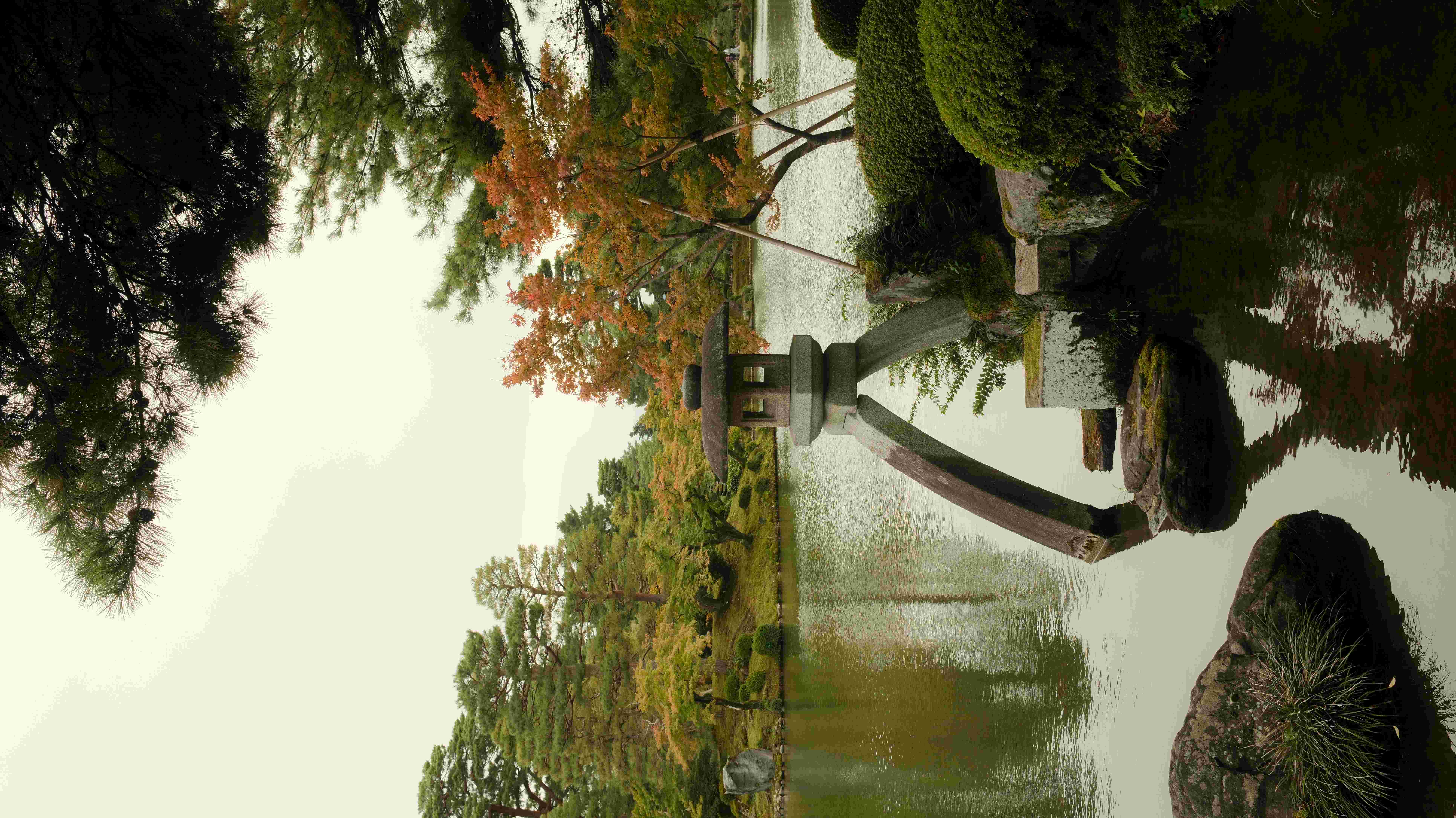
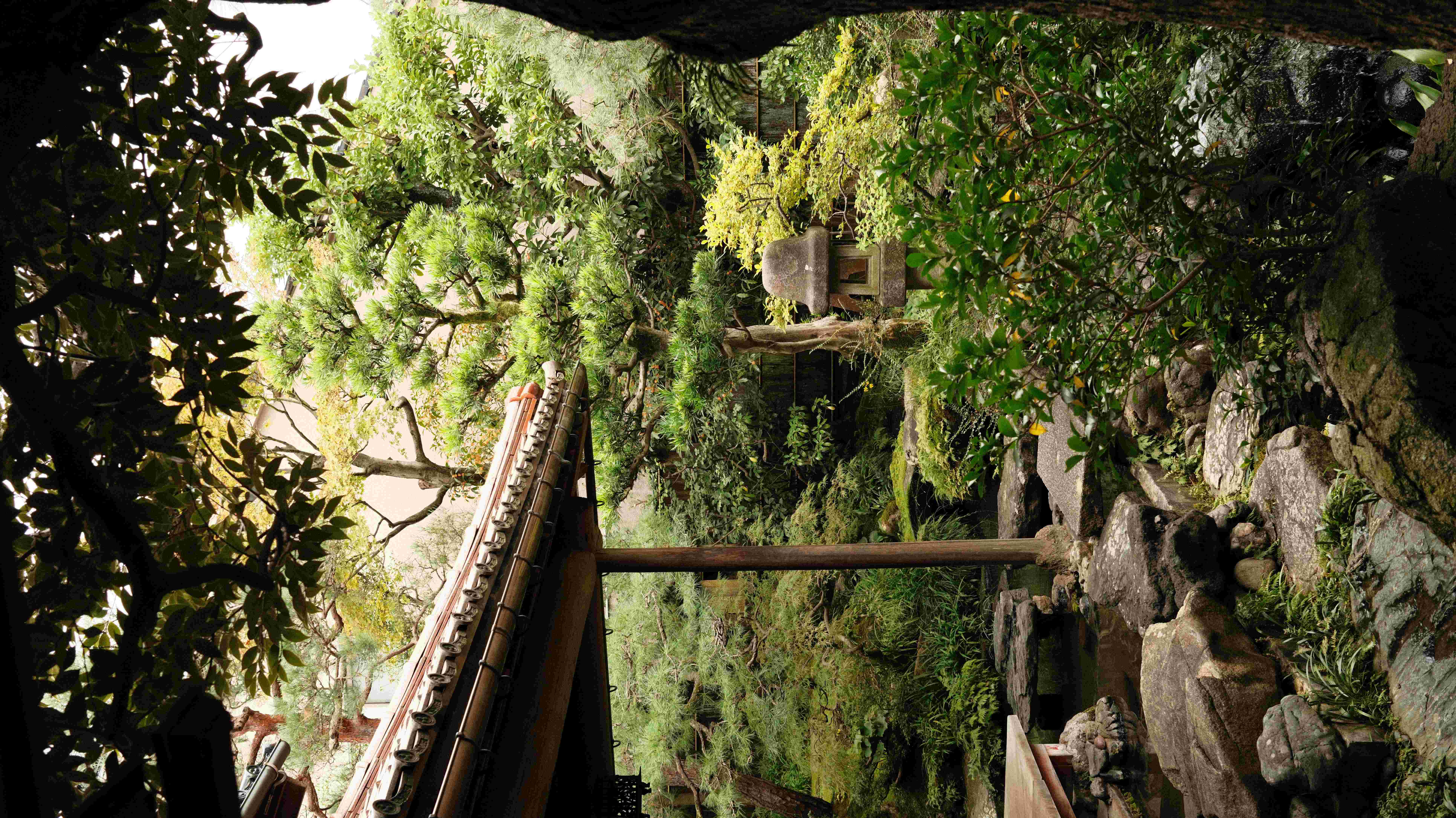
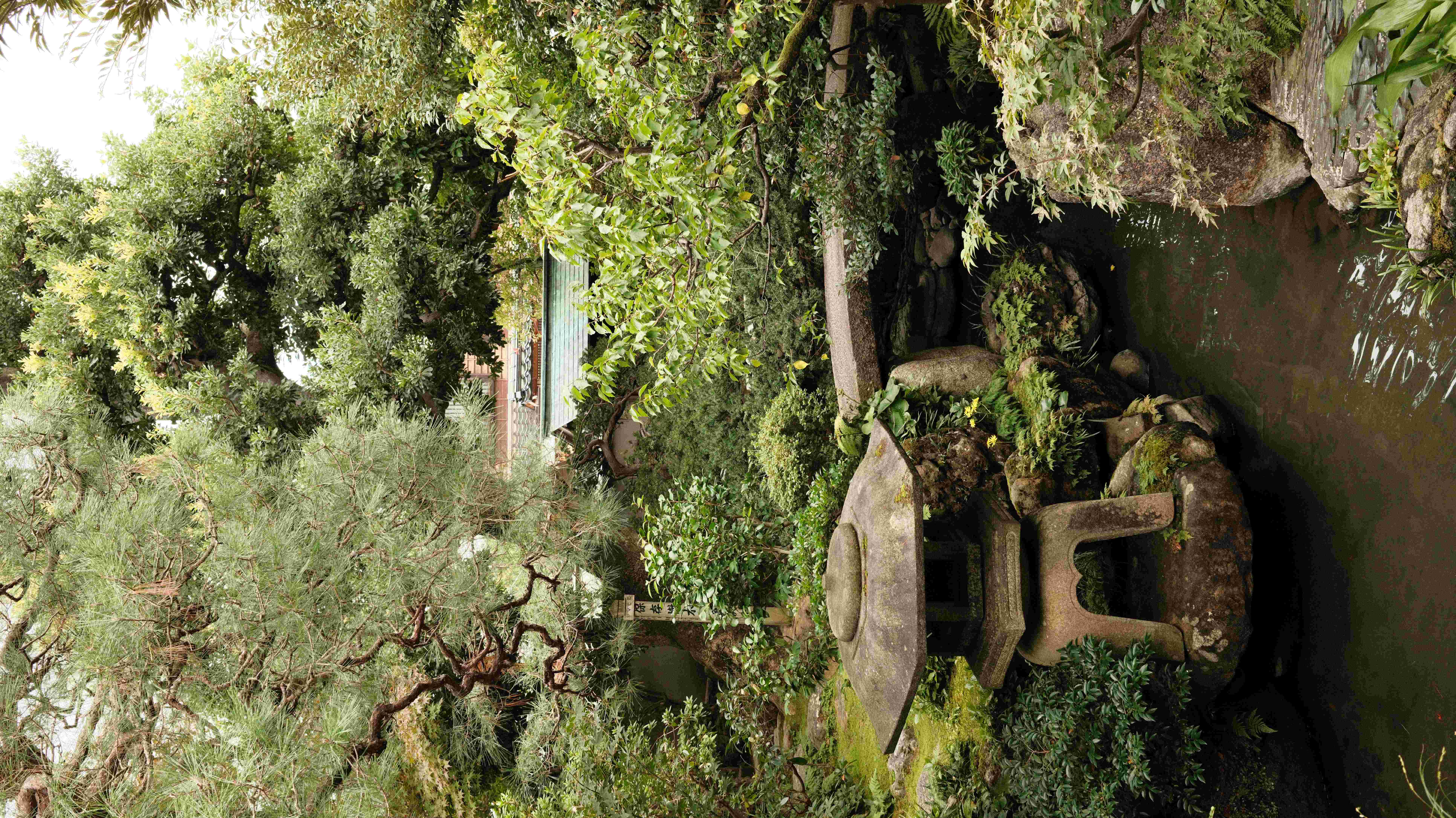
It covers 11 hectares in the centre of Kanazawa. The Kasumigaike pond and Hisagoike pond anchor the garden's two main areas; the Kotoji stone lantern — a two-legged lantern positioned at the water's edge — is among the most photographed images in Japan. The paths wind through maple groves, under shaped pines, past waterfalls and tea houses that the Maeda lords built over three centuries of development.
The garden was opened to the public in 1871 and designated a Special Place of Scenic Beauty in 1985 — one of only 36 such sites in Japan.
Kenroku-en by Season
Autumn — October to November ★★★★★
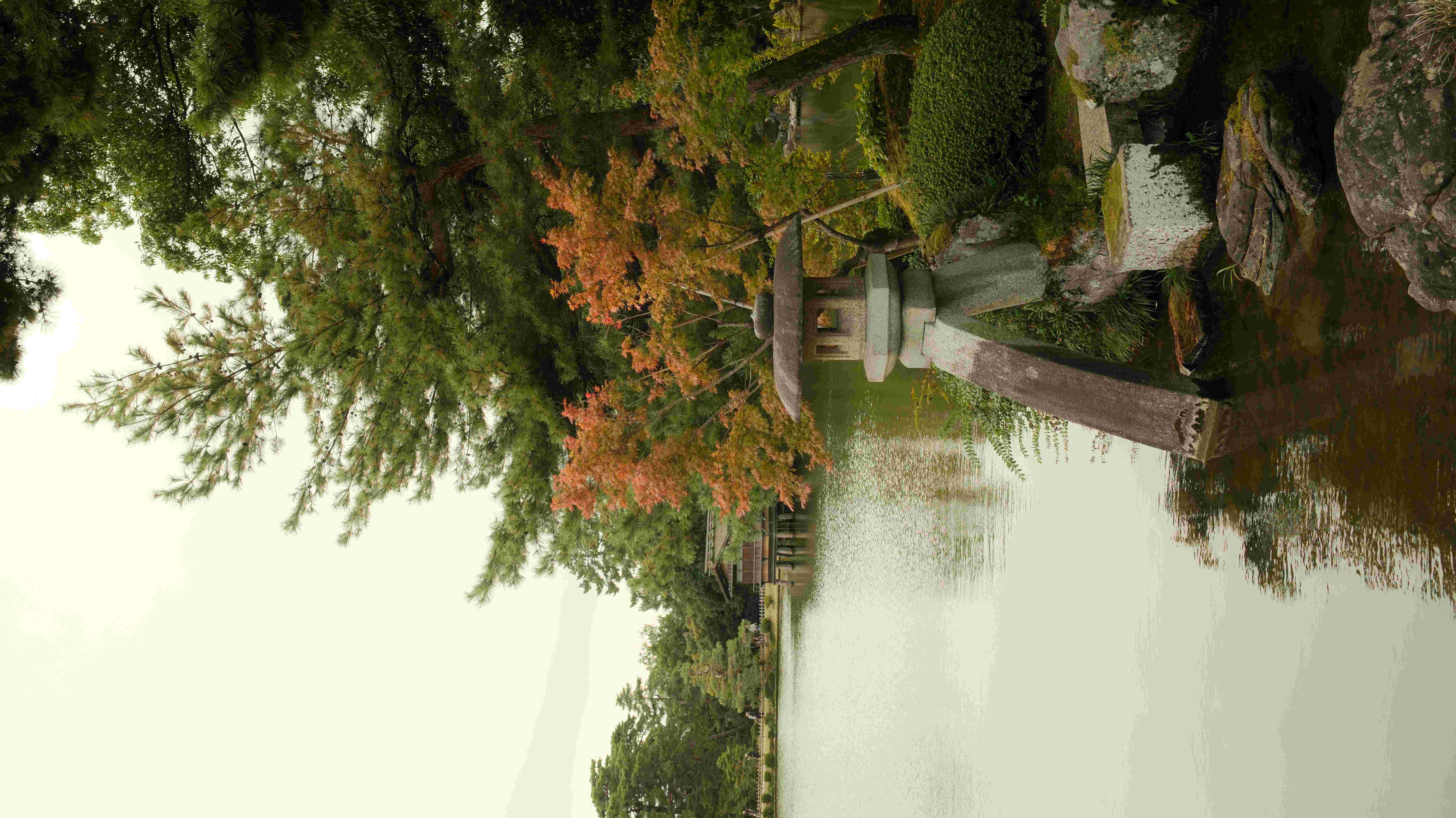
The most spectacular season. The maple trees throughout the garden — particularly around the Kasumigaike pond and the paths near the main entrance — turn red, orange, and gold from mid-October through November. The combination of the coloured canopy, the stone lanterns, and the reflections in the still ponds is genuinely extraordinary. We visited in autumn and the guide's description holds exactly: "crisp air, soft golden light, and maple leaves slowly turning red."
Night illuminations during autumn (usually mid-November) light the maple canopy and pond reflections — worth staying for if your schedule allows. Check the Kanazawa tourism board for exact dates each year.
Winter — November to February ★★★★★
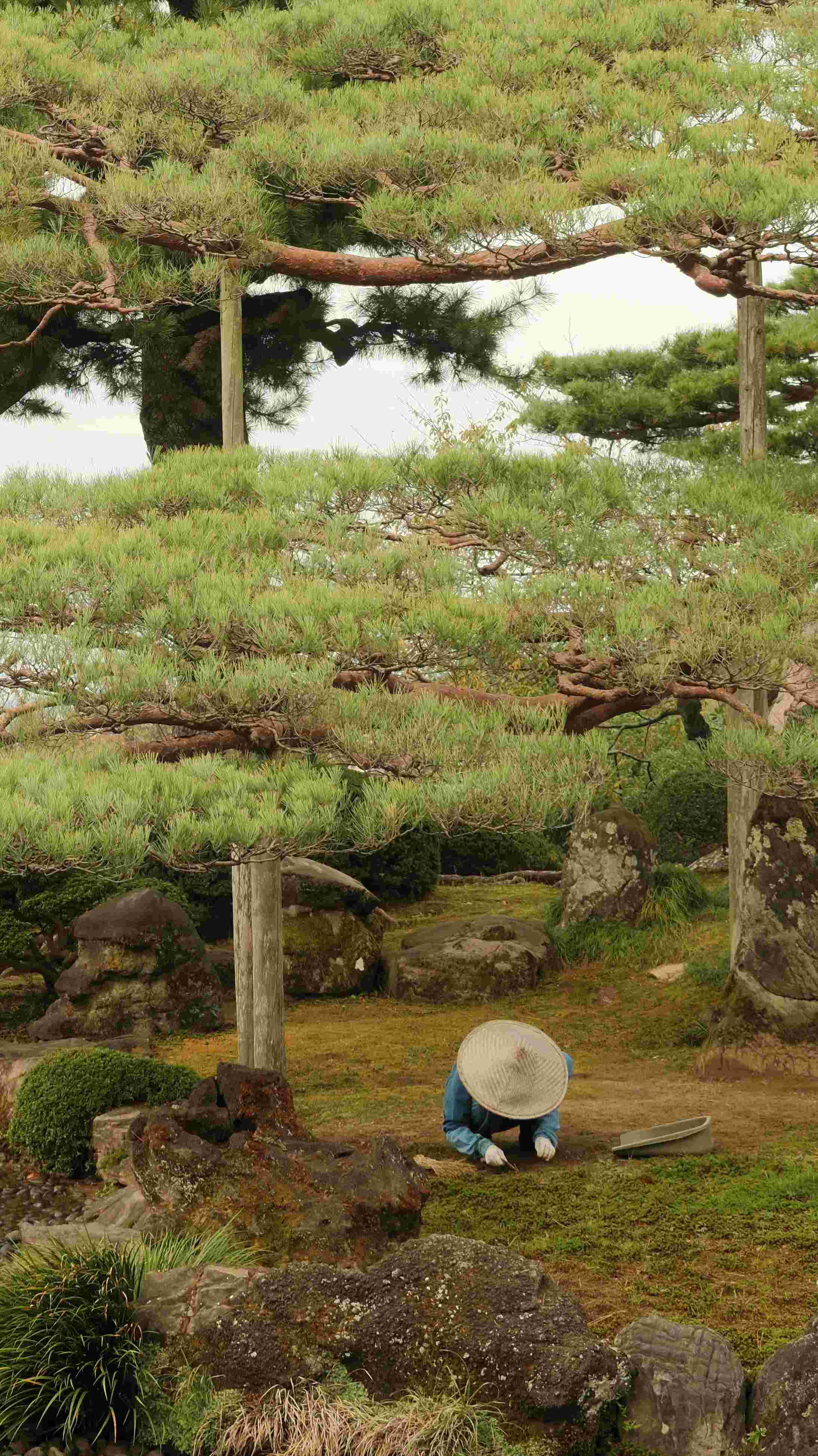
Kenroku-en's most unique season. From early November, the garden's crews erect yukitsuri — ropes stretched from tall bamboo poles to the branch tips of the garden's pine trees, forming a radial pattern that supports the branches against the weight of winter snow. It's a technique developed specifically for Kanazawa's heavy Sea of Japan snowfall, and the visual created by dozens of yukitsuri throughout the garden is one of the most iconic winter sights in Japan — something that exists here and nowhere else quite like it.
Under a fresh snowfall, with the yukitsuri ropes holding the white-laden pine branches, Kenroku-en is otherworldly. Snow crab season at Omicho Market (December–March) makes winter Kanazawa an argument for the best single season of any Japan visit.
Spring — Late March to May ★★★★☆
The weeping cherry (shidarezakura) near the centre of the garden is one of Japan's most photographed cherry trees — a century-old tree with branches that cascade to the ground in a full bloom of pale pink flowers. During cherry blossom season (usually late March to early April), the garden illuminates the cherry tree at night, creating a surreal, luminous effect against the dark sky.
Plum blossoms arrive earlier — late February to early March — in the garden's plum grove (about 200 trees). A quieter, less visited experience than the cherry blossom crowds, but the fragrance and the first warmth of spring make it quietly moving.
Summer — June to August ★★★☆☆
The garden is lush and green in summer, the irises in the Kenrokuen iris garden flowering in mid-June. The heat and humidity of July and August make the mid-afternoon a less pleasant time for the outdoor paths — visit in the early morning or at dusk. The lower crowds of summer make it possible to walk some sections in near-solitude.
What to Focus On Inside
The Kotoji Stone Lantern
At the eastern edge of the Kasumigaike pond — the two-legged stone lantern that anchors every photograph of Kenroku-en. Go early and you'll have it nearly to yourself; by 10am it's surrounded by cameras. The lantern at dawn, with the mist still on the water, is one of those images you remember for a long time.
The Kasumigaike Pond Circuit
The main pond with the Kotoji lantern on its eastern shore and the Yugaotei teahouse on its west. Walk the full circuit — the views across the water to the shaped pines change dramatically as you move around the perimeter.
Kenroku-en's Oldest Pine
An 800-year-old niwaki (garden pine) near the main path — the oldest tree in the garden, pruned by generations of Maeda clan gardeners into an extraordinary silhouette. Easy to miss; look for the marker.
The Fountain
Japan's oldest Western-style garden fountain, installed in 1861 — fed by water pressure from a pond 3 meters higher within the garden, requiring no pump. A curiosity worth finding on the way out.
Practical Information
| Entry fee | ¥320 adults (one of Japan's best-value admissions) |
| Opening hours | 7:00am–6:00pm (Mar 1 – Oct 15); 8:00am–5:00pm (Oct 16 – Feb 28/29). Free entry before 8am and after 5pm in summer season. |
| Best time to arrive | At opening — the early morning light, mist, and near-silence are the garden at its best |
| How long to allow | 1.5–2 hours for a thorough walk; 45 minutes for a focused visit |
| Getting there | Kanazawa Loop Bus (stop: Kenroku-en Shita / Dewa-machi); 15 minutes from the station |
| What's adjacent | Kanazawa Castle Park (free, immediately next door); 21st Century Museum (10 min walk) |
Our Verdict
Kenroku-en is non-negotiable in Kanazawa. Japan's three great gardens (Kenroku-en, Koraku-en in Okayama, Kairaku-en in Mito) are titled so for good reason, and Kenroku-en is — in our experience — the most beautiful of the three. At ¥320, it is also one of the most absurdly underpriced admissions in Japanese tourism. Go at opening. Stay for at least 90 minutes. In autumn, plan to return for the evening illuminations.
More Kanazawa Guides
- The Best Things to Do in Kanazawa + What to Skip
- The Best Time to Visit Kanazawa
- 2 Days in Kanazawa Itinerary
- Is Kanazawa Worth Visiting? Our Honest Review
- The Best Food in Kanazawa
- How Many Days in Kanazawa Do You Need?
- Where to Stay in Kanazawa
- The Best Cafes in Kanazawa
- Is Kyoto Worth Visiting? (Thunderbird Train from Kanazawa)
- Is Osaka Worth Visiting? (Thunderbird Train from Kanazawa)
- All Japan Guides
FAQ
Is Kenroku-en worth visiting?
Yes — absolutely. It's one of Japan's finest gardens, exceptional in every season, and ¥320 to enter. It would be worth it at ten times the price. Go at opening time for the best experience.
What is the best time to visit Kenroku-en?
Autumn (October–November) for maple foliage, or winter for yukitsuri snow-support ropes on the pine trees. Both are extraordinary. Arrive at opening for any season — the early morning quiet and light are the garden at its peak.
What are yukitsuri at Kenroku-en?
Ropes stretched from tall bamboo poles to the branch tips of pine trees, supporting them against the weight of winter snow. Erected every November, they create a distinctive radial pattern throughout the garden — one of the most iconic winter images in Japan, unique to Kanazawa's style of garden maintenance.
How long should you spend at Kenroku-en?
1.5–2 hours for a thorough, unhurried walk through both main areas of the garden. You can see the highlights in 45–60 minutes if time is tight, but the garden rewards slow walking and pausing.
Is Kenroku-en free?
¥320 per adult — one of the most reasonable admissions in Japan. There are free entry periods before 8am in summer and after 5pm; check the garden's seasonal schedule for the exact windows.
Some links in this post are affiliate links. If you book through them, we earn a small commission at no extra cost to you.