Fukuoka's food scene completely blew us away — flavorful, affordable, and full of local charm. This is the city that invented Hakata tonkotsu ramen and created Japan's yatai culture. Every meal here felt homemade and genuinely cared about. Here's everything we ate and every restaurant worth finding.
Hakata Tonkotsu Ramen — The Original
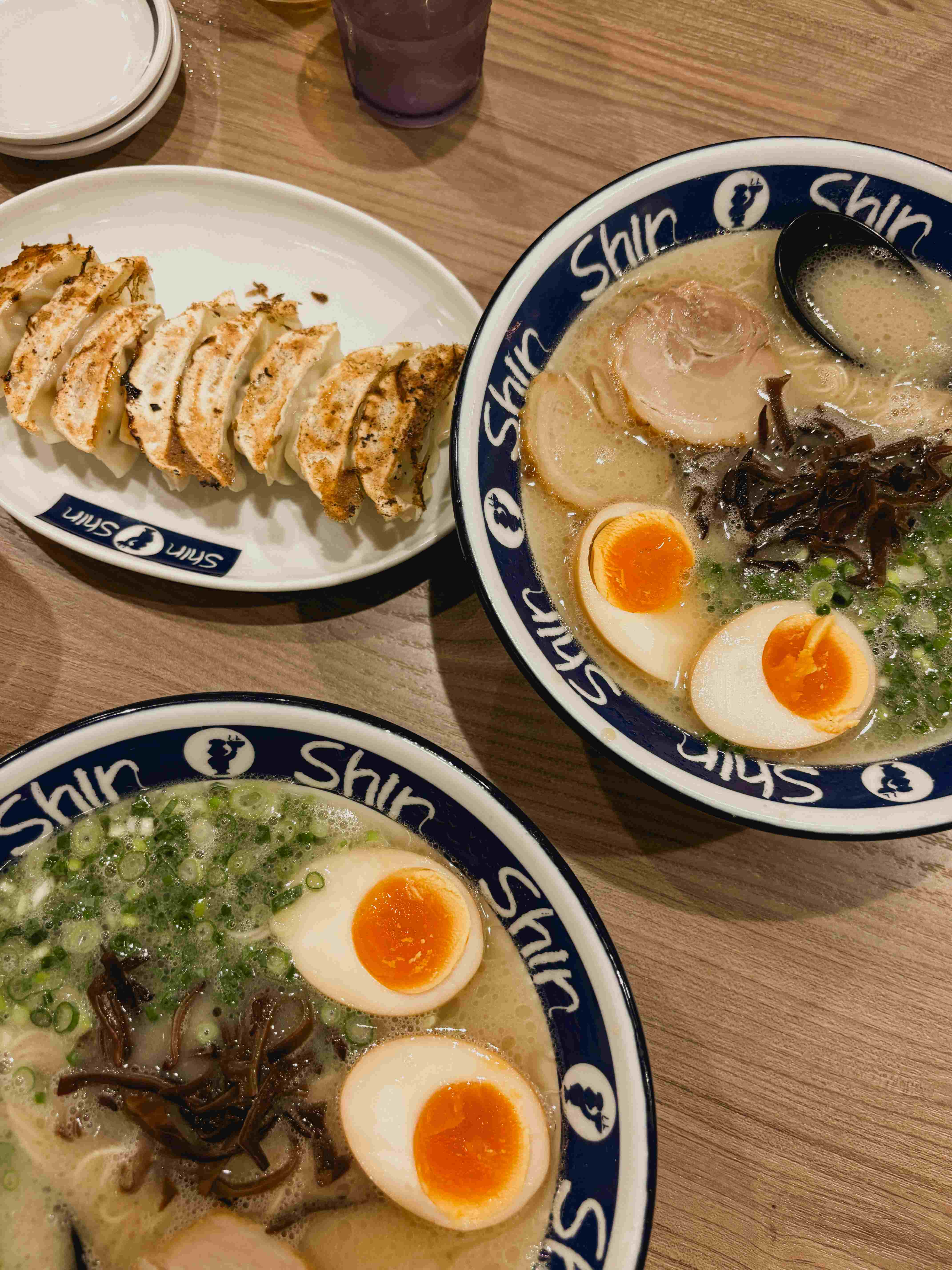
Fukuoka is where tonkotsu ramen was invented — pork bones (tonkotsu) boiled for 12–18 hours until the broth turns creamy, milky, and impossibly rich. The result is a white, opaque broth with a deep, almost sweet pork flavour. It's served with thin straight noodles (not the thick wavy noodles of other styles), sliced chashu pork, a soft-boiled egg, nori, and green onion. The noodles stay firmer than other styles because they're meant to be eaten quickly before they soften in the broth.
Shin Shin ★★★★★
The city's most loved tonkotsu ramen shop — locals and food media alike point here first. The broth is rich without being heavy, the noodles have an ideal chew, and — crucially — you choose your noodle texture when ordering: firm (kata), medium, or soft. Order firm (kata) if it's your first time; finish, then order a kaedama (extra noodles dropped directly into your remaining broth) for ¥100.
Order: Classic Hakata tonkotsu ramen. Choose firm noodle texture. Add a kaedama when your bowl is half-empty.

Hakata Ikkousha ★★★★★
Some of the best ramen we had in Japan — a deep, flavourful broth and tender noodles that the guide describes accurately. A more intense tonkotsu than Shin Shin — darker, richer, with a stronger pork character. Both are essential; the two shops represent different interpretations of the same style.
Order: Tonkotsu ramen. Add extra chashu if available.
The Yatai — Open-Air Stall Culture
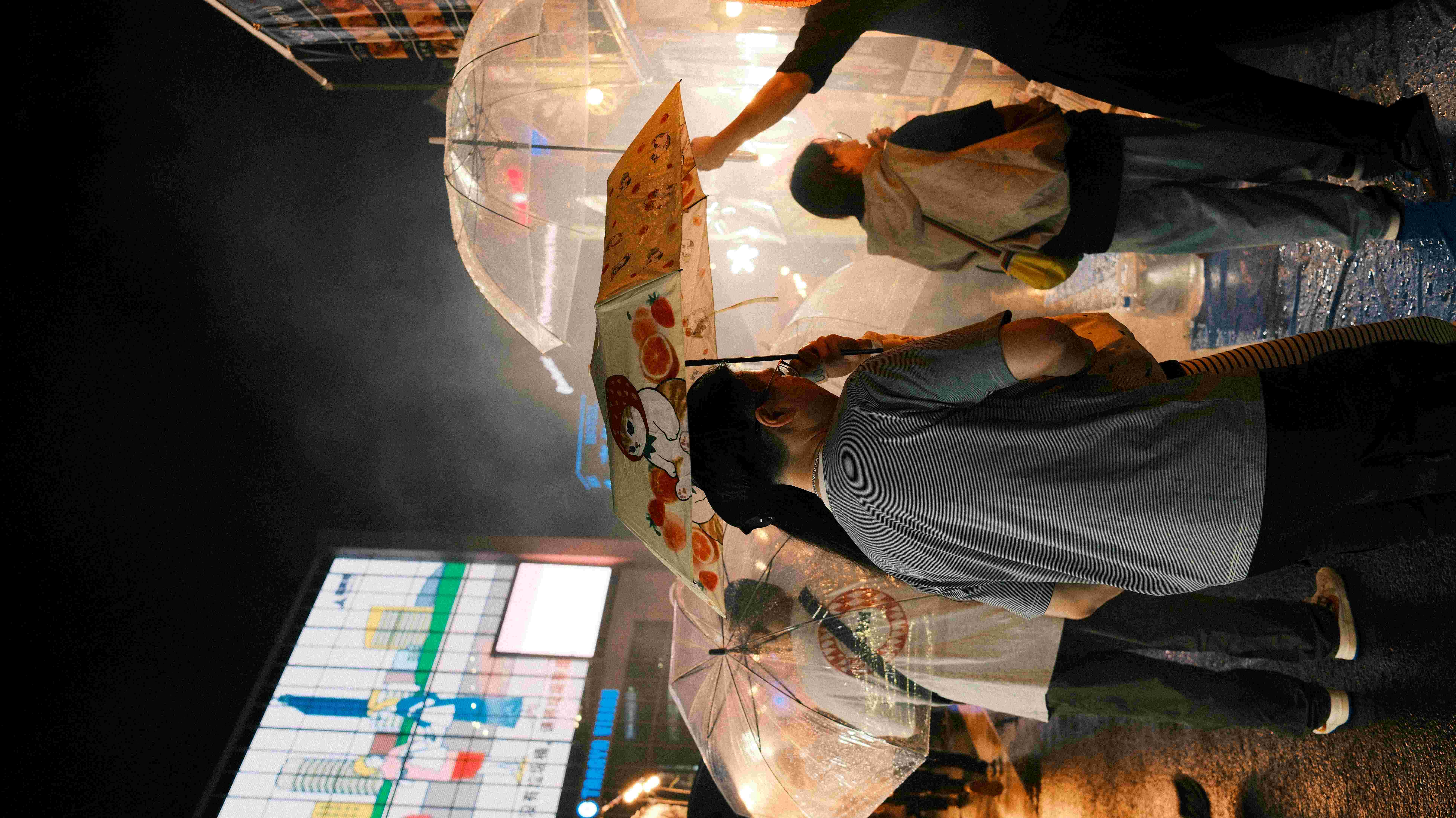
The yatai are not restaurants — they're small open-air stalls with eight to ten seats around a central cook, set up along the Naka River in Nakasu and in Tenjin every evening. The menu at most yatai covers tonkotsu ramen, yakitori, gyoza, oden (simmered vegetables and fish cake in broth), and whatever the cook feels like making that night.
The yatai experience is part food, part social ritual. You sit next to strangers. The cook knows some regulars by name. Locals treat them as their local bar. Tourists end up in the kind of accidental conversation that becomes a travel story.
Practical notes: Yatai open around 6–7pm and fill quickly — arrive early or be prepared to wait. Prices are higher than restaurant ramen (¥900–1,500 for a bowl vs ¥700–900 at a shop) but the experience justifies it. Most accept cash only.
Where to find them: The Nakasu riverfront strip and the area around Tenjin Station. Both concentrations are accessible on foot from central Fukuoka.
Sushi Sakaba Sashisu ★★★★★
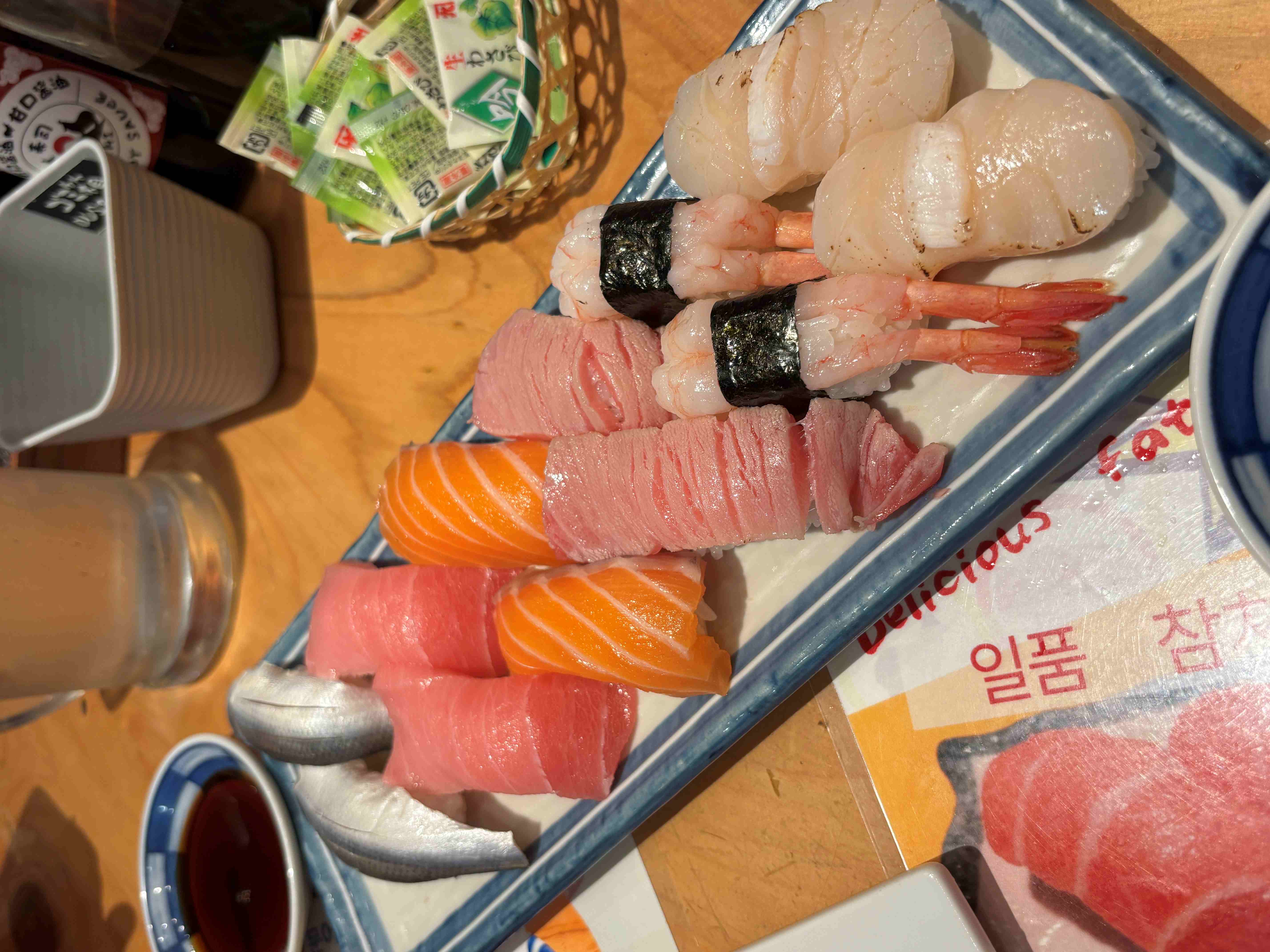
One of the best sushi meals of our entire Japan trip — prepared right in front of us at the counter, incredibly fresh, and surprisingly affordable at around €48 for two. Fukuoka's position between the Sea of Japan and the Pacific gives it access to exceptional fish, and Sashisu uses it properly. The fish quality here matched Tsukiji-adjacent sushi in Tokyo at a fraction of the price.
The relaxed izakaya atmosphere (sake available, sharing encouraged, a casual counter-bar setup rather than formal sushi restaurant) makes it more accessible than it sounds. Reserve ahead if possible, especially for evenings.
Order: The chef's selection nigiri. Whatever looks freshest on the day.
Motsunabe at Motsunabe Rakutenchi Hakata ★★★★☆

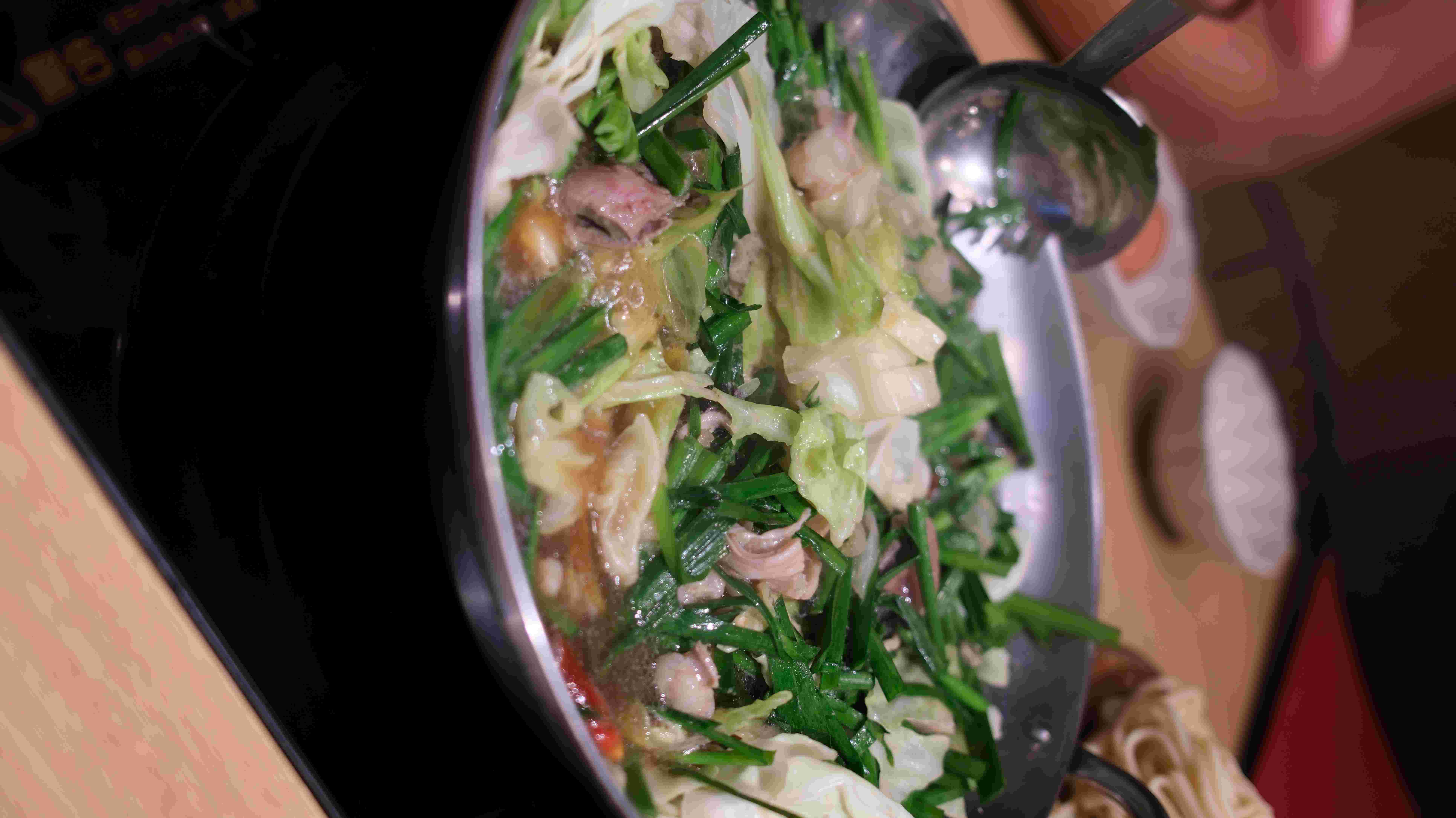
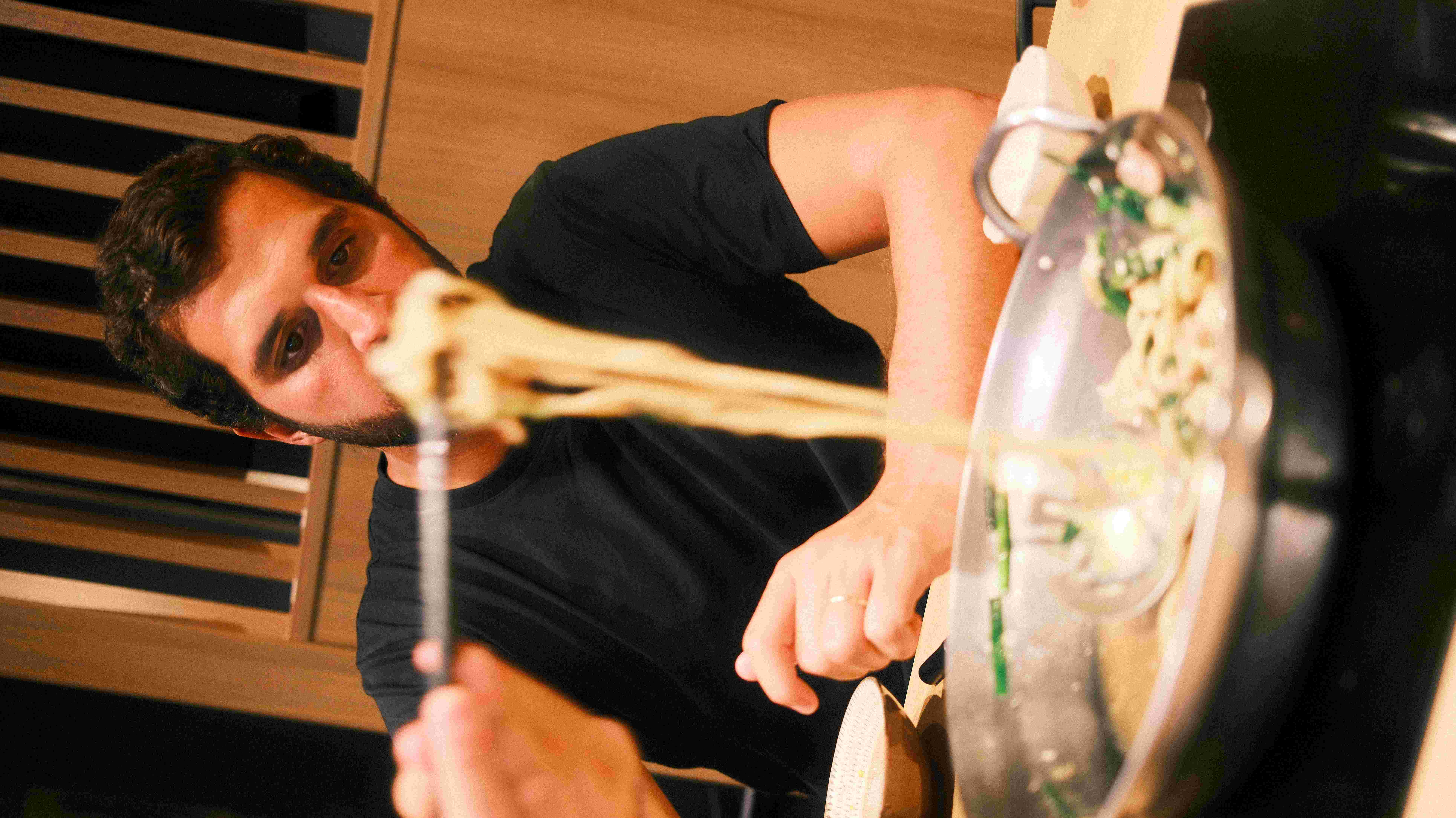
Motsunabe (offal hot pot) is a Fukuoka specialty — a rich, garlicky broth with beef intestines, cabbage, chives, garlic, and tofu, cooked at the table in a cast iron pot. The broth absorbs the vegetables and offal flavour over 20–30 minutes of simmering, becoming more complex as the meal progresses. At the end, you add champon noodles to finish the remaining broth — one of the best ways to end a meal in Japan.
Not for everyone (the intestines are a specific texture) but genuinely extraordinary if you're open to it. This is authentic Fukuoka eating — something you can't get at home.
Order: Garlic-based broth (shio/salt style is cleaner; soy style is richer). Add noodles at the end.
Tonkatsu Bowl at Yagura ★★★★☆
A crispy pork cutlet (tonkatsu) over rice with egg and a rich, sweet-salty sauce — the guide calls it "comfort food perfection" and that's exactly right. Simple, deeply satisfying, the kind of meal you find yourself thinking about the next day. Excellent value for the quality.
Order: The tonkatsu bowl. No need to overthink it.
The Shopping Mall Secret
The guide's most counterintuitive tip: don't underestimate KITTE Hakata (inside Hakata Station) and Parco Mall. These food courts and food floors contain some of the best eating in Fukuoka at accessible prices. The ramen and izakaya counters inside KITTE Hakata are particularly strong. Go for lunch when queues are shorter than the restaurant equivalents outside.
Practical Notes
- Ramen etiquette: Slurping is not just acceptable — it's correct. Eating ramen quietly is unusual. Kaedama (extra noodles in your remaining broth) is a Fukuoka custom — ask for it as you near the end of your bowl.
- Yatai cash: Most yatai are cash only. Carry ¥5,000–10,000 for a yatai evening.
- Early dinner culture: Fukuoka eats earlier than Tokyo — 6pm is a reasonable dinner time, and the yatai fill from 6:30pm onward.
More Fukuoka Guides
- The Best Cafes in Fukuoka
- The Best Things to Do in Fukuoka + What to Skip
- 2 Days in Fukuoka Itinerary
- Is Fukuoka Worth Visiting? Our Honest Review
- How Many Days in Fukuoka Do You Need?
- The Best Time to Visit Fukuoka
- Where to Stay in Fukuoka
- Dazaifu Day Trip from Fukuoka
- Is Hiroshima Worth Visiting? (Next Stop from Fukuoka)
- All Japan Guides
FAQ
What is Fukuoka most famous for eating?
Hakata tonkotsu ramen — the original milky pork bone broth with thin straight noodles. And yatai culture: open-air stall dining that is unique in Japan to Fukuoka.
Where is the best ramen in Fukuoka?
Shin Shin for the most balanced classic tonkotsu. Hakata Ikkousha for a deeper, richer interpretation. Both are essential.
What is motsunabe?
A Fukuoka hot pot specialty — beef intestines, cabbage, chives, garlic, and tofu simmered at the table in a garlicky broth. A local institution and genuinely extraordinary if you're open to offal.
Some links in this post are affiliate links. If you book through them, we earn a small commission at no extra cost to you.