We went to Hakone specifically to see Mount Fuji. We were there at the end of October, it rained non-stop, and the clouds never cleared. We never saw Fuji. Not once. And Hakone was still one of the most magical places of the entire Japan trip.
That tells you everything you need to know. Hakone is worth visiting even when it doesn't give you the thing you came for.
One day you're in the middle of Tokyo — the noise, the crowds, the sensory overload of one of the world's biggest cities. The next you're in a mountain town surrounded by forest, a volcanic lake, and the kind of calm that makes you slow down without even trying. We went for a private onsen that afternoon, our own room with a balcony overlooking the mountain in the mist, and that single afternoon felt like a full reset. If you're doing Japan for more than a week, Hakone is the breather your itinerary needs.
What Hakone Is Like
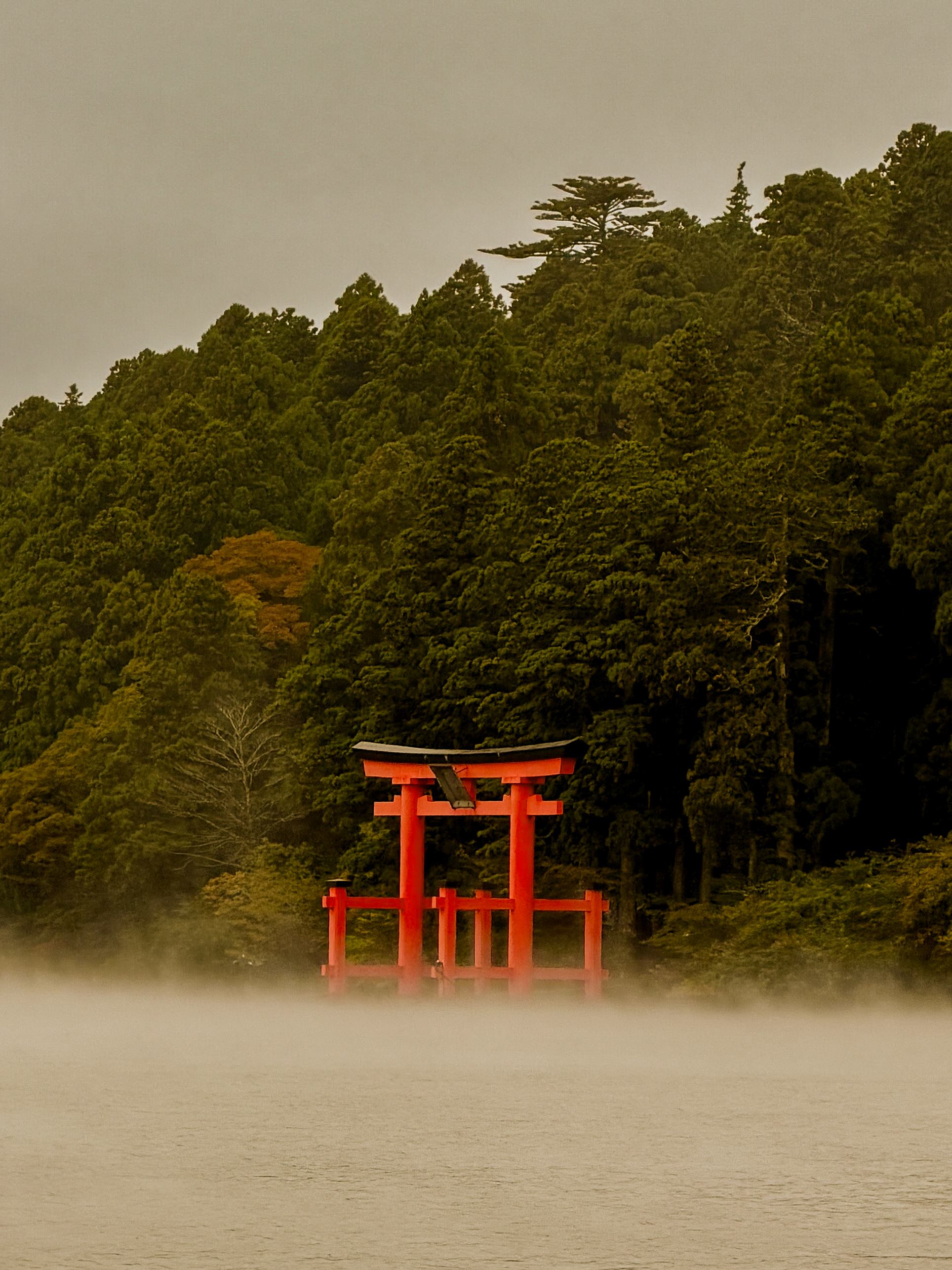
Hakone sits in the mountains southwest of Tokyo, about 85 minutes from Shinjuku by the Romancecar express train. It's a volcanic mountain region built around Lake Ashi, with hot springs running through the ground beneath almost every street. The town itself is small and quiet; the experience is almost entirely outdoors — the lake, the ropeway over the volcanic valley, the shrines, the hiking trails, the onsen.
Everything is exceptionally well connected. The Hakone Free Pass (more on that below) gives you unlimited access to local trains, the cogwheel railway, the ropeway, boats on Lake Ashi, and buses — so you move between all the sights without planning anything in detail. This is unusually easy for Japan, where transport can require research. In Hakone, you just get on things.
What We Loved
The private onsen at Hakone Yuryo ★★★★★ — Our own room, our own balcony, our own onsen. Sitting in natural hot spring water with the mountain in the mist in front of us, rain on the roof, complete silence. Then a massage directly after. This was one of the best single afternoons of the Japan trip. The guide described it accurately: "one of the best massages we've had." It's more than the massage — it's the combination of the onsen, the nature immersion, the privacy. See our full Hakone onsen guide for everything you need to book it.
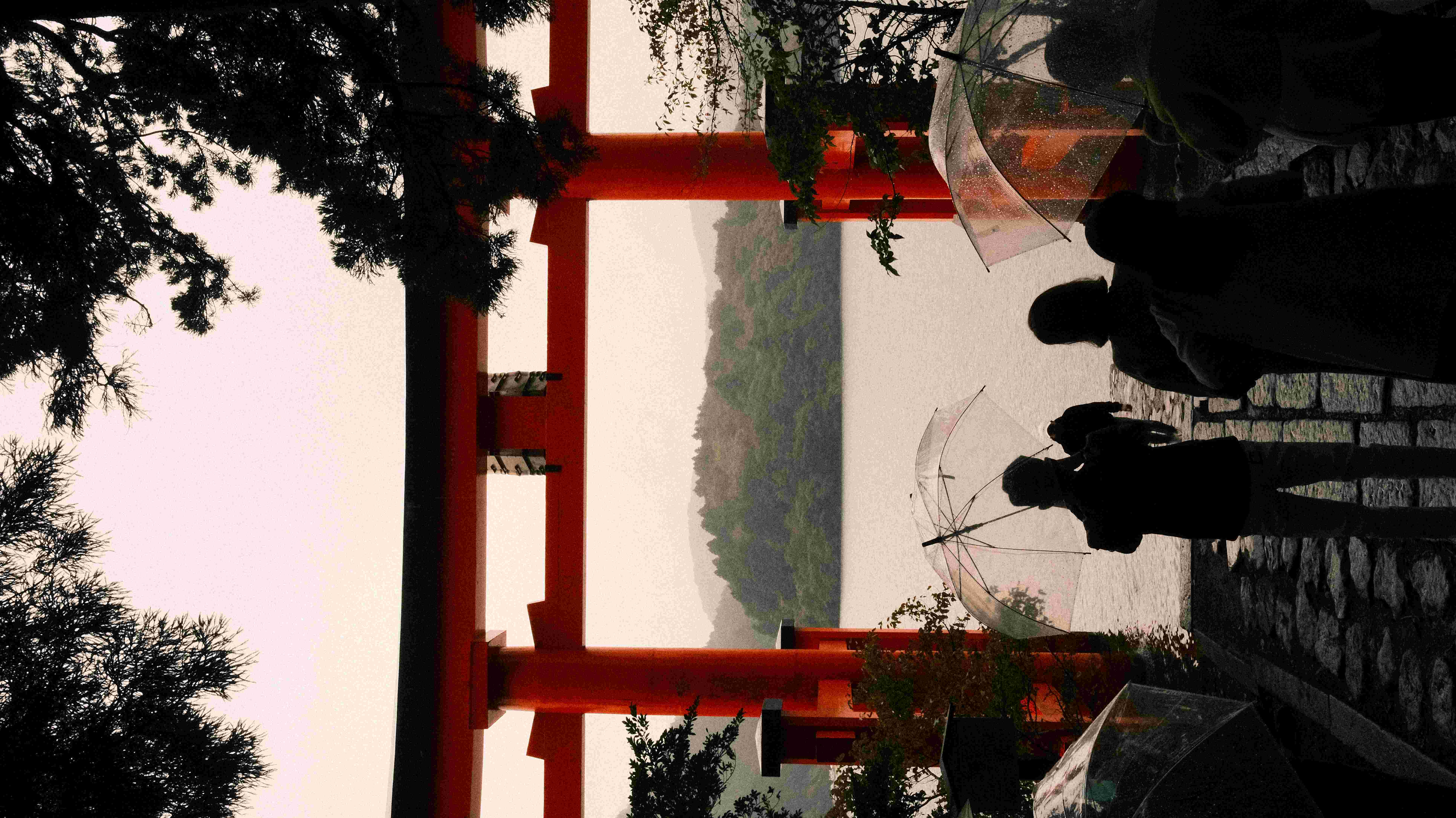
Hakone Shrine torii gate on Lake Ashi ★★★★★ — Even in the rain, even with no Mount Fuji behind it, the red torii gate rising from the surface of the lake is genuinely impactful. There was a huge queue of people waiting to take photos — in the rain — which tells you how powerful the image is. We didn't wait in the line. But we stood there for a while and the mist actually made it more beautiful than we expected.
The mountain calm ★★★★★ — This isn't a specific attraction. It's just what Hakone feels like. After Tokyo's energy, the pace shift is immediate and profound. Forest, lake, volcanic steam rising from the valley floor, wooden structures half-hidden in cloud. If you're doing a long Japan itinerary, this is the reset your nervous system needs.
The transport system ★★★★★ — The Hakone Free Pass makes movement effortless. Train up, ropeway across the volcanic valley, boat across the lake, bus back. It functions like a single curated experience rather than a series of logistics problems to solve.
Honest Notes
Mount Fuji views are not guaranteed. We didn't see it at all. The best odds are on clear winter mornings (December to February) or in autumn before the rain sets in. End of October was all cloud and rain for us. Go with the expectation that you might not see Fuji — and plan your other activities well enough that it doesn't matter if you don't.
One to two nights is the right amount of time. Hakone is not a city — there's no nightlife, no restaurant scene to explore, no reason to linger for more than two days. One full day gets you the main sights; two days lets you slow down and hike. Three or more is too long unless you're specifically there to fully disconnect.
Book your onsen in advance. Hakone Yuryo private baths book out — particularly on weekends and during autumn. See our onsen guide for how to do this.
Our Verdict
Yes — emphatically. Hakone is one of the most distinct stops on a Japan itinerary: nowhere else gives you this combination of volcanic landscape, traditional onsen culture, shrine-on-the-lake atmosphere, and the kind of quiet that Tokyo absolutely does not offer. Even without Mount Fuji, it delivered. The private onsen afternoon alone made the trip worth it.
Don't skip Hakone because you're worried about the weather. Go, do the onsen properly, and let the mountain do the rest.
More Hakone Guides
FAQ
Is Hakone worth visiting without seeing Mount Fuji?
Yes. We didn't see Fuji at all — it rained and was completely clouded over our entire stay — and Hakone was still one of the best stops of the Japan trip. The onsen, the lake, the volcanic landscape, and the mountain calm are worth it entirely on their own.
How far is Hakone from Tokyo?
About 85 minutes from Shinjuku by the Romancecar limited express — a direct, scenic mountain train. Easy day trip but one or two nights is better.
Is Hakone expensive?
Mid-range. The Hakone Free Pass (around ¥6,000–7,000 from Shinjuku) covers almost all transport and pays for itself quickly. The main splurge is the private onsen at Hakone Yuryo — about €25/hour, worth every cent. Hotels vary widely; WPU Hakone is excellent value for what it offers.
Some links in this post are affiliate links. If you book through them, we earn a small commission at no extra cost to you.