One of the things that surprised us most about Hakone was how effortlessly it all works. You arrive, you get the Free Pass, and suddenly everything — the mountain train, the ropeway over the volcanic valley, the boat across the lake — is just there, connected, waiting. We went from Shinjuku's rush-hour platform to standing in volcanic mist above Lake Ashi in under two hours. The whole place is designed like that: easy to move through, easy to enjoy, easy to let go of the pace you arrived with.
Hakone Shrine & Torii Gate on Lake Ashi ★★★★★
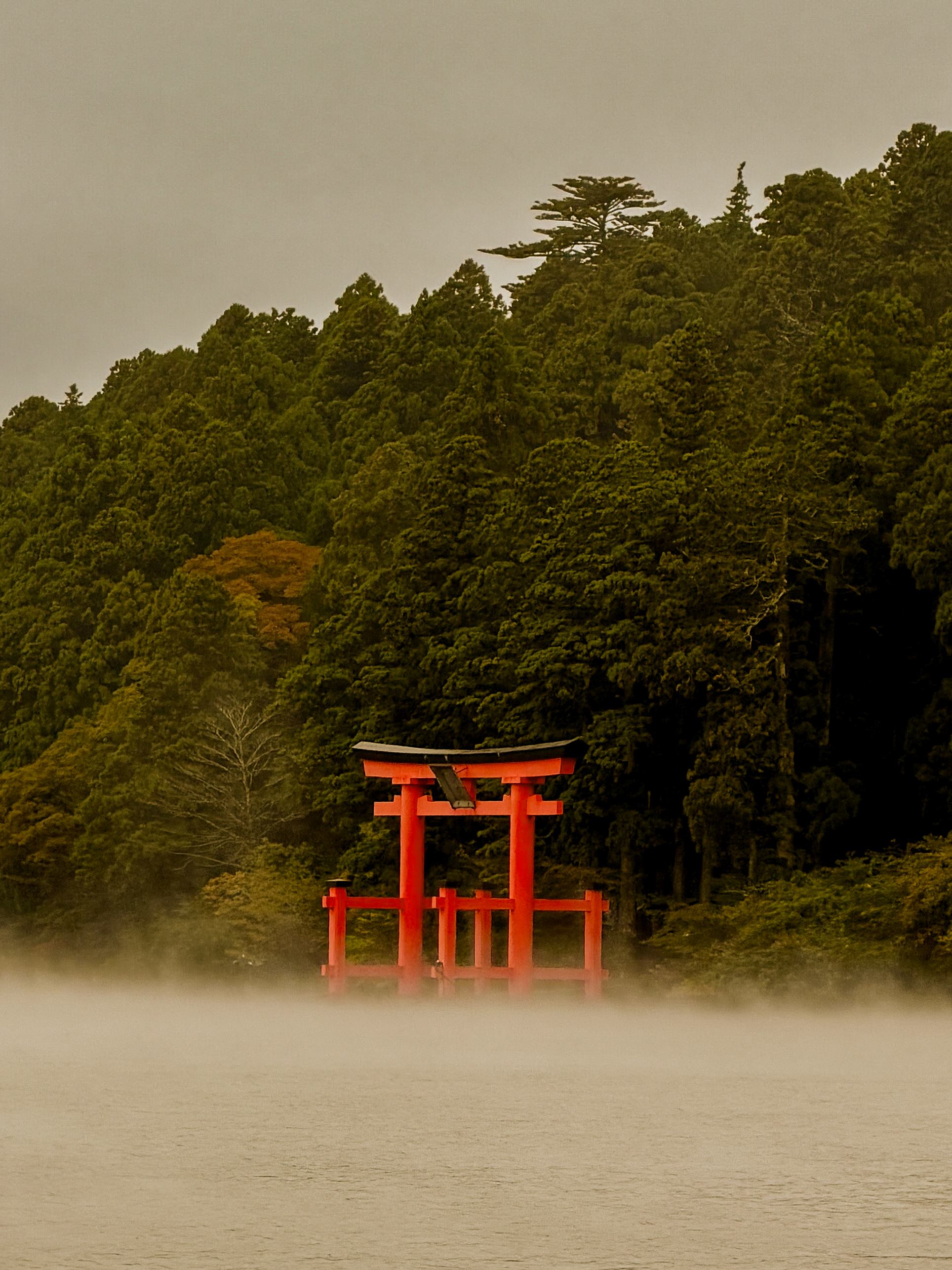
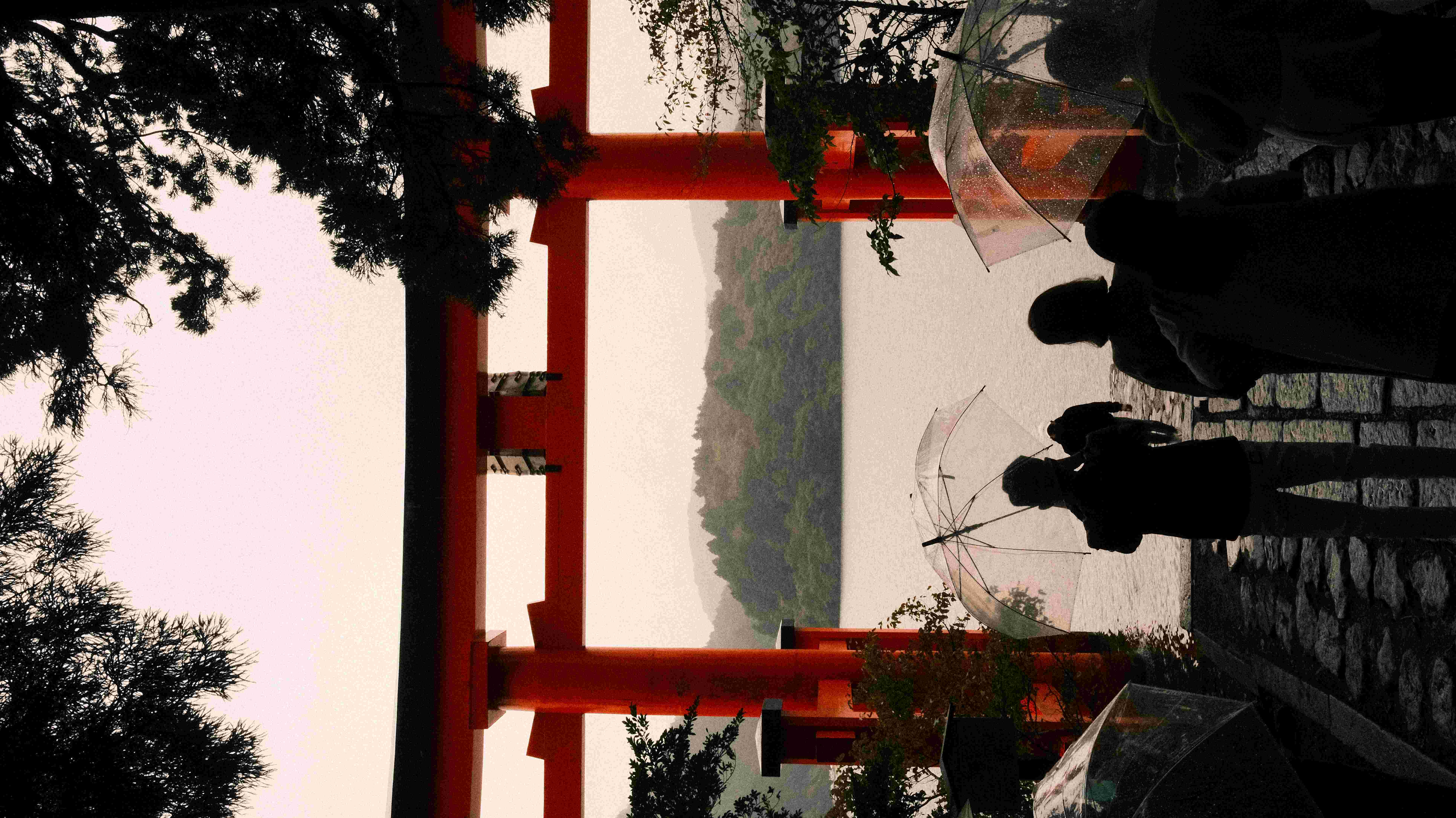
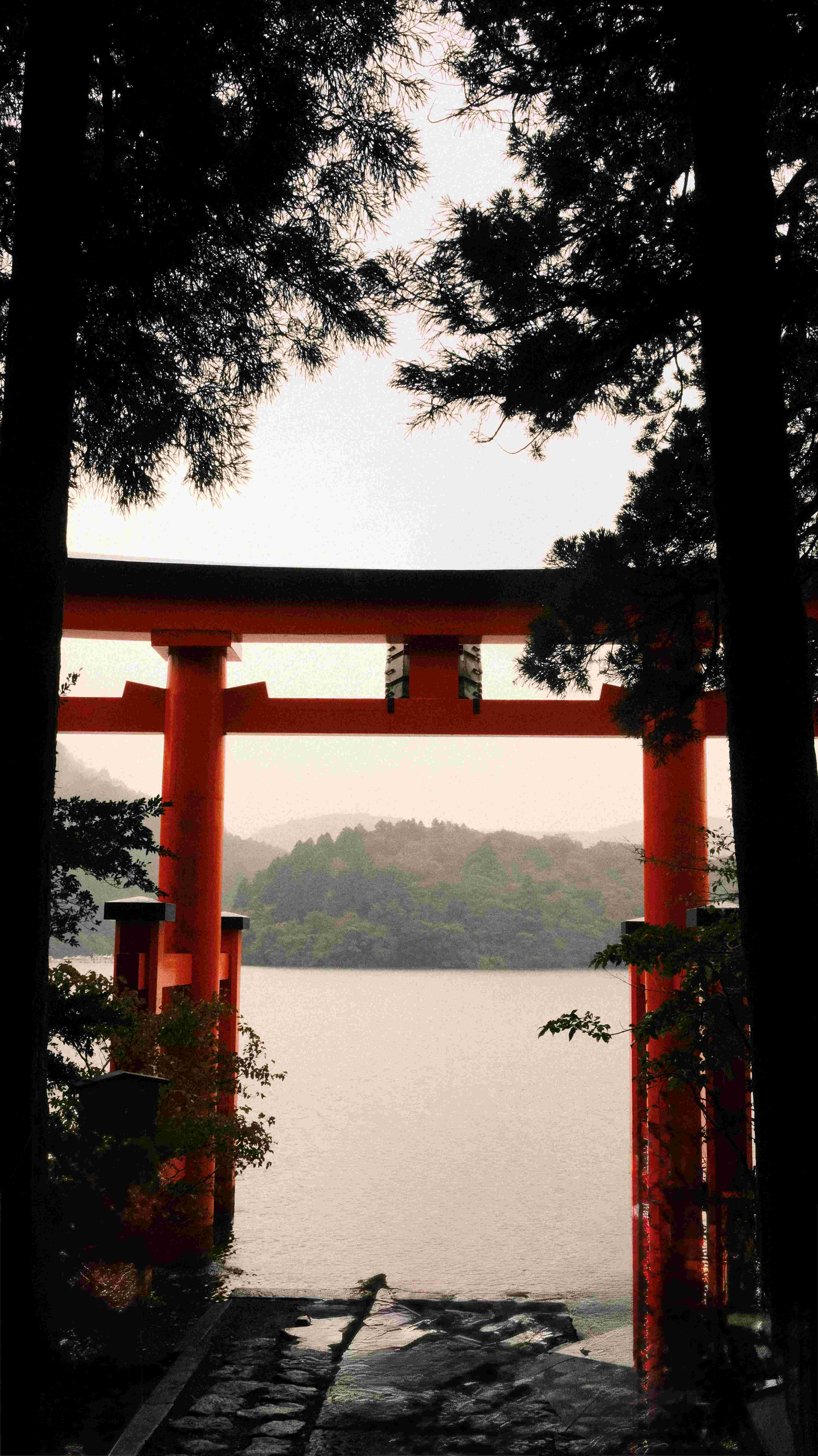
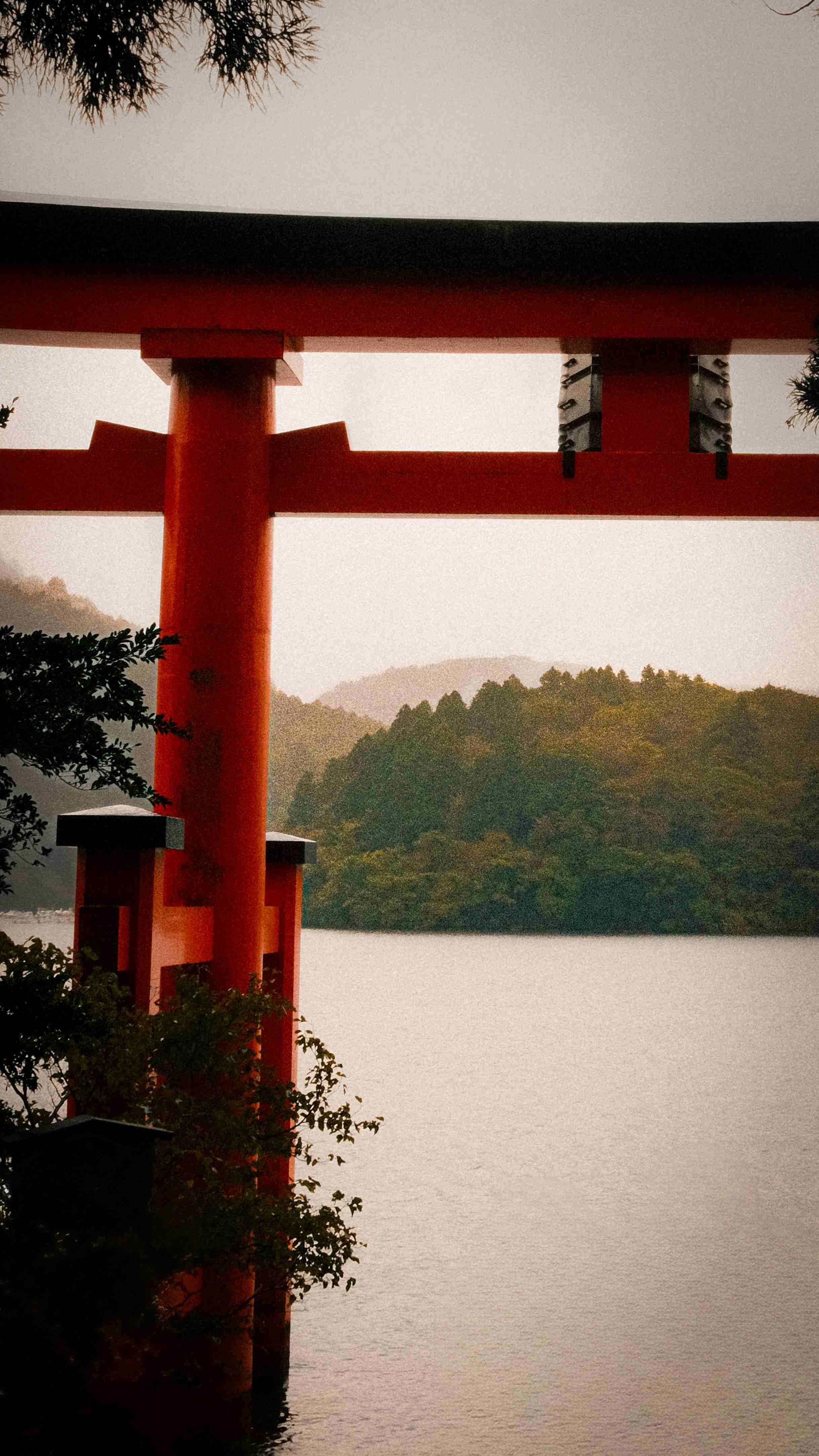
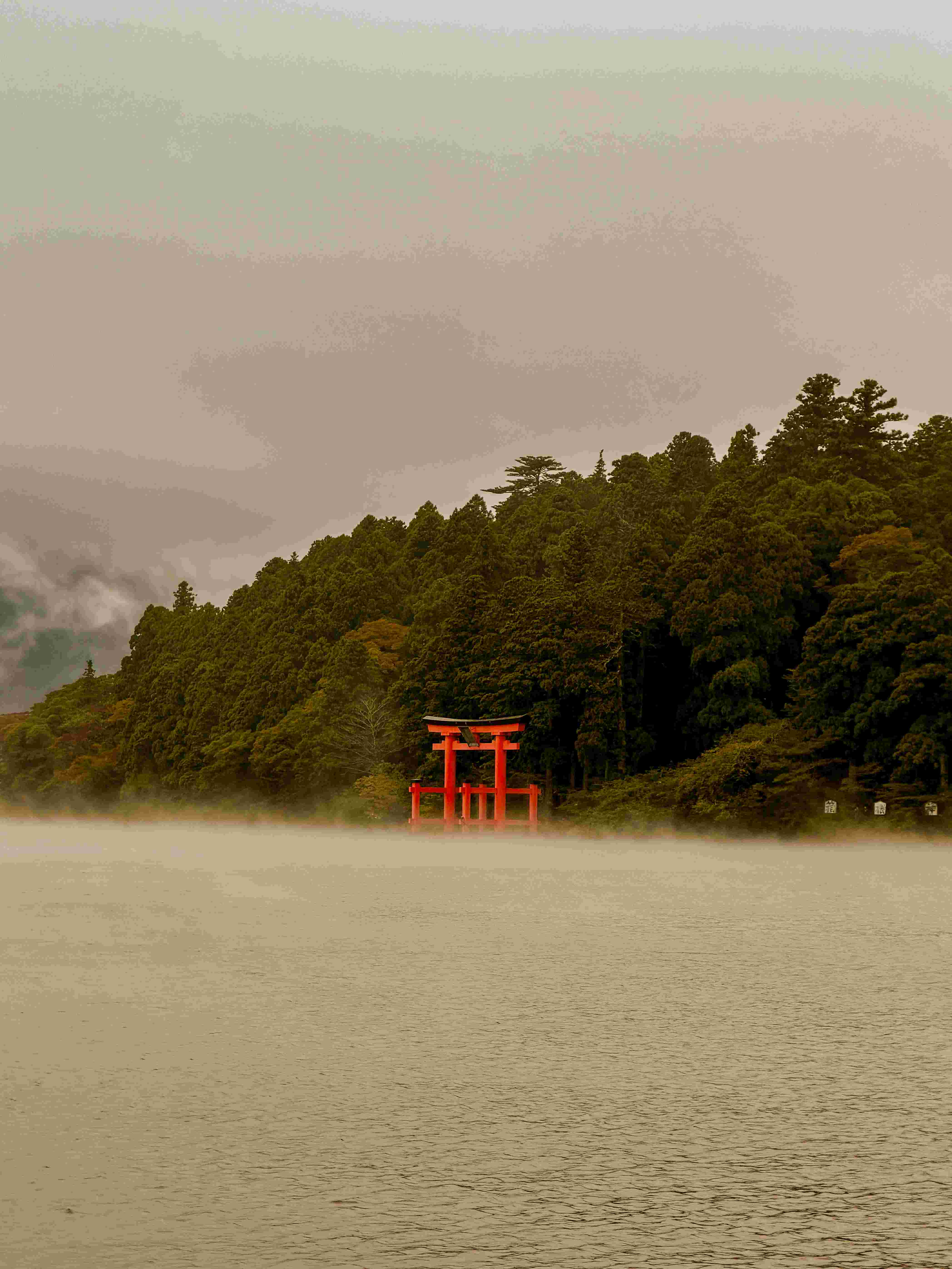
The image most people associate with Hakone: a red torii gate standing in the shallows of Lake Ashi, with Mount Fuji rising behind it on a clear day. We were there in late October and the rain never cleared — no Fuji, just low cloud and mist. The torii gate was still one of the most impactful things we saw in Japan. There was a huge queue of people waiting to take photos even in the rain, which we skipped. But standing near it, looking out at the lake through the mist, the stillness of the water and the scale of the gate — it stays with you.
Hakone Shrine itself is set back in a cedar forest just behind the gate, approached by a long stone stairway flanked by lanterns and massive old trees. Worth walking through slowly.
Tip: The classic photo spot (gate framing Fuji) requires clear weather and early morning. Come for the atmosphere regardless of whether you get the shot.
Private Onsen at Hakone Yuryo ★★★★★
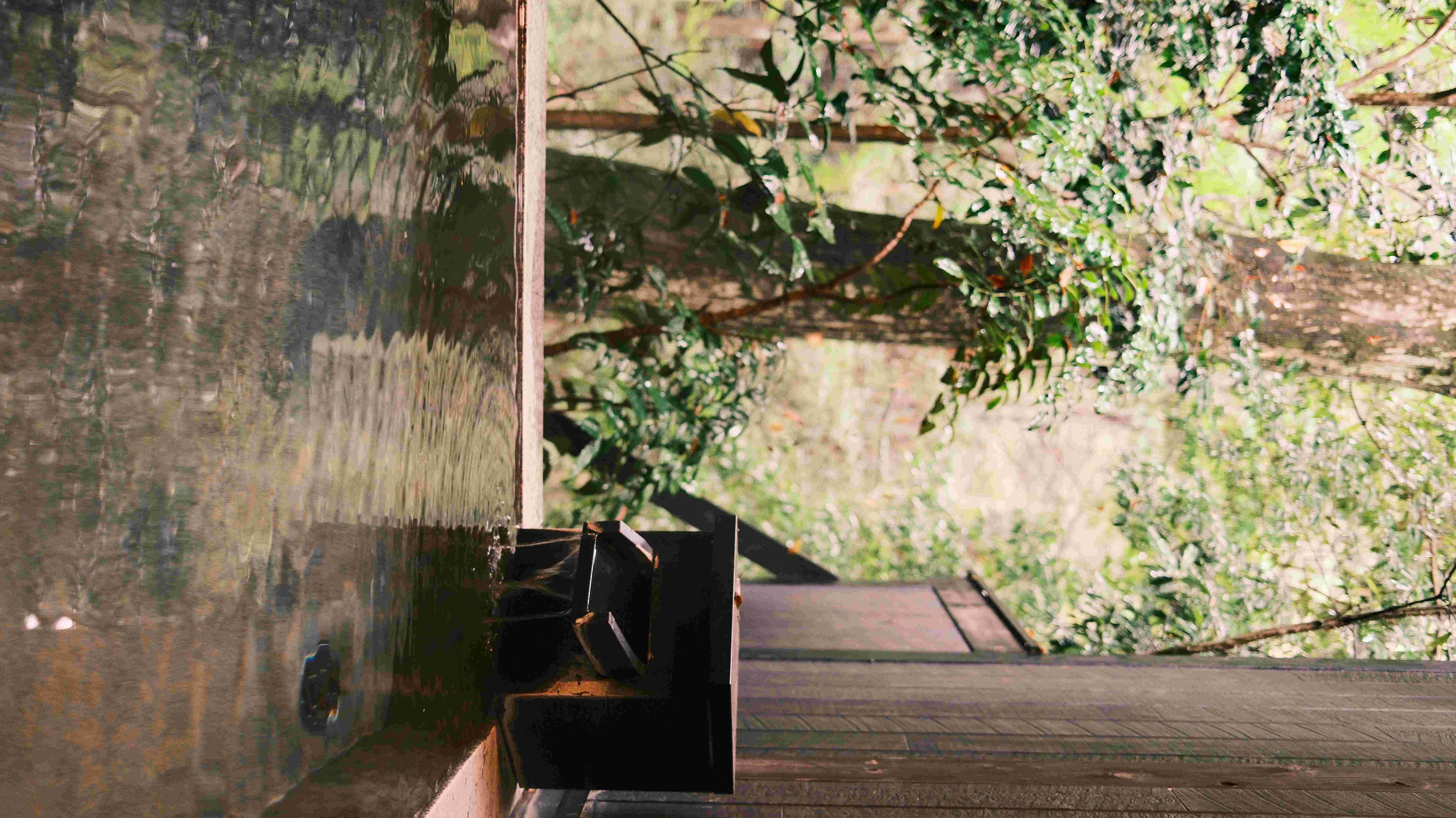
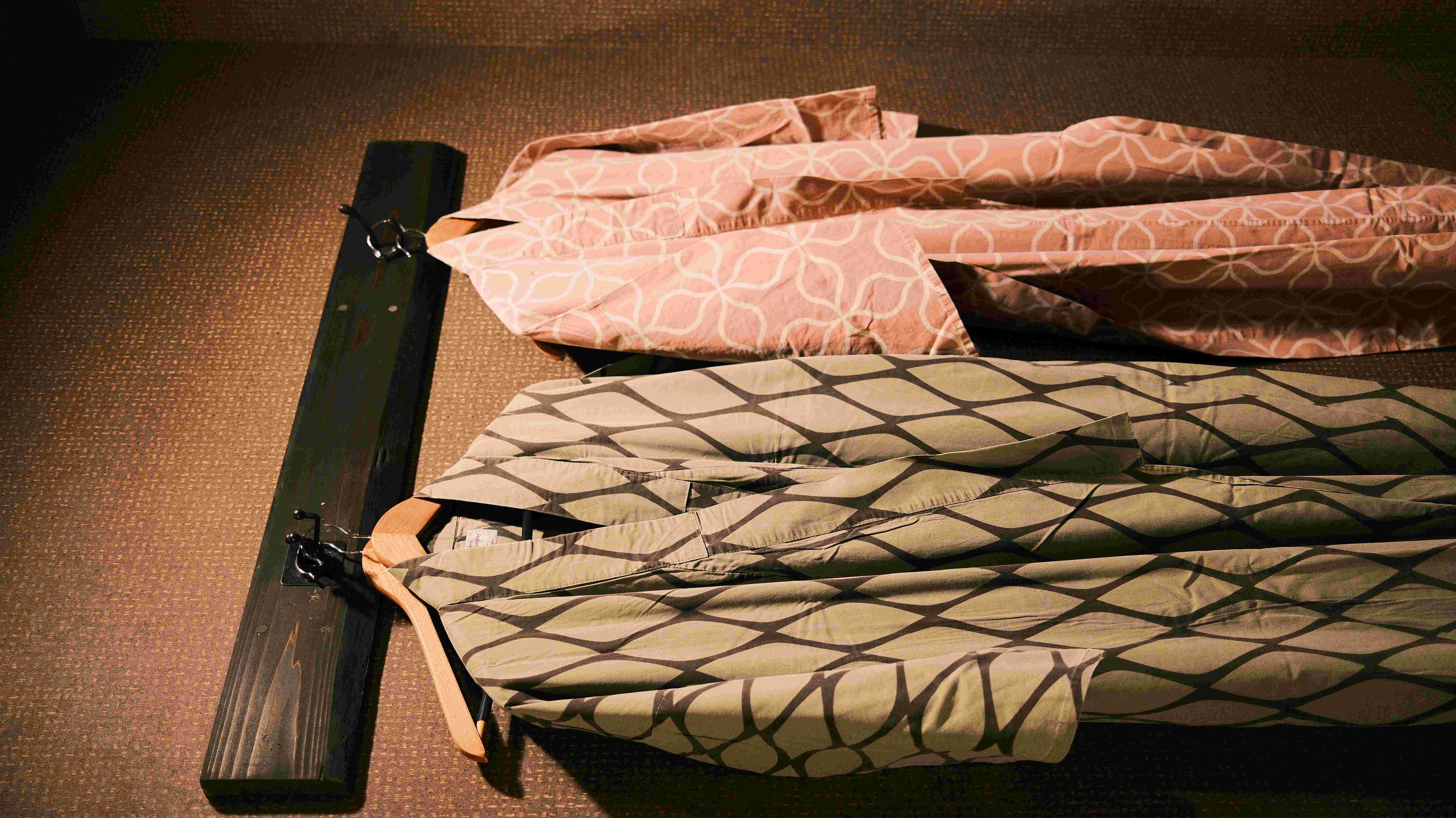
The non-negotiable Hakone experience. We booked a private room at Hakone Yuryo — our own onsen tub on our own balcony, the mountain in the mist in front of us, completely alone in the water for an hour. Followed directly by a massage. It was the best single afternoon of the Japan trip.
The private baths run by the hour (approximately €25) and need to be booked in advance — they fill up, especially on weekends and in autumn. Don't leave this to chance. See our full Hakone onsen guide for everything you need to book it properly.
Hakone Ropeway ★★★★★
The ropeway crosses the Owakudani volcanic valley — a dramatic landscape of grey volcanic rock, sulphur vents, and steam rising from cracks in the earth. On a clear day, the view of Mount Fuji from the ropeway is one of the most famous in Japan. On a cloudy day (as we had), the volcanic valley itself is still extraordinary — raw, active, almost otherworldly.
At Owakudani Station (midpoint), try the kuro-tamago: black eggs hard-boiled in the sulphur springs, with a slightly mineral flavour and the legend that each one eaten extends your life by seven years. The taste is essentially a regular hard-boiled egg; the setting makes them memorable. The Hakone Free Pass covers the ropeway in both directions.
Note: The ropeway sometimes closes partially due to volcanic activity — check before you go and have the Lake Ashi boat as an alternative route.
Lake Ashi Sightseeing Cruise ★★★★☆
Hakone operates pirate-ship style sightseeing boats across Lake Ashi — theatrical but genuinely enjoyable, and the views of the torii gate and surrounding mountains from the water are excellent. The Hakone Free Pass covers the standard boat service. On a misty morning, sailing across the lake with low cloud on the mountains is exactly as atmospheric as it sounds.
Hakone Open Air Museum ★★★★☆
An outdoor sculpture museum spread across forested mountain grounds — one of Japan's most visited art museums and genuinely impressive in scale. Major works by Picasso, Henry Moore, and Rodin sit in open lawns with the mountains behind them. There's also an indoor Picasso pavilion and an onsen foot bath within the grounds. The combination of art, nature, and mountains works better than it should. Budget two to three hours.
Hiking the Hakone Trails ★★★★☆
Hakone has extensive hiking trails through old-growth cedar forest, connecting the main sights at a slower pace. The Tokaido Highway (an ancient road connecting Edo and Kyoto) passes through the area — sections of the original stone-paved road are still intact and hikeable, passing through cedar forest with almost no other people on them. Accessible via bus from Hakone-Yumoto; the Free Pass covers the bus.
Everything in Hakone is super well connected — you can combine hiking with the ropeway and boat on a single day without any complicated logistics.
What to Skip
Owakudani black egg queues: The kuro-tamago are worth eating once; don't wait more than 10 minutes for them. The volcanic valley itself is the attraction.
Overcrowded photo spots on weekends: The torii gate sees enormous weekend crowds. Weekday visits are noticeably calmer, and the mist-and-rain atmosphere we had was honestly better for the atmosphere than a crowded clear day would have been.
More Hakone Guides
FAQ
What is Hakone most famous for?
Mount Fuji views (weather permitting), the red torii gate on Lake Ashi, and its onsen hot springs. The Hakone Ropeway over the Owakudani volcanic valley is also one of Japan's most dramatic transport experiences.
Do you need the Hakone Free Pass?
Yes — it covers the Odakyu train from Shinjuku, the Hakone Tozan cogwheel railway, the ropeway, the Lake Ashi boat cruise, and local buses. Without it you're paying separately for everything; with it, you move freely all day. Buy it at Shinjuku Station before you leave Tokyo.
Some links in this post are affiliate links. If you book through them, we earn a small commission at no extra cost to you.