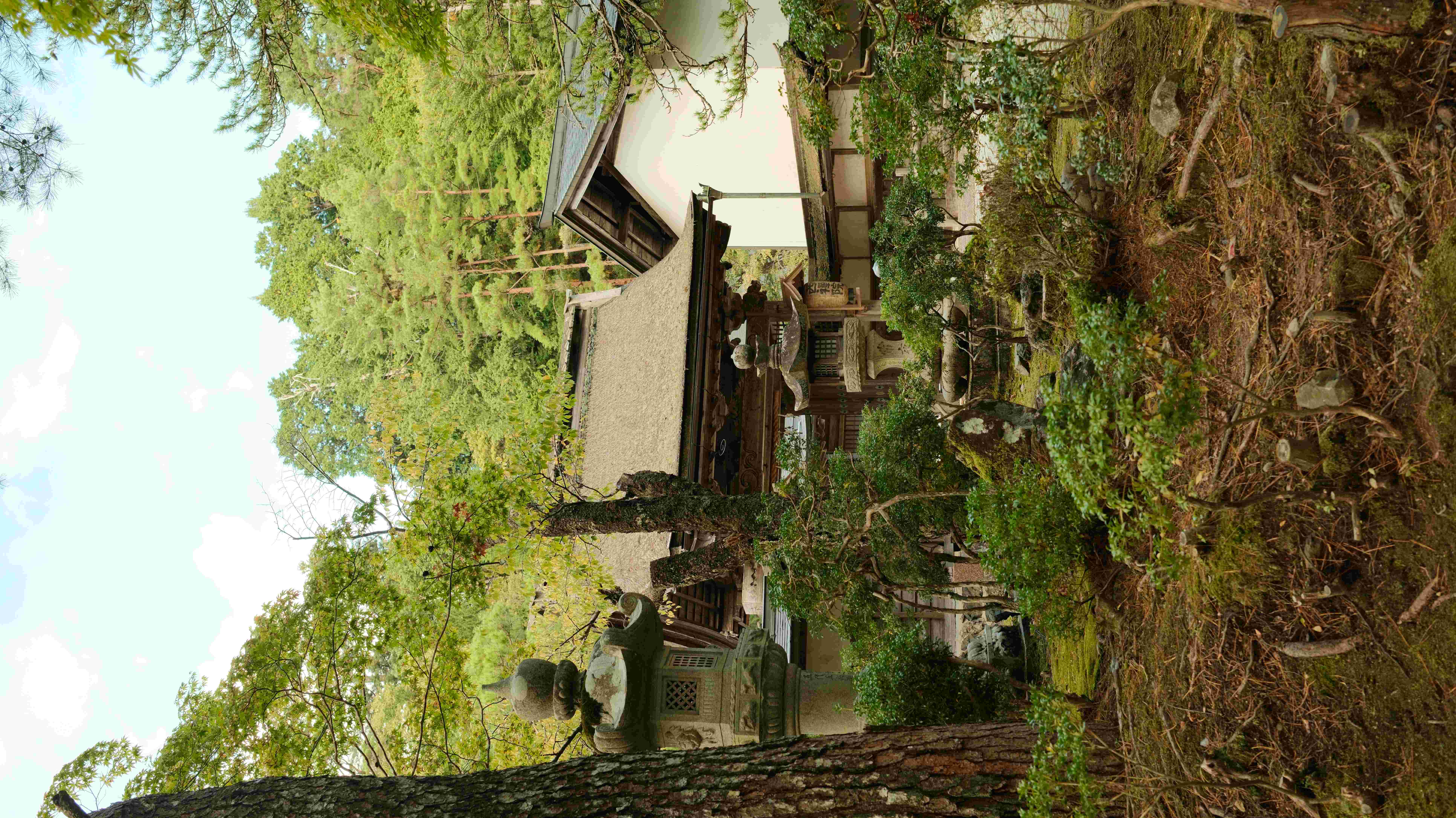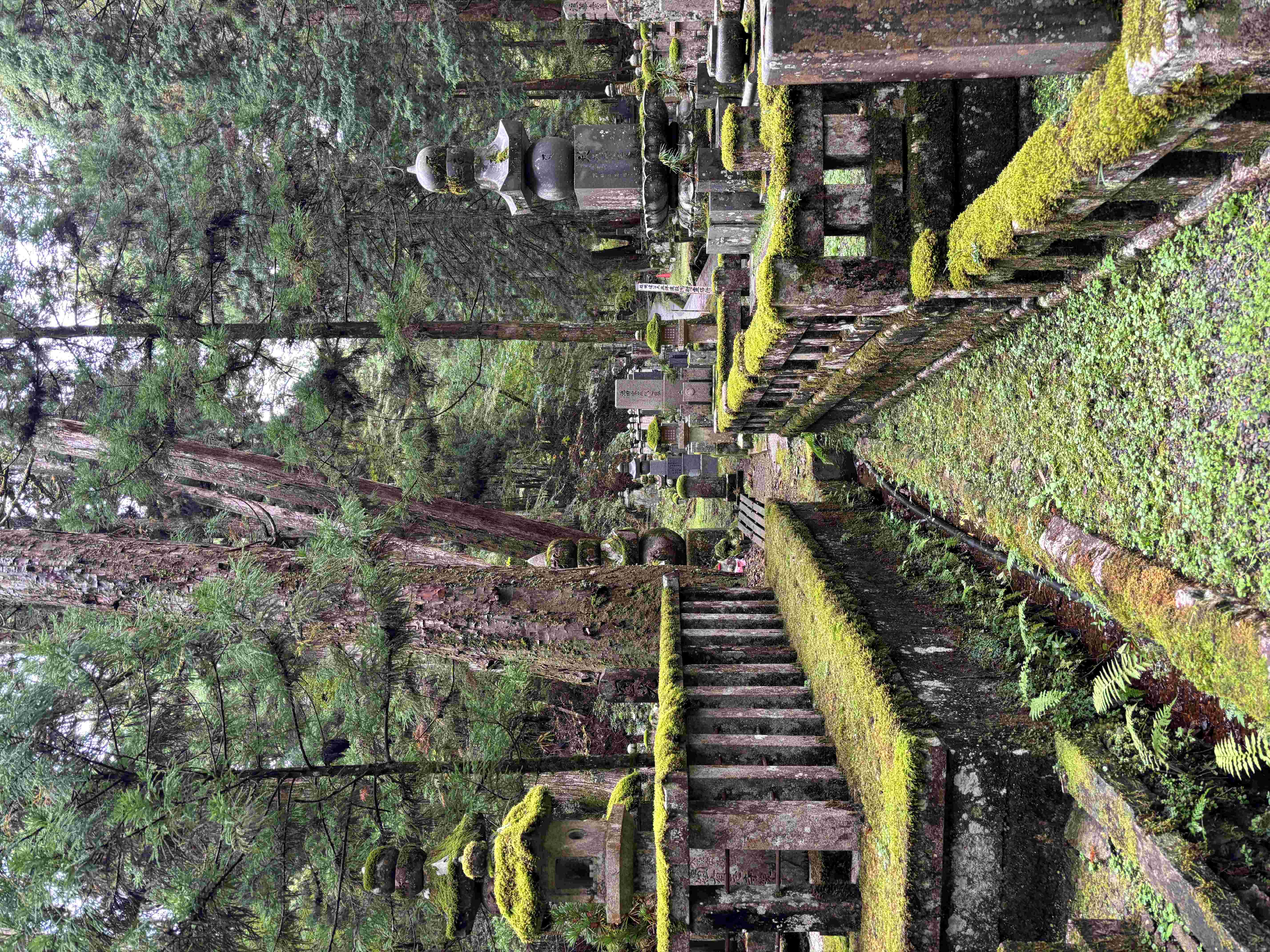
After dinner at the temple, as the last daylight was fading, we walked into Okuno-in. Japan's largest cemetery: over 200,000 graves nestled beneath cedar trees so tall they block out most of the sky, stone lanterns lining the paths, moss covering everything with the deep green of centuries. The further in you go, the quieter it becomes. By the time we reached Kobo Daishi's mausoleum at the far end, we were barely speaking. The guide described it as pure magic. That's right.
What Is Okuno-in?
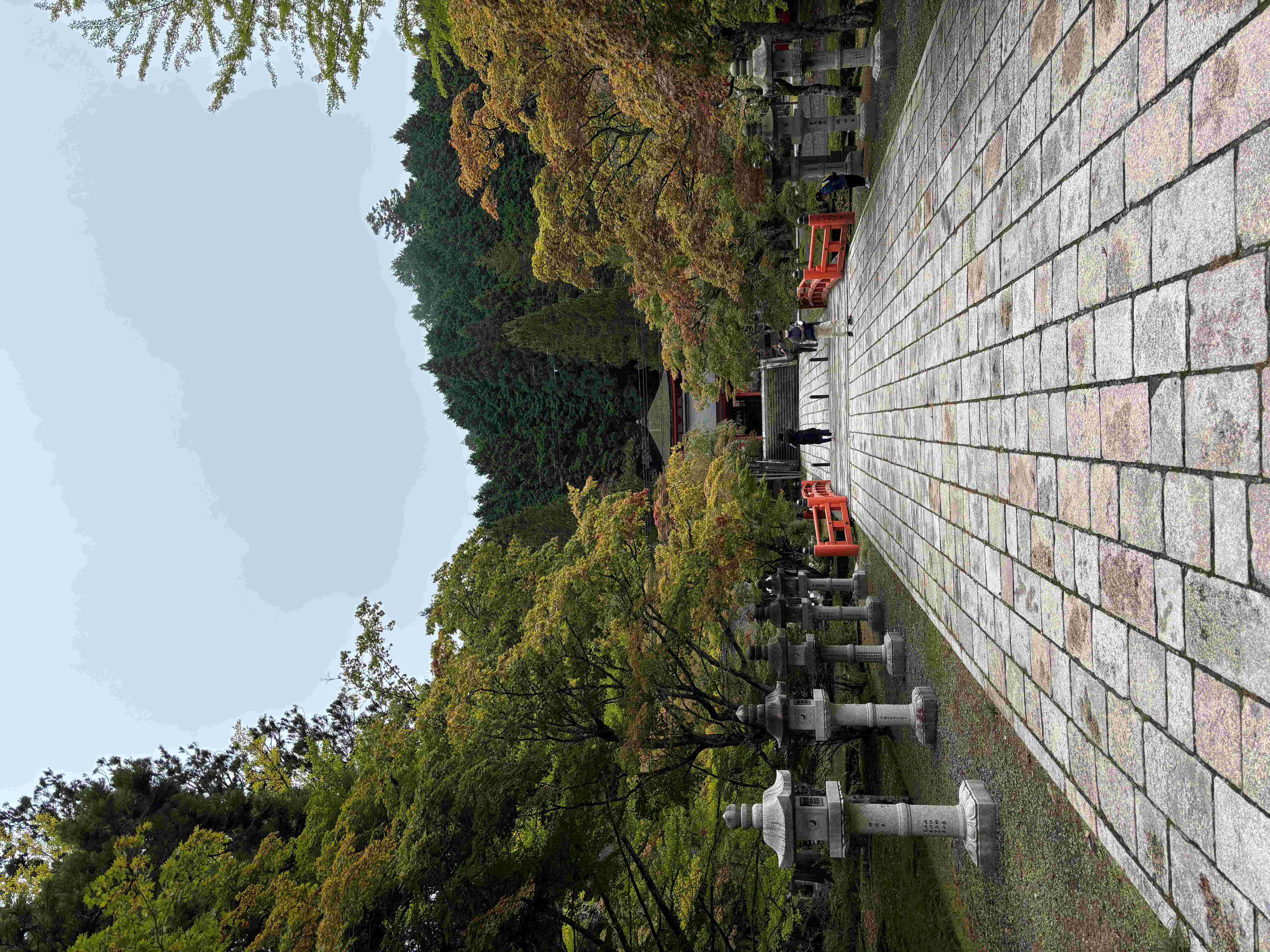
Okuno-in is the sacred heart of Koyasan — a 2-kilometre path through a cedar forest containing over 200,000 graves, monuments, and memorials spanning more than a thousand years. The path leads to the Lantern Hall (Toro-do) and beyond it, the mausoleum of Kobo Daishi (Kukai), the monk who founded Koyasan in 816 CE and who is believed, in Shingon Buddhism, to be resting in a state of eternal meditation rather than having died. Monks bring him two meals every day. The atmosphere of the place reflects that belief: it is deeply cared for, not merely preserved.
The graves along the path belong to samurai lords, feudal warlords, Buddhist abbots, company founders, and ordinary Japanese families — generations of the country's dead laid to rest near the mountain's most sacred figure. Some graves are elaborate stone monuments centuries old; others are simple markers still regularly maintained by living families.
When to Walk Okuno-in — Dusk Is Best
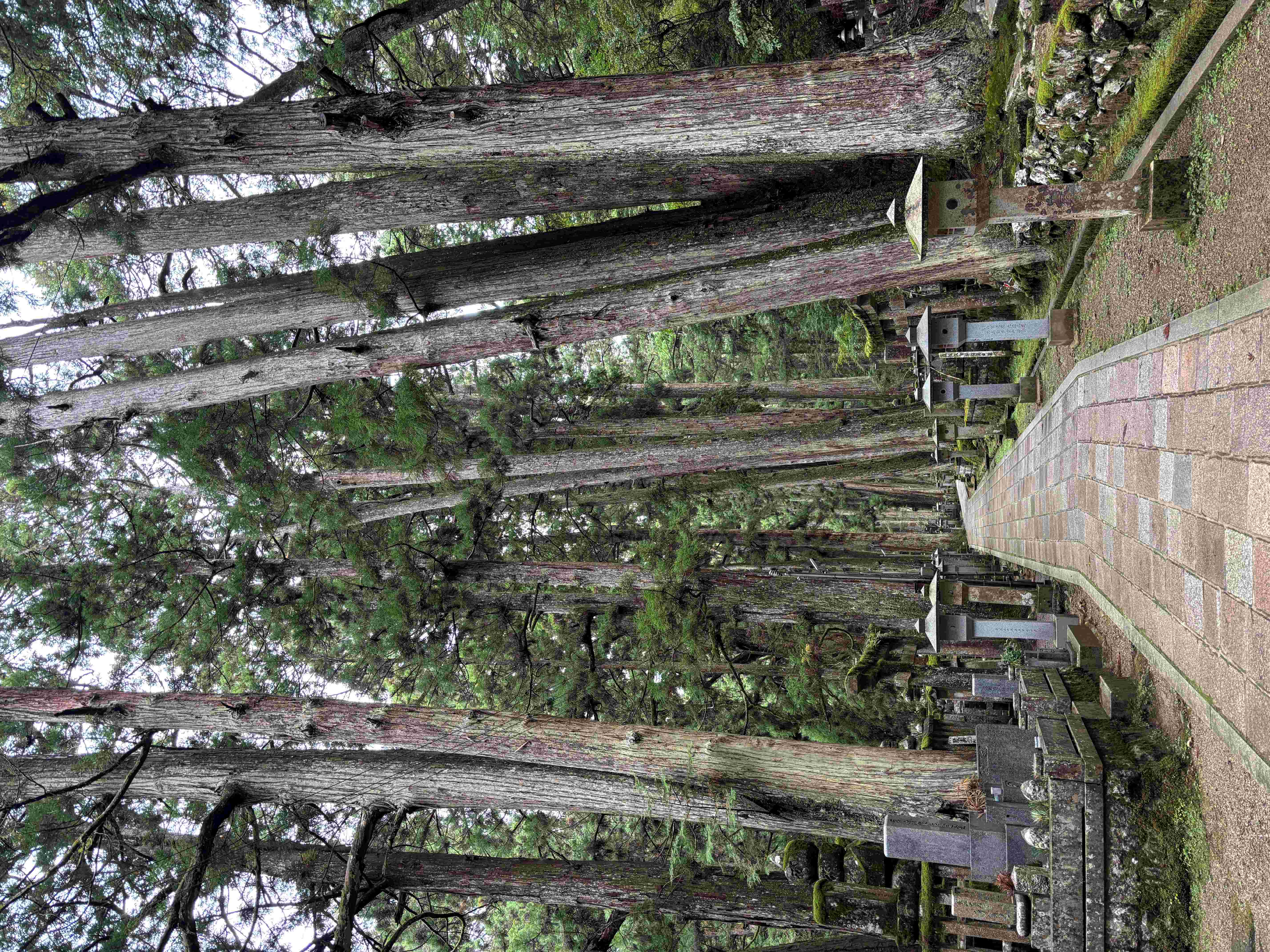
We walked at dusk, after dinner and before full dark. This is the best time — and the guide is specific about it: "Walking here at dawn or dusk is an unforgettable experience." The reason is the stone lanterns. Thousands of them line the path, and as the natural light fades, they begin to glow with a soft, warm light that transforms the atmosphere of the forest completely.
During the day, Okuno-in is beautiful but also populated with other visitors and tour groups. At dusk, after most day visitors have left, it becomes something different: quiet, intimate, the kind of stillness that's hard to find anywhere in modern Japan. The smell of incense from the Lantern Hall drifts back through the trees. The sound is mostly wind in the cedars and your own footsteps on the stone path.
Dawn works equally well for the same reasons — quieter and atmospheric before the day visitors arrive, with mist in the forest that adds another dimension. We went at dusk because we'd just finished dinner at the temple; either works.
The Walk — What to Expect
The main path through Okuno-in runs approximately 2 kilometres from the Ichi-no-hashi bridge (the traditional entrance) to the Lantern Hall and mausoleum at the far end. Allow 45–60 minutes at a slow pace, which is the right pace for Okuno-in. There are things worth pausing at throughout:
- The ancient cedars — some over 300 years old, towering above the graves. The scale of the forest only becomes apparent once you're inside it.
- The moss — covering the older grave stones in the thick, vivid green that only grows in places with consistent moisture and zero disturbance. Some stones are barely legible beneath it.
- Corporate monuments — a quirk of Okuno-in: major Japanese companies have built memorials here for employees and products. Panasonic, Nissan, Yakult, and others have monuments alongside medieval samurai lords. Strange and somehow very Japanese.
- The Lantern Hall (Toro-do) — the hall before the mausoleum, filled with thousands of lanterns donated over the centuries, burning continuously. The two lanterns said to have burned without stopping since the 11th century are the most famous. The glow from inside the hall through the latticed walls is remarkable.
- Kobo Daishi's Mausoleum — Photography is not permitted beyond the Lantern Hall. Approach respectfully and quietly.
Practical Notes
| Length | Approximately 2km one way from Ichi-no-hashi to the mausoleum |
|---|---|
| Time needed | 45–60 minutes at a slow pace; budget 90 minutes to linger |
| Best time | Dusk (after day visitors leave) or dawn (mist, quiet) |
| Entry | Free; open at all hours |
| Photography | Permitted along the path; NOT permitted at the inner mausoleum |
| Dress | No formal dress code, but respectful clothing appropriate for a sacred site |
| Torch/flashlight | Useful if walking after dark — the stone lanterns light the main path but some sections are dim |
The Night Walk
After full dark, Okuno-in becomes genuinely atmospheric in a way that's difficult to describe without sounding clichéd. The lanterns provide the only light. The forest absorbs sound. The graves stretch in every direction. It is not frightening in the horror-movie sense — it is quietly, deeply powerful. The Japanese relationship with death and ancestors is present in every moss-covered stone and every lantern flame. Walking through it slowly, at night, is the kind of experience that stays with you in a way that most sightseeing doesn't.
If you're staying overnight at a temple in Koyasan, walk Okuno-in after dinner. It's the perfect way to end the day on the mountain.
More Koyasan Guides
FAQ
Is Okuno-in safe to visit at night?
Yes — Koyasan is extremely safe and Okuno-in is visited at night regularly. The stone lanterns light the main path. A small torch is useful for dimmer sections. The atmosphere is atmospheric rather than threatening.
Is Okuno-in free to enter?
Yes — the cemetery path and the Lantern Hall are free to enter at all hours. No ticket required.
Can you take photos at Okuno-in?
Yes along the path and at the Lantern Hall exterior. Photography is not permitted at the inner mausoleum of Kobo Daishi — this is clearly marked and should be respected.
How long does the Okuno-in walk take?
45–60 minutes at a slow pace from the Ichi-no-hashi entrance to the mausoleum. Budget 90 minutes if you want to linger and absorb the atmosphere properly. Return the same way or take a slightly different route back.
Some links in this post are affiliate links. If you book through them, we earn a small commission at no extra cost to you.